Food security in Africa depends on rethinking outdated water law:
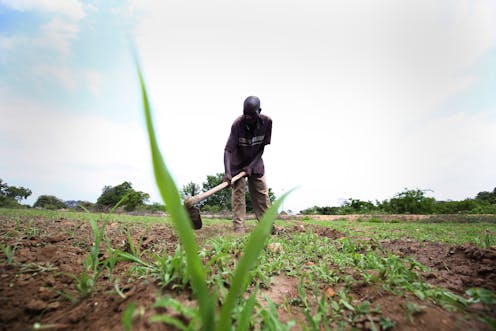
A new study has found that outdated, colonial-era water permit systems across Africa are unintentionally criminalising millions of small farmers who can’t obtain permits. This undermines efforts to boost farming production and meet economic growth goals.
The study examined water permit systems in five African countries: Malawi, Kenya, South Africa, Uganda and Zimbabwe. The permit system was introduced by colonial powers in the 1920s. They were designed to regulate water use in the interests of the colonial project by granting permits only to white settlers.
These systems established minority ownership of a natural resource that was vital for economies dependent on agriculture. African customary water arrangements were ignored and over-ridden.
These colonial style permit systems are still in use across the countries that were examined, and elsewhere in Africa. As a result, legal access to water through permits remains biased towards a few large users, such as large-scale irrigated farms, mines and industries, who are able to navigate the complicated and expensive process of permit application.
At the same time, customary regimes are expanding in informal rural economies, where millions of small and micro-scale water users invest in water infrastructure for self-supply and water sharing. Farmer-led irrigation development is the backbone of food security.
The bad news is that permit obligations have expanded to cover all water users, even those using small pumps to irrigate a few hectares. Small-scale water users who don’t have permits are, according to the legal texts, effectively committing an offence which carries a penalty of being fined, jailed or both.
The micro-scale users who are exempted from requiring a permit have a weaker legal status than permit holders. So women who irrigate vegetables for family nutrition at their homesteads, for example, have no way to safeguard their water uses. They have to compete for water with large-scale users with permits.
There’s a way to address this.
The hybrid solution
A guide for African policymakers has been developed that proposes a “hybrid approach” to deal with the problem. Instead of providing legal protection to a few, the approach recognises water uses governed by customary laws at equal legal standing as permits.
This is a suitable way for small-scale water users to invest in infrastructure and solve water sharing conflicts. And prioritisation of water uses that’s aligned with national goals and constitutional commitments protects the most vulnerable.
This approach is administratively lean. By targeting existing permits to regulate large-scale water users and integrating this with alternative arrangements for small-scale users, the administrative burdens that disadvantage many under the current systems can be overcome.
Collective permits where possible and appropriate would also be effective. This could preserve customary arrangements and protect local small-scale water users. It could overcome the bureaucratic hurdles faced by small scale users and lessen the burden on governments to implement individual permit systems.
A system built for purpose
In practice, a hybrid approach to regulating water use is already in use because water authorities lack the resources to raise awareness and to process and enforce millions of permits.
In Uganda, they refer to this practical focus on large-scale water users as the “20-80” practice. It focuses on the 20% of water users that use 80% of the water. In Kenya, targeted permitting has been formalised. Water users are categorised from A to D, depending on the impact their water use has, and they are regulated accordingly. However, the legal protection for small-scale users still remains unaddressed.
Ending hunger on the continent calls for a rethink of current water rights systems, and the implementation of systems built for purpose that recognise, prioritise and protect the water use of millions of small scale water users.
Barbara Schreiner, the executive director of the Pegasys Institute, contributed this article.

Barbara van Koppen receives funding from UK government/DFID/REACH for this particular project on water legislation, and other funders of international water research.
Source: The Conversation – Articles (AFRICA)
Read more on The Conversation.
Join the fun: Add Your event | Submit a Press Release | Add your listing.


