Foreign policy priorities South Africa should pursue:
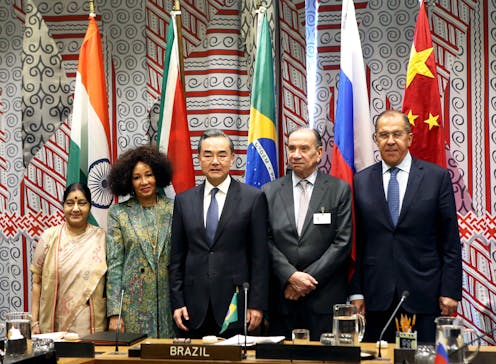
South Africa continues to enjoy an unusual degree of international prominence normally accorded to states that are more powerful, prosperous, or strategically located than it.
Following its first democratic election in 1994, the country quickly went from being an apartheid pariah state to one of the world’s most active and leading multi-lateralists.
For example, it’s the only African member of the G20. This international forum of governments and central banks is responsible for 90% of the gross world product and 80% of world trade. South Africa was also invited to join Brazil, Russia, India and China to form the BRICS group.
The pattern hasn’t ended, yet. For the third time in 12 years it has been elected a non-permanent member of the UN Security Council, for 2019 and 2020. Next year it will concurrently chair the African Union.
South Africa’s prominence may be partly explained as the afterglow of the country’s generally peaceful democratic political transformation. Last July former US President Barack Obama extolled the enduring virtues of this process in the first public lecture of his post-presidency, delivered in Johannesburg. Two months later a “Mandela Peace Summit” was held in New York at the start of the UN General Assembly.
In my view there are three urgent issues at the interplay of foreign and domestic affairs that will be of strategic long-term importance to South Africa and Africa.
These are what it should do to avoid being hurt by bilateral trade disputes between the US and China; mitigate and adapt to effects of climate change; and, defend South Africa’s liberal values and policy of pressing for multilateral solutions – short of regime change – in countries where human rights abuses are rampant.
Trade
Expanding South African trade and attracting greater foreign investment for jobs and development was the only major international issue in President Cyril Ramaphosa’s State of the Nation Address.
The foreign policy and diplomatic aspects of trade have become more pronounced in the wake of the dispute between the US and China.
South Africa has already suffered collateral damage. For example, the US has unilaterally raised duties on steel and aluminium imports. There’s also a potential collateral threat from brewing disputes over domination and regulation of the digital economy, use of robotics and artificial intelligence.
Another top long-term priority on the trade front must involve ensuring the World Trade Organisation is modernised and empowered to mediate these disputes by democratic consensus.
More immediately, South Africa is rightly pursuing economic integration with its neighbours. It’s also celebrating the imminent establishment of an African Continental Free Trade area. Such cooperation should benefit the country and strengthen Africa’s position in global trading negotiations.
Climate change
South Africa’s biggest and broadest long-term diplomatic challenge is climate change. It must engage in the politics of dealing collectively with climate issues regionally and globally. The aim must be to ensure secure resources for the benefit of the most seriously affected.
The recent Cyclone Idai was symptomatic of the extreme weather events linked to global warming. It was close to home for South Africa. Both the government as well as citizens responded quickly and effectively to help alleviate the suffering in Mozambique, Malawi and Zimbabwe.
Preparing for – and dealing with – such disasters portends huge international political and diplomatic challenges for South Africa.
## Responsibility to protect
A third strategic issue is whether, when, and how to act in defence of what’s known as the Responsibility to Protect. This is the obligation states have to protect their own populations – and those of in other countries – against the risk of genocide and other mass atrocities.
The approach stipulates three pillars of responsibility. First, every state must protect its populations from four mass atrocity crimes: genocide, war crimes, crimes against humanity and ethnic cleansing. Secondly, the international community must encourage and assist individual states in meeting this responsibility. And finally, if a state manifestly fails to protect its population, the international community must be prepared to take appropriate collective action in accordance with the UN Charter.
Twenty-five years ago UN members could celebrate their efforts to help end apartheid. But they also mourned their failure to prevent or halt the 1994 Rwandan genocide.
Since then, when and how to invoke this responsibility has posed several daunting diplomatic challenges. This has been particularly true for South Africa, given its history of domestic repression and prominent advocacy for human rights.
Minister for International Relations and Cooperation, Lindiwe Sisulu, explained recently that Pretoria opposes regime change, especially if done unilaterally. An example was the 2003 US-led invasion of Iraq to overthrow Saddam Hussein.
South Africa hasn’t always got its ducks in a row on this issue, as Sisulu candidly acknowledged. For example, it regrets initially backing a UN Security Council resolution to intervene to protect Libyan civilians. The reason for this was that the mission abruptly escalated. And it culminated in ending the regime of Muamar Qaddafi.
Another example cited by Sisulu was Myanmar. She admitted that South Africa was initially wrong not to back stronger UN action to defend human rights.
One recent and rare instance of unilateral diplomatic action was South Africa’s decision to protest against Israel’s extreme human rights abuses of Palestinians. It did so by withdrawing its ambassador and downgrading its embassy to a liaison office.
Foreign policy controversies inevitably arise over how to redress the abuse of basic human rights within a sovereign state. A case in point was the world’s response during the struggles to end apartheid.
Now democratic, South Africa enjoys special respect for its political achievements. But it also carries an added burden in upholding these values locally and globally. Its history teaches us the wisdom – which can be applied to multilateral relations among states as much as to the wellbeing of people within them – of Rev Martin Luther King’s statement that:
True peace is not merely the absence of tension: it is the presence of justice.

John J Stremlau does not work for, consult, own shares in or receive funding from any company or organisation that would benefit from this article, and has disclosed no relevant affiliations beyond their academic appointment.
Source: The Conversation – Articles (AFRICA)
Read more on The Conversation.
Join the fun: Add Your event | Submit a Press Release | Add your listing.


