Four big insights into HIV/AIDS that provide hope of finding a vaccine:
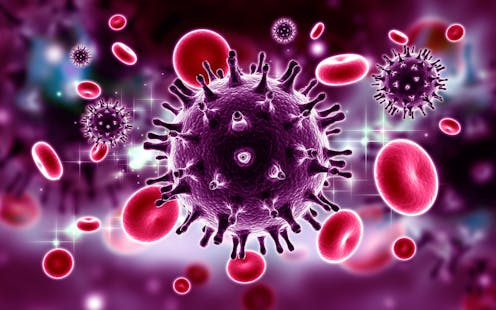
HIV remains one of the continent’s most intractable health challenges. Tremendous progress is being made to understand the virus, the immune mechanisms that contribute to its control and for new antiretroviral drugs and vaccines to be developed to treat and prevent HIV.
But much remains to be done to overcome the health and economic devastation of the epidemic. African researchers have been performing cutting-edge research to contribute to addressing these problems. The sub-Saharan African Network for TB/HIV Research Excellence has been at the forefront of this research and has provided some important insights into how the virus spreads as well as the immune mechanisms that enable some people to control the virus without antiretroviral drugs.
This knowledge could be translated into effective vaccines or other novel interventions to prevent the spread of the virus or achieve a functional cure where people are able to live without antiretroviral drugs at least for a while.
Although the goals of a vaccine or cure remain elusive, the research being done makes these goals appear increasingly likely.
Immune systems are critical
A major plank of our research, in collaboration with others, has been around understanding what mechanisms the body uses to control HIV – particularly in the early phase of infection.
Our research shows that within a few weeks of becoming HIV infected, almost all people have a very robust immune response through cells known as cytotoxic T lymphocytes, or killer CD8 T cells. These cells are able to partially suppress HIV.
But when most people are exposed to the virus, their immune systems are mostly skewed to respond to regions of HIV that are highly variable. This allows the virus to easily change to escape immune recognition.
The killer CD8 T cells produced during the acute phase are also highly defective. They become exhausted and die off easily, which enables the virus to persist.
But we’ve discovered an interesting twist. Some people have a genetic makeup that facilitates development of very good CD8 killer T cell immune responses. These rare individuals can control the virus without antiretroviral drugs. These are also a few people who appear to control the virus without using CD8 killer T cells, and we are in hot pursuit of the mechanisms that control the virus in such individuals.
This ground-breaking research is vital because understanding how the immune system is able to control the virus – either by killer T cells or other mechanisms – could lead to effective HIV vaccines or cures.
HIV evades or adapts to immune pressure
Our work has shown that HIV is very adept at evading the body’s immune responses to the virus. The main way it does this is by developing mutations that enable the virus not to be recognised by a person’s immune system. At the same time it continues to replicate and reproduce itself.
Our work shows that although this immune escape is common, in some cases the virus develops mutations that cripple it, making it unable to continue replicating efficiently.
We have identified some of the regions of virus that are vulnerable that cripple the virus if it is targeted by the immune system. These regions of viral vulnerability could be included in HIV vaccines so that the body makes an immune response against these regions of the virus ensuring that the immune system cripples the virus. This may be an effective way to make an HIV vaccine or achieve natural control of the virus in those already infected.
But that’s not the end of the story. There’s a further complication because we’ve also discovered that the virus can acquire new mutations that restore its ability to replicate efficiently. But we think that there may be ways to block or limit escape. The viral regions of vulnerability that we have identified could be good candidates for vaccines designed to disable virus replication.
Genetic and viral factors matter
There is a lot of variability in HIV disease progression.
Without antiretroviral therapy, most HIV infected people develop full blown AIDS within 10 years. But some people succumb more rapidly, within two years. There is also a rare group of individuals known as elite controllers who have been shown to live with HIV for more than 20 years with almost undetectable viral load and without developing AIDS.
Our group and others have shown that variability in disease progression can be explained by differences in genetic factors that govern the immune response.
Some people are naturally equipped with better genetic makeup that enables them to develop a very good immune response that can fight off the virus and control it. But in almost all cases, a robust and good immune response eventually leads to immune escape in the virus, which means that the virus acquires changes that enable it to hide from the immune system.
But some of these mutations can cripple the virus.
People infected with HIV but with superior immune responses – or with a virus that has been crippled by the immune system end up living long healthy lives without antiretroviral drugs.
This kind of knowledge is very useful for the potential development of vaccines.
The influence of viral genetic factors
One of the defining characteristics of the HIV/AIDS epidemic is that there are multiple genetic strains (known as subtypes or clades) that are unevenly spread throughout the world.
We have demonstrated that some regions of HIV differ in biological activity according to HIV subtypes, and these differences are consistent with reported differences in rates of disease progression.
For example, our work shows that there are characteristics in the Gag region (a specific part of the HIV virus) that make subtypes B and D able to replicate more efficiently than subtypes A and C, which may explain why subtypes B and D are associated with faster disease progression compared to A and D in some population-based studies.
Paradoxically, it appears that the subtypes that replicate less efficiently such as A and C are more successful in infecting more people, perhaps because infected people live longer with these viruses.
The work helps to explain how HIV affects the rate of disease progression in individuals and how in general epidemics spread and change over time. This kind of knowledge is important for predicting the spread of epidemics and how to combat outbreaks so that they do not cause massive suffering as has been the case with HIV and viruses such as Ebola.

Thumbi Ndung'u receives funding from the Gates Foundation, Gilead Sciences, the South Africa National Research Foundation, The National Institutes of Health, the Victor Daitz Foundation and the Wellcome Trust. He is affiliated with the University of KwaZulu-Natal, the Africa Health Research Institute and the Ragon Institute of MGH, MIT and Harvard University.
Source: The Conversation – Articles (AFRICA)
Read more on The Conversation.
Join the fun: Add Your event | Submit a Press Release | Add your listing.


