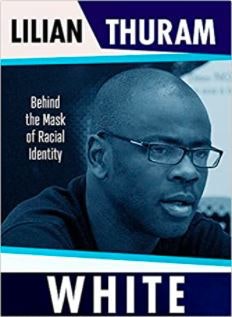
“People aren’t born white, they become white.” This realisation dawned on the former French footballer, World Cup winner and anti-racism activist Lilian Thuram while he was engaged in talks with the white French organisers of a proposed exhibition on racism. As he recounts in the introduction to his new book, White Thinking, Thuram told those around the table that, instead of focusing on the victims of racism, the exhibition
should instead focus on those who profit from this discrimination, often unconsciously and unintentionally.
He was referring, of course, to white people. However, the idea that an exhibition on racism should focus on the problematic nature of whiteness was almost incomprehensible to them.
It was this failed dialogue around the nature of racism that prompted Thuram to write White Thinking, of which I am one of the English translators, alongside Aedín Ní Loingsigh and Cristina Johnston.
Thuram’s first book, My Black Stars: From Lucy to Barack Obama, published in 2010, sought to challenge the white version of history and culture that he had learned in school in France by telling some of the black stories denied him in his childhood.
Now, in White Thinking, he has come to the realisation that this white story and the white thinking that underpins it need to be overturned.
The book was first published in France in late 2020. It provoked both acclaim and heavy criticism. Elements of the right-wing press in particular lambasted the book for its “frequently racialising discourse”. Many journalists and politicians on the right politically, as well as conservative Republicans, viewed the book as “anti-white racism”.
This was a charge that had been levelled at Thuram in late 2019 when he gave an interview in Italy about the racism present in football stadiums, which he argued was representative of a wider racism in Italian and European society more generally.
There was, however, significant praise from liberal and left-wing publications, such as Libération and Télérama, which recognised that the book delivered often unwelcome but necessary truths about ongoing racial inequality.
Thuram’s book is hugely ambitious, an attempt to trace and examine the origins of white supremacy, understood in its widest sense. This is not simply a study of vile racists but of an insidious, unthinking form of racial hierarchy, whose origins can be traced back to slavery and colonisation, and which still shapes our understanding of the world today.
Indeed, white thinking, Thuram argues, is not limited to white people. He cites two examples from his frequent visits to Africa. In Ouagadougou, a man he encounters in the street tells him that
White people come second only to God.
When he tells this story to the mayor of Ouagadougou, he’s told:
It’s not surprising. We have a saying here: “God is great but the White man is not small”.
This, Thuram argues, tells us all we need to know about the pervasiveness of white thinking.
Challenging French universalist ideology
Thuram was born on the French Caribbean island of Guadeloupe in 1972 and moved to the outskirts of Paris at the age of 9. An elegant full-back and centre-half, with Monaco, Parma, Juventus and Barcelona, he won a record number of caps for the French national team, won the World Cup in 1998 (scoring the winning goals in the semi-final) and the European Championship in 2000.
Thuram began his transformation from athlete to activist while he was still a competitive sportsman. In the mid-2000s, he spoke out against politicians such as Nicolas Sarkozy, the tough-talking minister for the interior, and later president. Sarkozy had demonised youngsters living in the poor, marginalised and multi-racial high-rise estates in the suburbs, many of whom were children of immigrants from north and sub-Saharan Africa. In 2005, he infamously stated that he would clear out the “louts” from the suburbs, which should be washed out with a power hose (Karcher).
Thuram had grown up in just such an estate. So had many of his fellow players in the French squad.
In 2008, when he retired from playing, he created a foundation to provide a platform for his fight against racism. The Lilian Thuram Foundation for Education against Racism is particularly concerned with anti-racism outreach work, often targeted at schoolchildren.
For many, Thuram will still be best known as a member of the multiracial French team that won the World Cup in 1998, and were famously celebrated as representing “la France black, blanc, beur” (black, white, Arab) in a play on the red, white and blue of the French tricolour flag.
Thuram believed the team did indeed constitute a celebration of the nation’s diversity. But he was perturbed by an emerging media and political discourse that sought to celebrate the team as embodying the success of French “integration” policies.
French universalist ideology typically imagines a nation made up of equal citizens and, within that framework, France has long given refuge to outsiders on condition that they are willing to be integrated into the dominant, secular Republican culture.
Or, to put it in the starker terms of a popular saying: immigrants and refugees can become French, as long as they leave the baggage of their foreign identity at the door.
Conclusion
The three translators of White Thinking were faced with the challenge of rendering in English slippery concepts such as “integration” for a British audience more accustomed to multicultural, hyphenated notions of identity. For example, how do you find a pithy way of explaining for the general public the French Republican antipathy towards communautarisme? It’s a term often used to describe as a threat to French universal Republican values any attempt to assert a particular, communal, minority identity or experience.
The translation experience brought to mind the work undertaken by Johnny Pitts in his pioneering study, Afropeans. Pitts seeks to explore both the particular nature of the black experience in various European countries and the commonalities that are all too plain to see when you take the time to look closely.
So, yes, we need to understand the specific nature of French Republican debates about race and citizenship. But, fundamentally, is there a major difference between the French discussion of integration or communitarianism and British debates about the “good” immigrant who respects “British values” and the “bad” immigrant who doesn’t?
Having worked with the Thuram Foundation on various projects over the past two years, I have been struck by how much Thuram’s words and ideas find echoes in the increasingly confident public proclamations on race (and other social matters) by young black British footballers such as Raheem Sterling, Marcus Rashford and Tyrone Mings.
However, there remains a reciprocal lack of awareness of the black experience across national boundaries within Europe. And it is still far more common to look instinctively to the African American context for models of how to resist and bring about change.
In that context, the publication of White Thinking is perhaps another small step towards building that Afropean sense of identity envisaged by Johnny Pitts.


