It’s been well over a century since the Nubian people arrived in Uganda from what was then Sudan, as the armed enforcers of the British colonial government. Over time, the new arrivals assimilated individuals from different ethnic backgrounds within Uganda while remaining a distinct group. Now officially recognised as Ugandans, the history of Ugandan Nubians – sometimes referred to simply as the “Nubi” – makes a case study of how social identity is formed and changed.
The Uganda Nubian origins were in what is now South Sudan. There, in the 1820s, some members of the Shilluk, Dinka, Bari, Lotuko, Madi, Lugbara and Alur ethnic groups coalesced into a community of people known as “Sudanese-Nubians”. They practised Islamic culture and spoke a creolised form of Arabic.
The Sudanese Nubians developed as a distinct group as a result of Egypt’s military expansion south into Sudan in the first half of the nineteenth century. Among Sudanese Nubians were professional mercenaries who were used by both Africans and Europeans to capture slaves, ivory and minerals from Gondokoro (southern Sudan) during the 19th century. In the process, Africans adapted to the Arabic culture.
This is the group from which the British military administrator in Uganda Lord Frederick Lugard recruited a band of mercenaries to keep law and order.
The Sudanese mercenaries under their leader Selim Bey were recruited at Kavali, an area in the southwestern corner of Lake Albert in Uganda. The band of about 8,200 Nubian men, women and children set off by canoe on Lake Albert via Bunyoro, a kingdom in western Uganda.
The Nubians later assimilated with those around them with whom they socially identified. This included the Kuku, Lugbara, Acholi, Kakwa, Bganda and Batoro. They became the Nubi-Muganda, Nubi-Kuku, Nubi-Toro, Nubi-Lugbara, Nubi-Acholi and Nubi-Kakwa, among others.
Most of Uganda’s ethnic groups are associated with specific ancestral territories. For instance the Baganda of central Uganda, Bagishu of eastern Uganda and Banyankole of western Uganda. However, Uganda Nubians have had no territorial claim because they settled in the different places they were deployed.
For decades Ugandan Nubians were treated as foreigners or “Abagwira” and discriminated against. But the country’s 1995 constitution recognised the Nubians as a Ugandan indigenous ethnic community and as citizens. This was a significant step because their identity was now officially recognised with similar rights as other Ugandans.
In my PhD research I studied the formation and shifts of the Nubian ethnic identity, and the strategies Uganda Nubians have used to define and sustain themselves as a distinct ethnic group in Uganda. Understanding identity shifts over time allows for an appreciation of the fluidity and the construction of identities.
I drew the conclusion that there is more to ethnic identity than ancestral location or settlement pattern. It goes beyond language or family history too. Understanding this can lead to lessening of ethnic conflicts worsened by the colonially constructed ethnic territorial boundaries.
Shifting identity
Like most historical studies, my research relied mainly on oral history and written archival records. Oral interviews were conducted in Bombo and Kampala (both in central Uganda), Kabarole district (western Uganda) and Arua Adjuman and Pakwach (west Nile districts of Uganda).
Based on the oral narratives and archival documents, my study found that over the years, the Uganda Nubians came to take on different identities. But they retained a distinct group identity bound together by Islam and other aspects of culture, including language, food, dress and crafts.
In the early colonial period (1890s-1930s), the Nubians were identified by the British as “Sudanese mercenaries”. This was because they had worked as Sudanese-Egyptian mercenaries during the Anglo-Egyptian imperial campaign in Sudan during the 19th century.
This is why they were hired by Lugard for the Imperial British East African Company. But their mercenary identity changed when the British recruited them formally into the British army (Uganda Rifles and later East African Rifles) with the intention to boost the colonial army in order to “pacify” East Africa.
Throughout the colonial period to independence (1894-1962), the Uganda Nubians had settled wherever they were deployed by the British. By the mid-20th century, many Nubian soldiers were retired from service and integrated with other ethnic communities because they could not go back to Sudan. The Sudanese government did not consider the Uganda Nubians as their own since many decades had passed since they had left Sudan.
After Uganda’s independence in 1962, the Uganda Nubians came to be seen as “Sudanese foreigners” or “Sudanese mercenaries”. Even after living in Uganda for many decades, they were still perceived as “Abasudani Abagwira”. This is the local phrase for “Sudanese immigrants”. Thus the Uganda Nubians were left out of national programmes like education, health and poverty eradication.
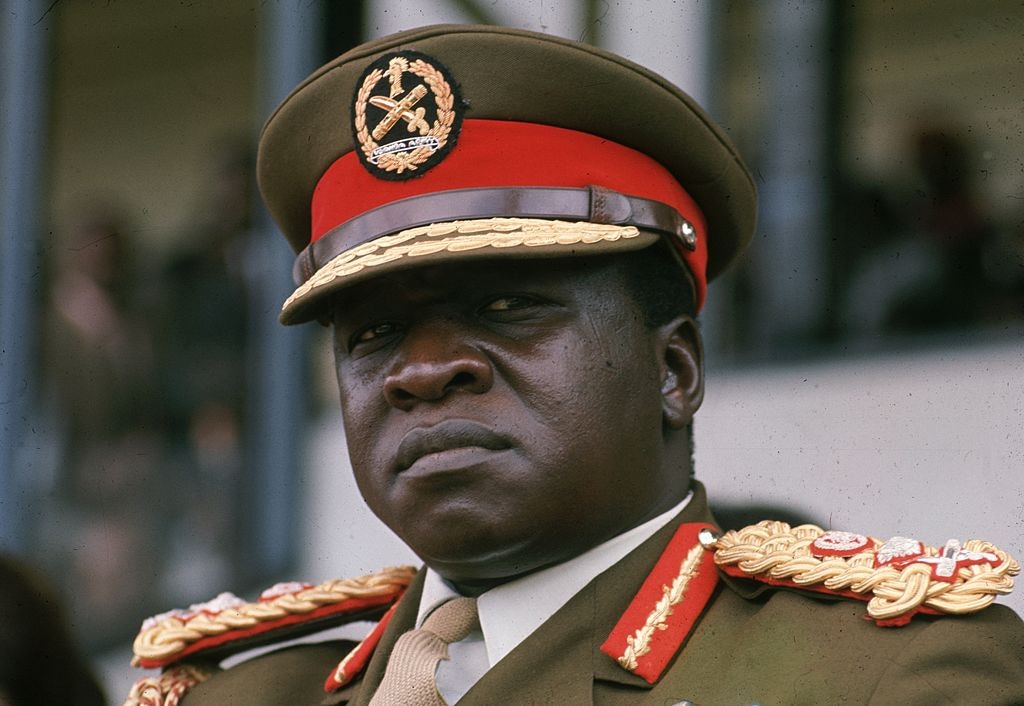
Perceptions of the Uganda Nubians were to change again during Idi Amin’s regime (1971-1979). Some people labelled them as “Amin’s men”. Amin came from the Kakwa ethnic group, a Sudanic speaking Nilotic group in the West Nile part of Uganda. He identified himself as a Nubi-Kakwa and elevated the Uganda Nubians to crucial positions in the army, police, business, and other fields in his military government.
With the fall of Amin’s notoriously brutal regime in 1979, many Uganda Nubians were targeted as having been his accomplices. Nubian settlements were destroyed, bank accounts were frozen and shops belonging to Nubians were looted. Some Nubians fled into exile in neighbouring Kenya, Sudan and Tanzania.
Those who remained in Uganda suffered from marginalisation and discrimination. Some of them changed their names and those of their children to disguise themselves as other ethnic groups to get access to government services.
End of marginalisation
The Uganda Nubians were able to return to Uganda and resettle after President Yoweri Museveni and his National Resistance Movement took over in 1986. The framers of the 1995 constitution recognised them as Ugandans since they had settled in Uganda before 1926 (the deciding date for the country’s boundaries and citizenship). They became known as the Nubi.
As citizens of Uganda, the Nubi were at last able to obtain national identification cards and passports. They now also enjoy voting rights. They became accepted by other ethnic communities, for example through intermarriage. This has eased ethnic tension and conflict in areas where the Nubi settled.
The 2014 statistical report puts the Uganda Nubian population at 28,772 out of about 34 million Ugandans.
The history of the Nubi is an example of how ethnicities change and are not limited to geographical boundaries. They are socially created by the power centres of the time.


