Gender inequality in education is still an issue in Kenya and South Africa:
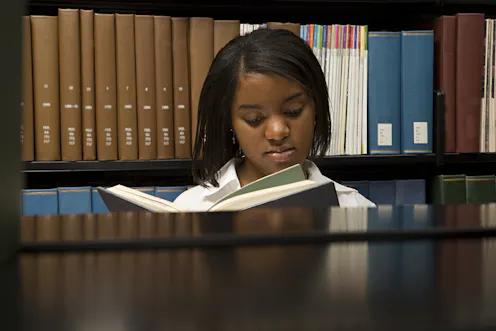
Women still aren’t fully represented in higher education in Kenya and South Africa, despite changes in law and policy over the years. This failure of the education sector to harness and develop women’s talents curtails their ability to contribute meaningfully to society.
The constitutions in both countries guarantee every citizen a right to education. This is regardless of gender, sex, or social class. Higher education in particular holds great value for the public good. It is central to the development of individuals and nations.
But there is still uneven development between genders. In Kenya and South Africa women still struggle to access institutions of higher education. And they also struggle to succeed in science, technology, engineering, and mathematics (STEM) related courses, and to progress into postgraduate studies.
I address this in my research paper. I focused on Kenya and South Africa because both countries have progressive legal frameworks. My aim was to find out how these progressive frameworks translated into real life opportunities for women.
My study found that although both countries have progressive policies that support gender equality and equity, things are different on the ground. Higher education still excludes many women, in particular those from marginalised communities.
Progressive policies such as gender equality policies and equity clauses have been enacted in both countries. But gender skewing is still prevalent in public higher education institutions in terms of throughput, completion rates, areas of study and enrolment in postgraduate studies.
The difficulties particularly black women face in higher education are a continuation of the social conditions they live under. This includes poverty, racism, geographical positioning and institutional cultures that still have a gender bias, and sexism.
The South African story
In South Africa’s higher education institutions, systemic gender inequality is seen through through skewed enrolments, stereotypical course selection, and poor career progression.
Historically, black South African women suffered “triple marginalisation”, precipitated by race, sexism and social class.
One of the consequences was that very few black people had access to higher education despite the fact that they made up 70% of the population. Before 1994, black students, both male and female, accounted for 9% of total enrolments in higher education. The apartheid system, which was supported by a male-dominated political order, made it difficult for black women to access and participate in education meaningfully.
South Africa’s post-1994 democratic reform agenda addressed gender marginalisation through law and policy. Affirmative action was formalised through new laws that were designed to enable formerly marginalised groups to access courses such as medicine and engineering through a quota system, and improved general access to higher education.
The Kenyan story
Women and girls are progressing steadily in the Kenyan education systems. But they still encounter challenges. While the Kenyan government has created policies that offer equal opportunities to all, it has paid much less attention to the way policy is converted into action.
The gender gap in primary education is not as wide as in higher education. According to the Ministry of Education records, of the 85% of learners who progress from primary to secondary school, 30% proceed to higher education. Women account for just one third of total enrolments.
Kenyan women have been on the margins of power for decades. This can be ascribed to inferior education, lack of opportunities, sexism, ignorance and demeaning cultural practices that relegated them to privates spaces.
Gender inequality is not limited to higher education. It permeates all tiers and levels of living and learning.
For example, girls are more likely to drop out of school than boys due to factors such as poverty, insecure learning environments, the high cost of education, and long distances from education institutions. These factors affect boys too, but they give rise to additional risks in the case of girls, such as early pregnancies and sexual abuse.
Other challenges are the burden of household chores and family responsibilities assigned to girls.
As a result, fewer girls than boys are enrolled in primary and secondary schools and fewer are eligible for higher education. This limits their access to future job opportunities.
Redressing the balance
In both countries, legal mechanisms and policy interventions have given women better access to higher education. But there are still reasons for concern. Transition and completion rates have to improve, and there has to be a balance in fields of study and fairness in terms of progression at the work place.
In addition, governments need to address the root causes of marginalisation.
As a start, the Kenyan and South African governments need to tackle poverty and enforce women’s rights. Following on from that a shift is necessary to change the way society thinks about how it treats its women.
In addition, higher education institutions ought to rethink their strategies and policy goals to ensure that women are benefiting from reforms. For their part, NGOs and educational institutions can do more to tackle gender based violence, ensure safe learning spaces and educate communities about dangerous cultural practices that promote sexism and marginalisation of girls and women.
The shift is possible if all stakeholders can work together through harmonisation of their programmes.

Beatrice Akala does not work for, consult, own shares in or receive funding from any company or organization that would benefit from this article, and has disclosed no relevant affiliations beyond their academic appointment.
Source: The Conversation – Articles (AFRICA)
Read more on The Conversation.
Join the fun: Add Your event | Submit a Press Release | Add your listing.


