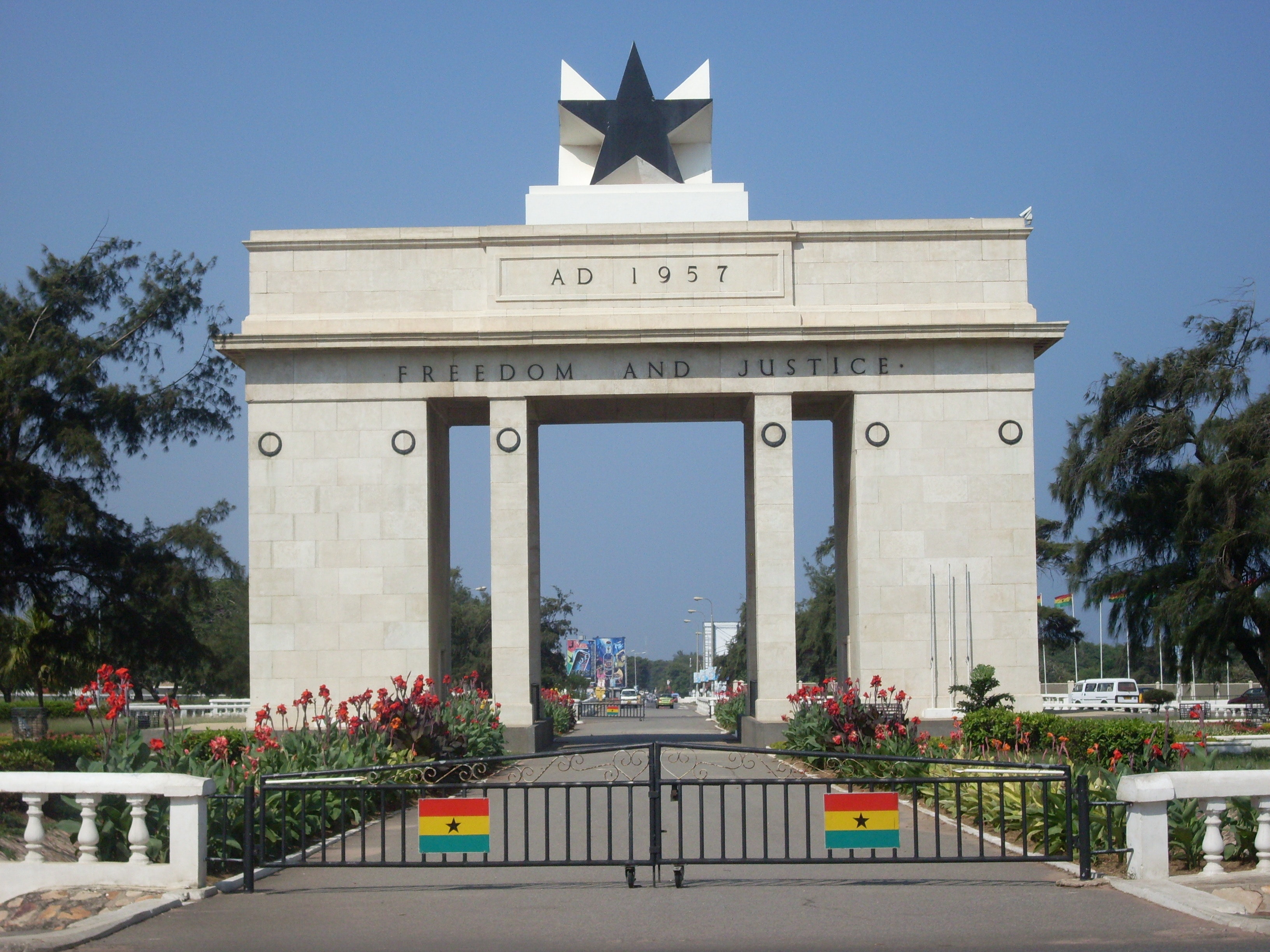
Ghana has had four constitutional republics since independence. However, only the Fourth Republic – 1992 to the present – has remained relatively stable. This is partly due to the fact that its institutional arrangements are different to earlier more turbulent efforts.
Ghana is recognised as one of Africa’s model democracies partly because its constitutional arrangement appears robust and open to revision. It nurtures competitive politics and has dispute resolution mechanisms.
Across different countries and over time in Africa, various models of the state – federalism, consociation, unitary – have been trialled . Most, if not all, have been truncated by multiple bouts of precipitous and catastrophic failures, transitions and relapses.
Ghana’s model of the state has primarily been unitary and has equally suffered several breakdowns and resuscitations.
In a recent paper I interrogated Ghana’s institutional design efforts. Using extensive archival data, local media, expert interviews and secondary sources, my study examined the power dynamics between the Ghanaian state and society over time.
I found that a primary factor that has run through Ghana’s political history is the imbalance between the power of the state and the legitimacy it gets from civil society. It was in the Fourth Republic that the country’s institutional design efforts began to look as though they had found a good balance between the appetites of the state and the motivations of society. This includes the arrangement of a tripartite counterbalancing between the executive, legislature and judiciary.
Underpinning this arrangement is the assumption that the state has the capacity and willingness to keep itself in check. But this has proven not to be the case, even with the added filter of the four-year electoral cycle.
In my view, the best promise for sustaining stability is if Ghana’s civil society contributes to taming the power of a strong state. But this will need to be accompanied by reforms to curb the power of the executive. The changes should include overhauling the way in which public officials and members of the judiciary are appointed and dismissed.
A flawed fourth republic
The Fourth Republic of Ghana has two flaws.
First, the three arms of government – executive, legislature and judiciary – must keep each other in check. But the people of Ghana are only invited to vote in four-year cycles. In this arrangement, society must trust the state to exhibit goodwill during inter-election periods. But the state is not egalitarian, neither is it single-faced; it is janus-faced, which means it can exhibit both goodwill and bad faith. Often, it has exhibited bad faith when society was not looking on dedicatedly.
The second flaw, which is the more problematic, is the apportioning of unfettered power of appointment and dismissal to the executive. This means that it disproportionately overshadows the two other arms of government. In addition, the burden of gratitude that appointees feel towards the executive makes them unable (often unwilling) to constructively criticise it.
The American-style three-arm government strategy is used to counterbalance power between the executive, legislature and judiciary. Each is also mirrored at the national, regional and local assembly levels. The judiciary has no cap on tenure and has mandatory retirement at age 70 as seen in article 145 of the constitution. Officers of the other two arms have four-year renewable mandates, although the executive’s is renewable only once.
All the arms of government have the power to propose amendments (through legal or constitutional instruments) or interpret provisions in the constitution. However, I would argue that the power at the disposal of the executive (president) is excessive.
The president must appoint, and can dismiss, judges and the Chief Justice. He also appoints the Electoral Commissioner, the Auditor General and literally every public office holder. The executive must also appoint more than 50% of cabinet ministers from the legislature.
The Attorney General and Minister of Justice is an appointee of the executive and a mandatory member of the Cabinet. It’s worthwhile noting that no person holding this post since the inception of the Fourth Republic has initiated any legal proceedings detrimental to the ruling government’s interest.
It is not only the executive that is problematic in this arrangement; the legislature is also complicit, especially due to the symbiotic relationship between it and the executive. With the constitution mandating the selection of more than half of cabinet ministers from Parliament, both arms of government have always worked together as uncritical partners.
The equal number of governing and opposition Members of Parliament in the 8th Parliament that sat for the first time in January 2021 did not make much difference. This was despite fierce resistance to government’s unpopular Electronic Levy Bill in December 2021 and January 2022. During the vetting of ministerial nominees in 2021, Parliament approved all of them. This was although some appeared not to even understand their nominated offices.
Recommendations
To consolidate the longevity of Ghana’s Fourth Republic, I propose the following.
First, all stakeholders must pursue a decoupling between the legislature and the executive. The passage of the Private Members’ Bill (a proposed legislation introduced by a Member of Parliament in their private capacity, as opposed to one by a minister of state on behalf of the executive) by the seventh Parliament (2017–2021) is a good first step.
Second, civil society – even though it’s diverse – must continue to claim its place at the table. It must do this by building relationships among its constituents and with the state. It must use its affinity with the public and take advantage of the vulnerability of the political class during electoral cycles to set a national agenda and negotiate state responsiveness to public concerns.
In addition, citizens must elect the chief executive officers of local assemblies rather than the president appointing them. This will make those who are elected feel accountable to local electorates instead of the executive. This will require an amendment to Article 243(1) of the constitution. Currently it states that the chief executive must be appointed by the President with prior approval of not less than two-thirds majority of the members of the Assembly.
Finally, Parliament and civil society should collaborate to streamline the appointment and dismissal of public officials and members of the judiciary to make it difficult for the executive to terminate or manipulate appointments for political expediency. This should include putting a cap on the number of Supreme Court judges.
These steps are necessary because the state does not have the capacity – or the willingness – to keep itself in check. Nor has it shown a commitment to put society’s interest first.


