Local governments across the world have turned to what is called “urban innovation” in a bid to manage urban problems. The term refers to the use of smart data collection, digital infrastructure facilities and services that meet intertwined urban challenges. These include housing, water, sanitation and electricity provision.
But policy making and research focus on innovations in the developed world. What’s not been explored are the practical ways people find to live in poor, marginalised, informal and crowded urban areas. For example, how they manage water and sanitation provision and maintenance.
In our recent paper we argue that the solutions these residents come up with to make everyday urban life livable are a form of social innovation.
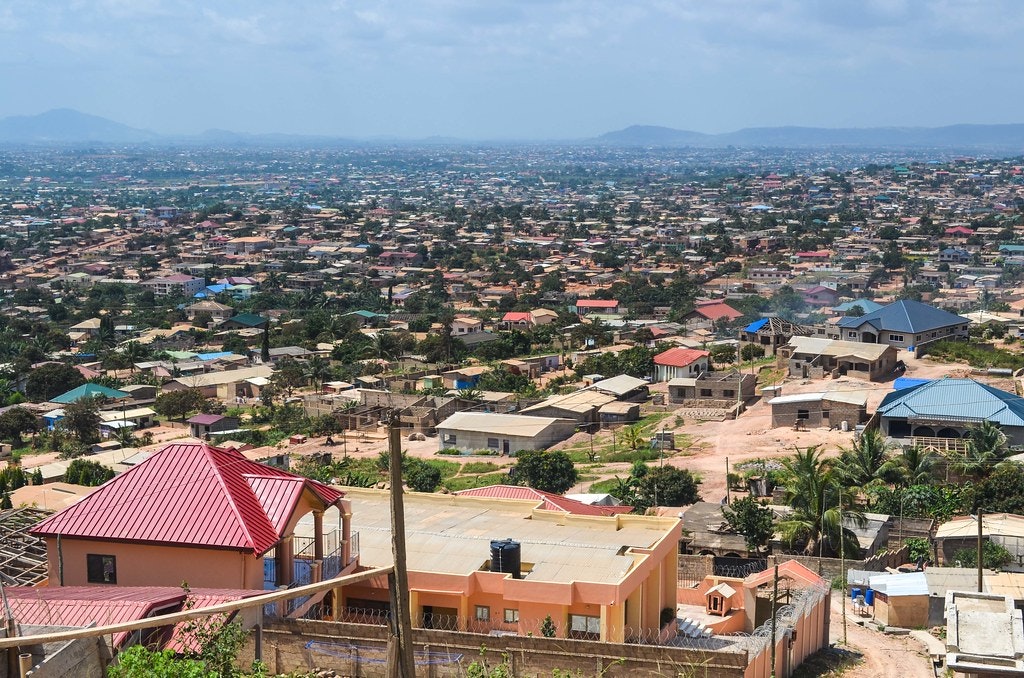
We conducted our research in Accra, the capital of Ghana. It’s estimated that about 45% of Accra’s population live in informal areas with high poverty rates, and extremely limited access to basic facilities such as water and sanitation.
We found that social innovation helped people solve many challenges. It also created collaborations and relationships that enhanced people’s capacity to act to address pressing issues for the common good.
We argue that improving informal settlements requires recognising the inventiveness of these initiatives. And that they should be integrated into urban planning and policy. We conclude that recognising and working with innovative practices in informal areas of Accra is a pathway to a people-centred and inclusive approach to urban planning.
The research
Our research set out to explore residents’ collective infrastructure management in the indigenous township of La Dade-Kotopon in Accra, Ghana. We conducted our research in an indigenous quarter of La old township. This area is part of the over 70 informal or slum communities identified by the UN-Habitat in 2011.
The township is densely populated. Access to water and sanitation is severely limited, mostly served by private vendors. Housing conditions are relatively poor.
We explored how people were managing the challenges they faced every day through the lens of social innovation. For us, social innovation refers to:
-
a locally embedded action for solving social challenges
-
initiatives that involve creatively reassembling existing resources or assets to achieve specific goals
-
the use of technology
-
the use of soft resources such as social capital and traditional knowledge or craftsmanship.
Our study revealed a deep-rooted, culturally embedded and socially constituted process for the management of water and sanitation. In particular, there were three main aspects of collective infrastructure management.
Provisioning: Residents had instituted a community-based decision-making structure to identify and prioritise infrastructure needs. For instance, every Sunday, local residents met in one of the eight family houses along clan lines to discuss infrastructure needs. These kinds of clan-based needs assessments were taken by clan representatives (local elder, secretary, treasurer) to the community-wide leaders’ meeting. This meeting, organised every other week on Thursdays, collated all identified needs from the clan level. These needs become the subject of deliberations with community representatives to define priorities and resources. The youth and women’s committee made inputs and contributed to discussions designed to prioritise urgent needs for certain groups of people, especially women and children. These priorities were then submitted to the quarter chief, who discussed them with the divisional council for preliminary approval. They would be sent back to lower-level clan meetings for any final discussions.
Financing: Residents had set up multiple financing arrangements to carry out water and sanitation projects. For example, there was the clan fund, which was a monthly contribution by members of each clan. There was a fixed contribution. But those unable to pay had a flexible and incremental system to contribute over time. The combined clan funds were deposited in a community fund at a local bank. The community also appealed for donations during one of the annual festivals as a source of capital to add to community funds. These were used to construct a sewer line, public restroom and toilet facilities.
Construction: To reduce labour costs, the community used local artisans such as masons, carpenters and plumbers for water and sanitation projects. Where necessary, outside technical expertise was sought. But communities maintained that there should be at least one artisan participating in each project to ensure skill transfer to the community.
Maintenance: This took two forms. First, maintenance by proximity: the residents living close to a facility took responsibility for maintenance on a rotational basis, with a wage paid by community funds or user fees. Second, the appointment of “caretakers” in the community to supervise and manage the facilities.
Recognising and supporting bottom-up informal innovations
The mechanisms that residents used to manage water and sanitation infrastructure highlighted examples of socially innovative practices in informal settlements in Accra.
Urban and development planners need to move away from only looking to technology innovations from the global north. Instead they should also learn from the ways in which informal residents have been organising themselves to address their everyday challenges. In other words, to focus on and integrate what people are doing rather than what ought to be, in order to build sustainable and inclusive cities.


