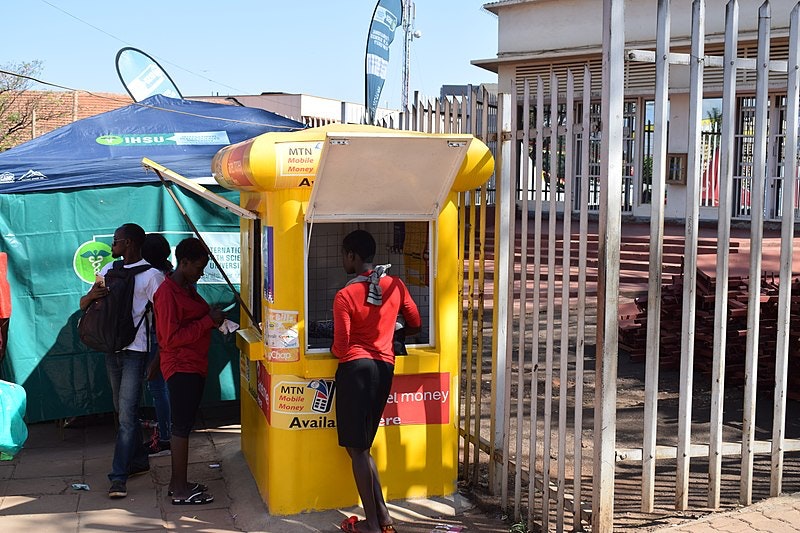
Mobile money — a technology that enables financial transactions through mobile phones without a bank account — is driving financial inclusion, especially in developing countries. It gives more people a chance to use financial products and services.
In Ghana, there is a policy to encourage the use of mobile money and reduce the flow of cash. And mobile money has proved popular because of its advantages.
People can transfer money or make payments wherever they are, in a simple, fast, convenient and affordable way. Mobile money has improved the efficiency of transactions and initiated some changes in traditional banking in the country. By 2017, Ghana had over 11 million active mobile money accounts.
But in recent times, incidents of mobile money fraud have increased. Statistics from the cybercrime unit of the Ghana Police Service showed over 300 reported cases in 2019.
As a result, MTN, the biggest mobile money operator in Ghana, has introduced a new policy . It requires proof of identity (ID) before a customer can withdraw cash. Valid forms of proof are a driver’s licence, voter’s ID, passport, Social Security and National Insurance Trust ID, National Health Insurance card or Ghana card (national ID). All mobile money agents will have to select the ID type and enter the ID card number presented by the customer before completing the transaction.
There are two problems with this: it excludes people from financial services and it encourages the use of cash. There are better ways to address fraud.
The ID problem
According to Ghana’s National Identification Authority, only about 15.5 million out of the population of 30 million have been registered with formal ID. The new policy potentially excludes these individuals from using mobile money.
Research shows that people without formal ID tend to be the poor, living in remote villages, where mobile money is their only access to financial services. They rely on mobile money agents for remittances.
In Ghana, mobile money is becoming the favourite channel for financial transactions and this new policy means that people need to carry IDs every time. It is difficult to obtain and replace IDs in Ghana because of bureaucratic processes. So this policy could create inconvenience, which could discourage customers from using mobile money.
I’ve done research on what influences behaviour related to financial technologies. One of my findings is that people are more open to using mobile money when they expect the effort of doing so to be small. On this basis, I believe they will not use mobile money if there are hindrances like constantly providing ID. Faced with this effort, they may revert to the use of cash — thereby derailing Ghana’s financial inclusion progress. This new rule about presenting an ID has good intentions but might produce unwanted effects.
The new policy also encourages the conversion of mobile money to cash, which works against the government’s agenda of discouraging cash. The government encourages electronic payment to widen the tax net and to fight corruption and robbery. Mobile money policies should support this agenda instead of undermining it.
Alternative solutions
Providing ID before withdrawals will not solve mobile money fraud. Fraudsters can easily use fake IDs for transactions because of the limited integration of all national databases. Also, IDs in Ghana are not properly linked to residential addresses, so it will be difficult to trace perpetrators even when mobile money fraud is detected.
Rather, focus should be on the use of emerging technologies like artificial intelligence and machine learning to develop algorithms that can automatically detect, flag, and temporarily block potential fraudulent transactions for further investigation.
Similarly, there’s the option of two-factor authentication. This allows people to use authentication apps or text messages to validate transactions before they are authorised. It gives people another level of security in addition to personal identification numbers to fight fraud.
Another solution available to fight fraud is to eliminate fees for inter-mobile money transfers. This will encourage e-funds to remain in circulation, which makes it easier to trace fraudulent funds and uncover fraud networks. Fraudulent funds that are not withdrawn can be easily traced.
Ghana also has a universal QR code payment technology to encourage cashless transactions. MTN needs to work with the Ghana Interbank Payment and Settlement Systems, merchants, petty traders, drivers and others to roll out the technology throughout the country. This would enable more people to use mobile money to pay for daily activities.
Lastly, more could be done to improve people’s awareness of how mobile money fraud works and can be prevented. And perpetrators should be prosecuted.
Using this policy of “no ID, no cashout” will only derail the financial inclusion gains and Ghana’s cashless agenda. Mobile money operators should use advanced technologies to proactively foil fraudulent transactions instead of relying on manual interventions.


