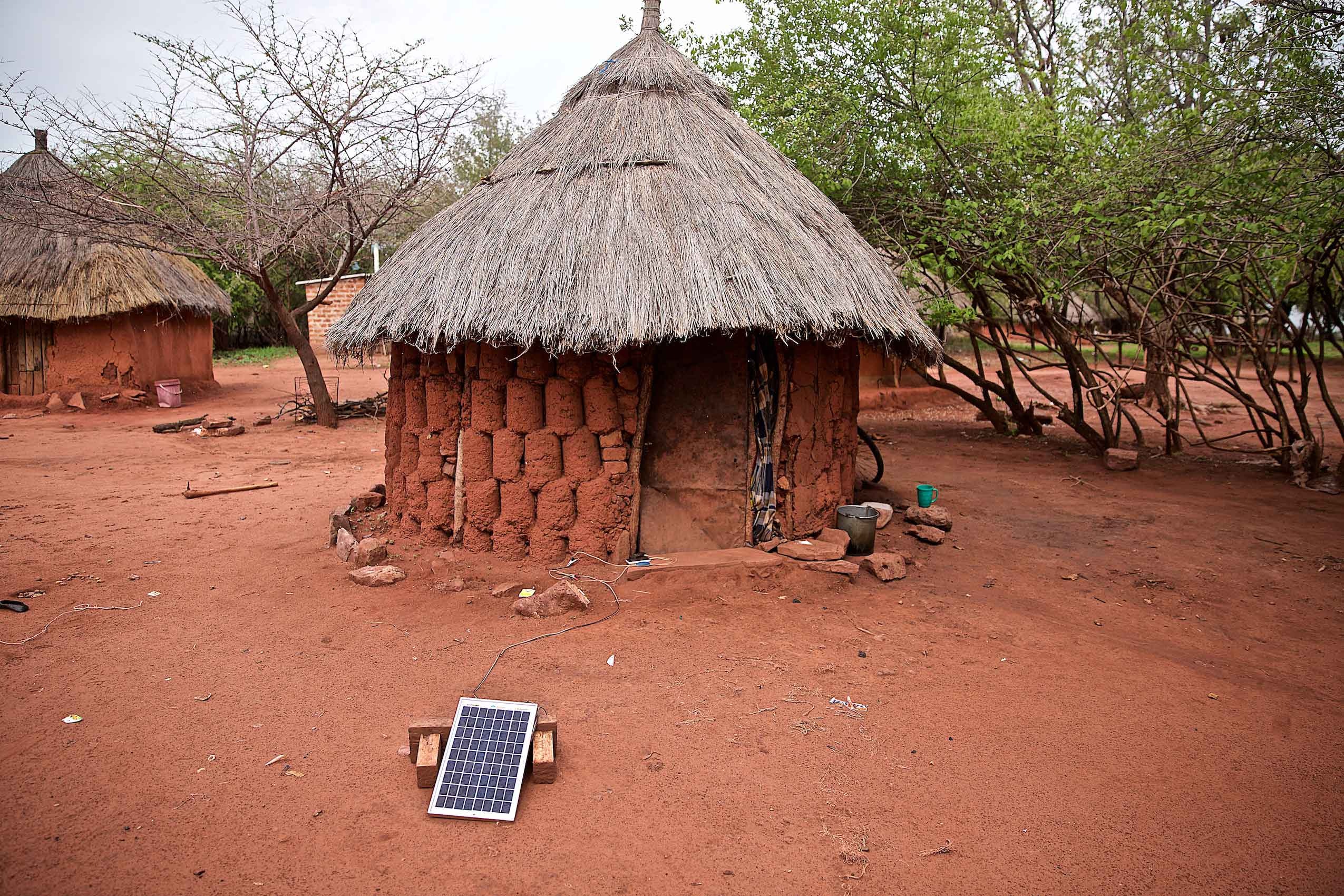
Thirty years ago, ending energy poverty wasn’t among the world’s development goals. Neither the 1992 Rio Declaration on Environment and Development nor the Millennium Development Goals 2000-2015 placed it on the agenda.
That has since changed. Goal 7 of the sustainable development goals (SDGs) is “universal access to affordable, reliable, sustainable and modern energy services” by 2030. But the strategy for tackling energy poverty favours growth of energy generation. That is, increase in renewable share and improvement in energy efficiency – a line of reasoning which positions energy poverty as a problem of production.
In other words, the thinking is that if more energy is produced, more people will have access to sustainable modern energy services and products.
Using Zimbabwe as a case study, I sought to understand whether this was so. Would an increase in energy generation address energy poverty in the country? My study found that the solution doesn’t lie in the number of accessible commodities (kilowatts of electricity) and what people can do with them.
In fact, I found that continuous growth of energy production and consumption, even from low carbon energy sources, could create more problems than solutions. At the heart of the problem is that SDG7 operates in an environment where the idea of development is pinned on economic growth, capital accumulation and increased consumption of goods and services.
Flaws in the energy goal
My analysis was informed by a series of interviews with participants in the Zingondi Resettlement Area in Manicaland province of Zimbabwe. I also interviewed key informants such as power utility employees, energy ministry officials and reviewed related policies. Interviewing these participants was important because policy-making often fails to integrate social development, user perspectives and existing institutional structures. The focus tends to be on technical and financial factors alone.
Asked what the government’s plans were in dealing with energy poverty, interviews with the policy elite (government officials) revealed that technology and efficiency would turn the tide. Hence, the country’s focus on increasing energy projects.
While compelling, for two reasons, this is akin to the ostrich approach – a refusal to face reality or recognise the truth. First, more often than not, renewable plants are installed for reasons other than demand growth, such as international and national clean power targets. Second, when politicians fail to deliver, they turn to technology as a solution or excuse. This is politically convenient because a technocentric approach hides and contradicts the challenges that affect households. Consequently, the energy poor would then pin their hope on technology to solve their problems.
A flawed approach
Drawing on the experiences of participants in my study, it emerged that the application of SDG7 on energy to Zimbabwe is flawed in three main ways.
First, its emphasis on efficiency and growth of energy generation is an over-simplification. Growth doesn’t equalise development or access to energy by the poor. Yet the quantity of energy used by economies continues to increase.
Zimbabwe’s national renewable energy policy is instructive. It addresses climate change concerns and the country’s commitment to the world to reduce greenhouse gas emissions. But it also aims to help turn the country into an upper middle income economy. It assumes that economic growth will support technological innovations that solve energy poverty.
Second, growth oriented national policies are of little relevance to the energy poor. Increased production of renewable energy, thanks to technological advancement, doesn’t change anything about distribution. For example, even if additional energy production capacity was added to the national grid through renewables, questions remain about whether access to it will be equitable and affordable.
Read more: How socio-economic conditions shape renewable energy uptake in Zimbabwe
In addition, access and affordability depend on the effectiveness of the power utility, the Zimbabwe Electricity Supply Authority. Regrettably, issues of corruption, rent-seeking and brain drain at the power utility haven’t helped matters.
Pinning hope on “modern” energy as the solution for Zimbabwe is overly simplistic. Other factors play a bigger role in shifting consumption patterns. These include electricity connections and household priorities: profoundly political and social factors. SDG7 fails to fully recognise the sensitivity of context.
Third, at a global level, it seems the problem isn’t about production and generation of energy, but of inequality. Any technology can be co-opted and perverted by capital. Global finance to developing countries in support of clean and renewable energy had risen to US$21.3 billion in 2017. But these investments don’t always aim to ensure universal energy access; they aim for high returns over short time frames.
Read more: Why renewable energy won’t end energy poverty in Zimbabwe
What is the real problem?
The problem is a crisis of overproduction in the developed world, where some markets have become saturated. This technologically advantaged class is impelled to move to locations where costs are lower and profits higher.
There’s evidence that the developing world has outspent richer countries on renewable energy investment.
The system of global capitalism misrepresents political issues as technological ones. For instance, it equates sustainable energy with renewable energy, as implied by SDG7. Efficiency that’s highlighted by targets and indicators appears to be exclusively concerned with the efficiency of energy appliances. It ignores the efficiency of means of energy conversion, which is the transformation of energy from forms provided by nature to forms that can be used by humans.
This is a serious oversight because renewable energy has its downside.
First, it may conflict with other aspects of protecting environmental health, a phenomenon known as green-green dilemma. Second, it can create problems such as the environmental hazard that solar panels and solar lanterns pose as e-waste in dumpsites.
Going forward
Chasing technological efficiency, without addressing ever-increasing energy consumption, is missing the forest for the trees. Rather, energy efficiency must be dealt with along with problems of inequality and inequity.
Currently, SDG7 as a global agenda for energy development is tinkering on the periphery. Should the world continue with business as usual, neither conventional nor renewable energy will challenge capitalism.


