Popular and academic literature is replete with examples of how to cope with daily stresses. Mental health professions have also long researched and implemented strategies to deal with burnout from workplace stressors.
Coping with stress is not a new phenomenon. But COVID-19 and the responses to the pandemic have increased our attention on how people and systems cope with stress-inducing shocks.
This should not surprise us given the impact of COVID-19 on almost every aspect of our lives. There are indications that many people and countries are still struggling to emerge from its shadow.
Resilience is a relatively new area of study in the health sector and is explained as the ability of an individual to withstand and recover from adversity using their inner strength, optimism, and being flexible and competent.
Everyday resilience is important to ensure health workers can cope with daily stressors, and take action to change their circumstances when they are confronted with challenges. At a health system level, everyday resilience means that health workers can deal with the systemic challenges in their work environment.
We argue that everyday resilience is needed at two levels: healthcare workers – who mostly bore the brunt of the pandemic in their working and personal lives – as well as the health system.
We draw on research around resilience in the health sector to highlight why it’s important to focus on it for health workers and for the health system as a whole.
Health workers
Health workers face trauma daily. Their line of work often requires them to make life-saving decisions in the face of significant resource limitations as well as high expectations of patients, families, communities and their managers.
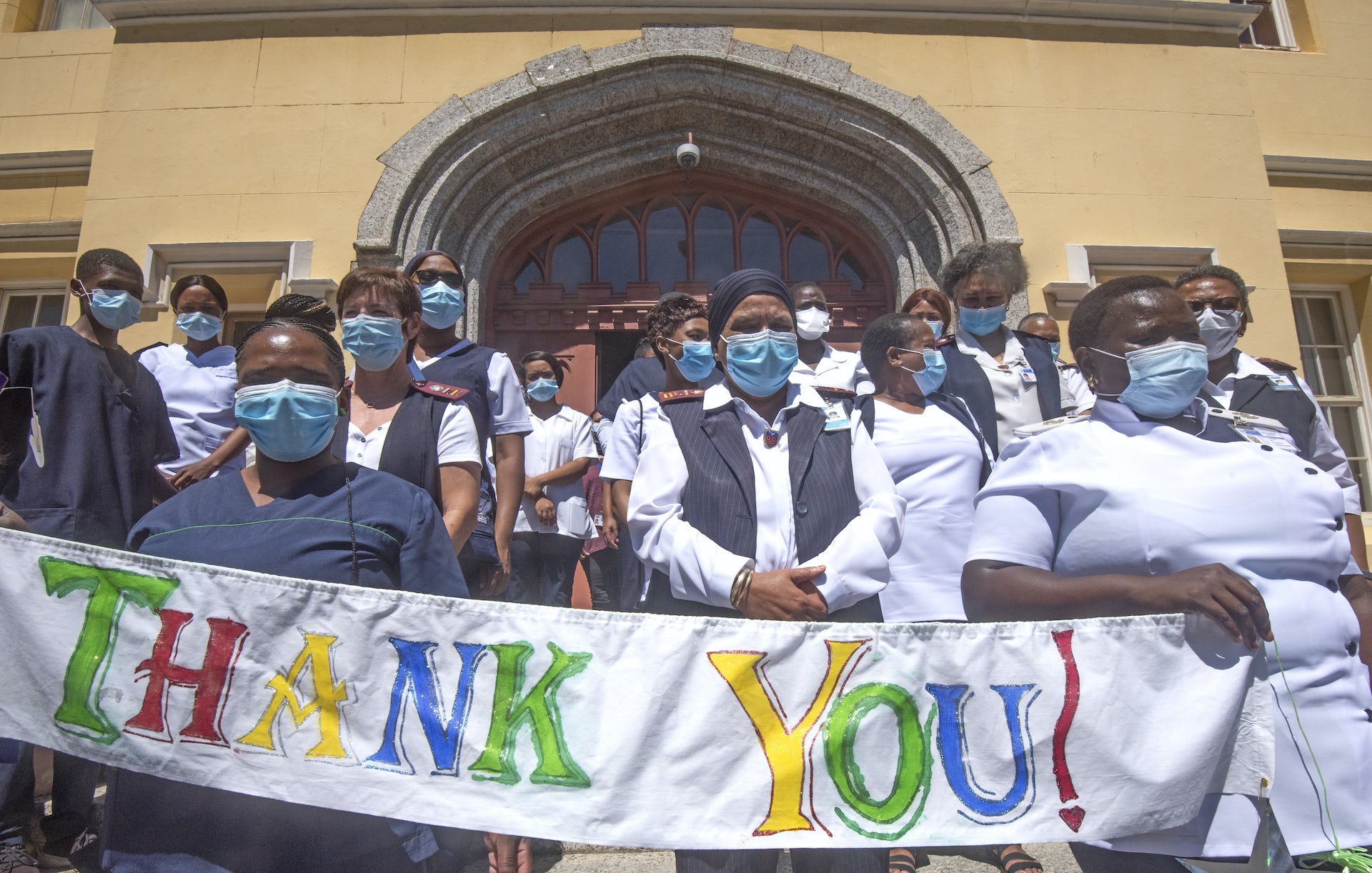
The rate of burnout in health workers is high throughout the world. This was exacerbated by the COVID-19 pandemic which contributed to alarming levels of anxiety, depression and traumatic stress among South African health workers.
There have been suggestions about how to build resilience in health workers, including medical students, against daily workplace stresses.
There’s an example of how COVID-19 had an impact on the health workforce from clinical associates at the University of Pretoria’s Health Sciences Faculty who supported mining companies. About 100 clinical associates conducted COVID-19 screening, testing, follow up and vaccinations. They performed quarantine or isolation ward duties and provided general healthcare services to miners.
During the peak COVID infections periods the clinical associates worked an average of 18 hours per day. They took huge physical and emotional strain. Many of them also had to deal with severely ill relatives and deaths. They met every evening via a virtual call to discuss their experiences and complex cases. This provided an outlet for their emotional strain and an opportunity to improve their clinical understanding.
Because of the direct access to the emotional support provided by the university staff, these health professionals could readily find support when they felt overwhelmed. Halfway through the pandemic, a team of private occupational therapists conducted an eight-week online group therapy programme with the clinical associates, called the Unsung Heroes programme. Conducting this form of therapy online was unheard of before the pandemic, and included both group therapy sessions as well as individual consultations. Clinical associates afterwards reported how much these sessions helped them to cope with the burden of COVID.
But the focus on building resilience at the individual level has been criticised as focusing on the symptoms rather than the root causes. For example, studies have argued that building resilience in frontline health workers may hide the systemic challenges.
These might include a shortage of personnel, inadequate equipment and medicines, and organisational cultures that limit innovation and adaptation. A more comprehensive approach to building resilience would, instead, focus on what some have called everyday resilience, based on everyday capabilities.
What does such a focus offer the health system?
Borrowing from the ideas of colleagues working with the London School of Tropical Medicine and Hygiene, everyday resilience is founded on
the combination of absorptive, adaptive and transformative strategies that actors in systems adopt in responding to strain.
Transformative resilience ultimately implies changing the system so that it can continue to change in the face of multiple, future, unpredictable challenges.
The literature suggests the need for further research into the notion of transformative resilience. But we already know a lot about what can be implemented even as the world focuses on the structures, practices and routines needed for pandemic preparedness and control.
There are many proactive (adaptive) examples from South Africa and Kenya of how primary healthcare workers coped before the COVID-19 pandemic. These examples illustrated personal agency as well as system changes initiated at local level. For example the temporary reintroduction of user-fees in Kenya, agreed with local communities, until government funding was again transferred to ensure that primary healthcare services were not disrupted.
In South Africa there are examples of new forms of collaborating across organisations to work towards shared goals. There are also new ways of managing and organising meetings to support learning and enable mutual accountability among colleagues in primary care settings.
Across countries, respectful leadership practices that empowered frontline workers and strengthened relationships were also found to be very important to everyday resilience.
Similarly, during the COVID-19 pandemic, the Western Cape Department of Health in South Africa introduced the concept of daily huddles. These daily hour-long meetings allowed for key issues to be presented and discussed. They included managers from all levels of the health system – including the private health sector – as well as managers from other sectors of government. As the pandemic receded, they happened less frequently.
The meetings enabled managers to work across silos in the health system across administration and health programmes, for example. Everyone that participated in the huddle could do so freely without sanction. This reduced the hierarchy within the health system.
The presentations in these huddles were evidence-based. They illustrated the importance of real-time information as well as use of evidence for decision making.
Our colleagues who were part of these huddles reported that they used these to build on long-standing initiatives in the province to strengthen the health system.
Organic learning systems
The COVID-19 pandemic highlighted various challenges to health workers and health systems. These are foremost in our minds. But the sector has faced similar challenges over many decades.
There are many examples of how to strengthen resilience that we can learn from, and scale. What is clear is that unless health systems are organic learning systems and continuously focus on building systems for resilience, we may run the risk of learning anew each time health workers and health systems face a catastrophic event.
Building a strong health system that focuses on everyday resilience may be the best way to deal with everyday challenges as well as pandemics.


