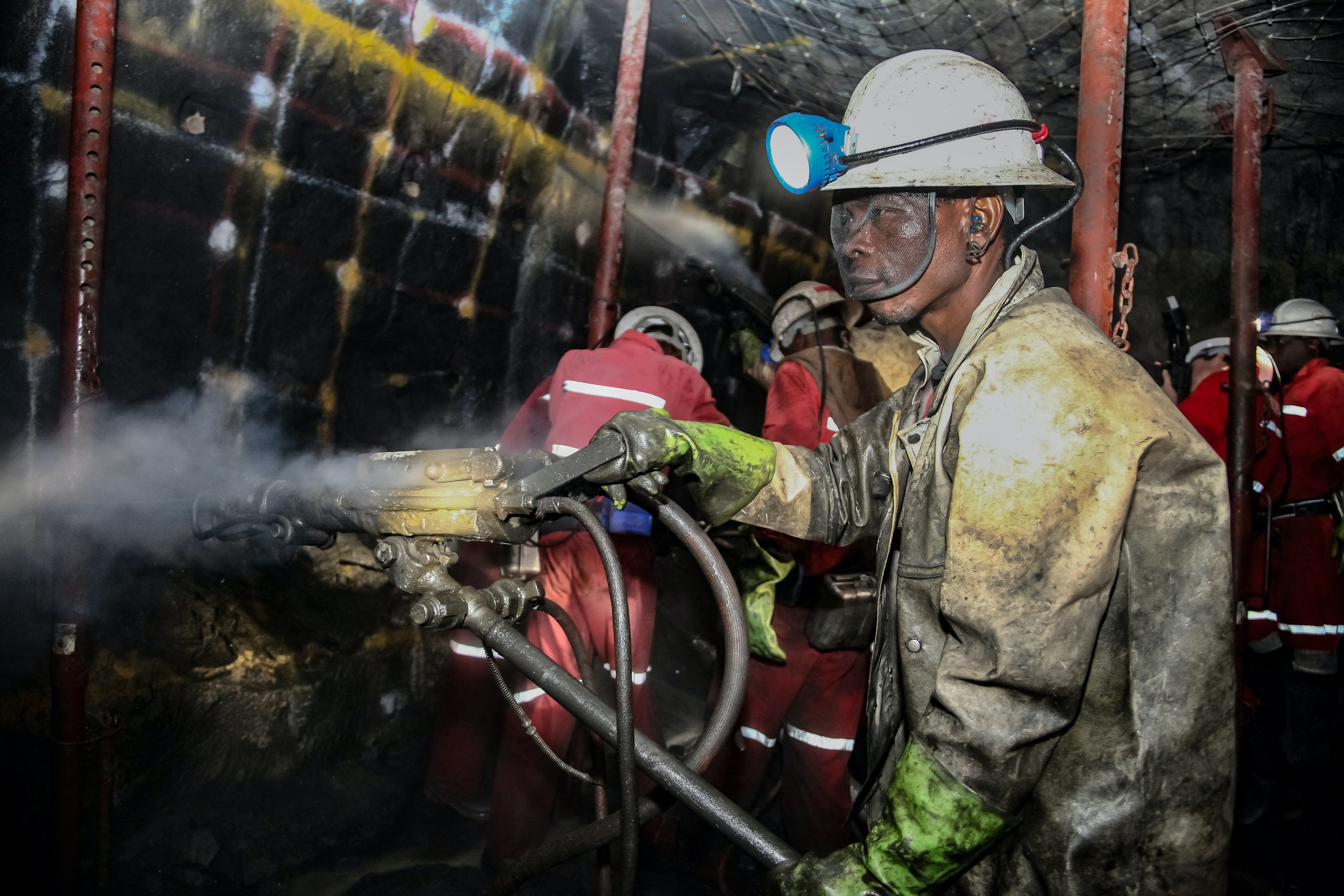
South Africa’s mining industry has long been an important part of the country’s economy.
In 2020 alone, despite COVID-19, mining contributed R361.6 billion (almost 20 billion US dollars) towards South Africa’s gross domestic product, a share of over 8%. The industry employs 451,000 people.
But despite its value and the regulations in place to protect workers, it has been criticised for a poor record of health and safety.
The South African constitution guarantees workers’ right to an environment that is not harmful to their health or wellbeing. Employers must provide a reasonably practicable working environment that is safe and without risk to the health of employees.
The mining sector has been accused of neglecting the fundamental rights of most mineworkers. It has failed to implement adequate occupational health and safety regulations on a number of fronts, including monitoring new occupational diseases and injuries.
The country’s miners face a number of hazards. These include fatalities, silicosis (a lung disease caused by inhaling silica dust in gold mines) and occupational noise-induced hearing loss.
Hearing conservation programmes were introduced nationwide in 2003 by the Mine Health and Safety Council, an organisation comprising labour, the state and employers. But in 2013 the industry conceded that these were not having the desired impact of reducing the new cases of occupational noise induced hearing loss.
As a response to this admission, we conducted a study to understand how these programmes were being implemented in the industry and to identify areas for improvement.
We found a number of gaps in these programmes. There were no clearly defined action plans. We also found flaws in the formulation of hearing conservation programmes. Intervention programmes need to include occupational audiologists. Furthermore, the mining industry needs to be accessible for research purposes.
Noise-induced hearing loss
The Leon Commission in 1995 was the first inquiry into occupational health and safety in South Africa’s mining industry for more than 30 years. Eventually, in 2003, hearing conservation programmes were rolled out throughout the industry.
The programmes targeted two key areas. The first stated no employee’s hearing should deteriorate by more than 10% from the baseline by December 2008. The second was to ensure that, by December 2013, the total noise emitted by all equipment would not be higher than a sound pressure level of 110 dB(A).
Hearing conservation programmes are complex and need an integrated approach. These programmes require a range of actions to be taken. For example employers must monitor the workers’ noise exposure levels. And employees’ hearing must be monitored over time.
At the summit to review the milestones in 2013, the chairperson of the Mining Council admitted that the industry was not making the desired progress with noise-induced hearing loss.
The issue of occupational noise-induced hearing loss is prominent in the mining industry. But there is a lack of information on the extent of hearing loss – this is part of the problem.
Occupational noise-induced hearing loss is not life-threatening. But it has long-lasting health, psychosocial and economic effects.
Our research investigated the management of occupational noise-induced hearing loss in the South African mining industry from policy formulation to implementation, monitoring and evaluation. We interviewed members of the Mine Health and Safety Council and analysed regulations and policies on the management of occupational noise-induced hearing loss since 1994.
There was a lack of comprehensive studies addressing all the pillars of hearing conservation programmes. Some stakeholders were excluded from the formulation and implementation of these programmes. We also identified gaps in the role of occupational audiologists in the mining sector.
In addition, we faced restrictions when trying to gain access to the mining industry for research purposes. At the core of the problem was the fact that hearing conservation programmes are complex interventions. They have multiple pillars. These include periodic noise exposure measurement and monitoring, engineering controls as well as personal hearing protection. Hearing conservation programmes are also influenced by the behaviour of various actors such as mine management and mineworkers. Additionally, there are few studies focusing on understanding the processes followed in the implementation of hearing conservation programmes.
Our original review of hearing conservation programmes was published in 2018. But more recent research I’ve done shows that the problems persist. Hearing conservation programmes are fragmented. For example, workers were not adequately trained on using hearing protection devices.
Way forward
Currently, hearing conservation programmes are not successful and this may not change unless contextually relevant changes are adopted.
These changes include embracing innovative and evidence-based advances in hearing conservation programmes. Objective stakeholders such as audiologists must be allowed to evaluate the cost versus the benefit of implementing hearing conservation programmes.
Existing programmes need realistic reviews to understand what works, for whom, and under what circumstances. This is key to evaluating the status of these programmes.


