In the coming decades, heat will become one of the most significant and visible impacts of climate change, particularly in Africa, where temperatures are expected to increase faster than the global average. Heat is linked to both increases in deaths and disease.
The African continent has received far less attention than high-income countries in research on heat’s effects on health. Little is known about how vulnerable people are to heat, and there seem to be few heat-related policies, warning and action systems established to ensure public health and safety.
Cities are recognised as areas particularly vulnerable to effects of heat on health. This is because urbanised areas experience higher temperatures than less-urbanised or rural areas. Research has also shown that marginalised groups, such as the poor, or minorities, seem to suffer the most from heat-related deaths and disease.
I conducted research in Dar es Salaam between September 2016 to February 2018. It included interviews with urban decision-makers from the public sector, informal settlement residents and health sector actors. It also included literature reviews, climate analyses and a stakeholder engagement workshop.
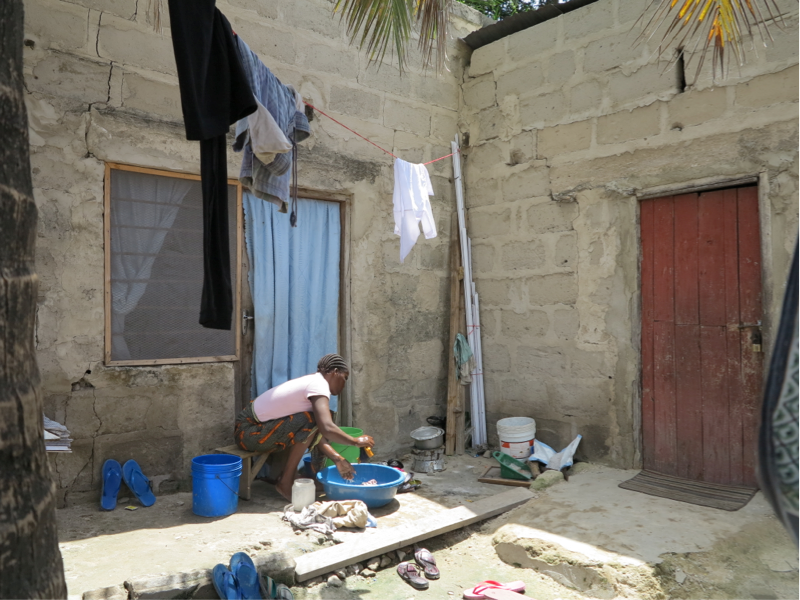
My findings showed that informal settlements in Dar es Salaam are highly vulnerable to the health effects of heat. While Dar es Salaam has a tropical climate, and therefore one that isn’t generally exposed to “extreme” temperatures, informal settlement residents reported that the levels of heat in the city were already too much for them.
Significant risks
The results of the study suggest that increasing temperatures under climate change are likely to be a significant risk to human health in Africa, because many cities on the continent are likely to have the same features as Dar es Salaam that increase the vulnerability of informal settlements to heat.
These include being located in areas where temperatures are high for much of the year, experiencing rapid urban population growth that outstrips service delivery, housing and infrastructure provision, and losing green spaces and vegetation cover to urban sprawl.
Dar es Salaam is a city of about 4.5 million people. It is located on the coast in the eastern part of the Tanzanian mainland. While not the national capital, it is Tanzania’s economic hub and largest city. Its population is projected to reach “megacity” status – 10 million residents or more – by the early 2030s. As shown by the climate analyses, the city has a tropical climate with relatively warm temperatures and high humidity.
About 75% of households in the city live in structures that are unplanned or informal. These have features that either increase temperatures or lack features that would cool them down. For example, think of the hot sun beating down on tin roofs or tin shacks.
In addition, inadequate or absent planning means that housing is too densely packed, so that air can’t circulate. And the rapid growth of informal settlements is causing green spaces to disappear. This means that the cooling (and shading) effects of vegetation are lacking.
On top of that, the health of people living in informal settlements is already worn down by other stressors, making them more vulnerable to heat-related death and disease.
Finally, informal settlement residents have little capacity to adapt to heat, because they lack resources. For instance, a fan, and the electricity to power it, is a luxury.
Added to that, residents have very little knowledge of heat-health interactions, and very little access to information on heat-health impacts and what adaptation measures they could take.
What can be done
At the the time of my study the city did not yet have a strategy or action plans for managing heat-health effects.
But there’s a great deal that can be done.
Cities can develop measures to mitigate high vulnerability to effects of heat on health by developing action plans. For example, one simple measure is a heat-related health information plan, to communicate the risks of hot weather and heatwaves, and to provide behavioural advice to citizens.
But these action plans have typically been developed in high-income countries and would need to be adapted to the realities of low-income countries. For example, communicating a heat-health information plan will need both formal and informal systems in African countries. Some commonly used warning channels, such as the TV, may not reach informal settlement residents. Using community leaders to share messages would be better.
Similarly, certain measures to keep indoor temperatures low during times of high heat exposure might be very difficult to put in place given the reality of African cities. Heat-resistant buildings can reduce vulnerability to heat, for instance, but are not very feasible in informal settlements.
But urban authorities could create “cooling centres” in places such as schools, churches or clinics in areas where residents have few resources to escape the heat. And, given that vegetation strongly contributes to heat resistance, more more vegetated areas could be developed.
Urban planning approaches can focus on protecting and restoring vegetated open space, or increasing the levels of native vegetation and tree cover.
Unfortunately, more “visible” problems like drought and water scarcity (think of Cape Town’s famous “Day Zero” crisis) can overshadow the significance of heat as a health issue, in part because heat can be thought of as a “silent killer” – its contribution to death and disease is only obvious in times of extreme heatwaves.
The Dar es Salaam example shows that heat is already a problem for residents, and that the heat-health issue is under-prioritised.
Policy-makers and practitioners urgently need to give attention on effects of heat on health on people living in the most vulnerable conditions.


