The eyes of the world are focused on Qatar for the 2022 edition of the men’s Fifa World Cup – the globe’s largest single-sport event. Qatar was a somewhat surprising choice. It’s the smallest-ever host in terms of its geographic and population size, and its extreme heat in the usual hosting period (June/July) means the tournament is playing out in November/December. Since the decision was announced in 2010, much media attention has focused on the country’s customs and cultural issues, such as the perceived abuse of workers’ rights and the lack of acceptance of LGBTIQ freedoms.
In the lead up to the event, there were calls – from teams and high-profile celebrities – to boycott the event or protest these issues. The host nation seems largely untroubled: it has continued its strategic policy of using major sport events to boost its global reputation and image, especially through showcasing its technological advances and Arabic hospitality.
Read more: World Cup 2022: Senegal and Cameroon carry Africa’s best hopes
As a scholar who focuses on sport tourism, mega-events, legacy and place branding, I have been studying the nation branding potential of the World Cup in the light of South Africa hosting the men’s event in 2010.
As my research makes clear, South Africa’s nation branding benefited enormously from hosting the 2010 World Cup. So, what can Qatar learn from the South African experience? What lessons might be applied to create a positive legacy?
What South Africa did right
Since the turn of the millennium, emerging nations, and especially members of the BRICS bloc (Brazil, Russia, India, China and South Africa), have increasingly bid for and hosted sport mega-events.
Brazil, for example, hosted the 2014 World Cup and 2016 summer Olympic Games. Russia hosted the 2018 World Cup and 2014 winter Olympics. India hosted the 2010 Commonwealth Games, China hosted the 2008 summer and 2022 winter Olympics and South Africa hosted the 2010 World Cup.
All of these nations sought to leverage these sport mega-events for global recognition and reputation enhancement – or nation branding.
My colleagues and I conducted a variety of studies before, during, and up to eight years after the World Cup in South Africa. The findings indicated that stakeholders – residents, tourists, government agencies, the tourism and event sector, and event sponsors – viewed the country’s overall reputational gains as positive and enduring.
It is often forgotten that South Africa, like Qatar, experienced serious doubts and concerns over its ability to host the World Cup. Some of this came down to general “Afro-pessimism”, but global media also highlighted the country’s high crime rate, cautioning that it was not safe for visitors. My 2010 study indicated that crime was the most negative perception among visitors before the event.
Yet, after the event this perception was greatly reduced. People who previously had limited knowledge about South Africa’s cities, people, technology and general development knew more about it after the World Cup. Their image of the country became one of a place that welcomed visitors, embraced diversity and had a competent and capable industry – all perceptions that could aid foreign direct investment in the country.
How did South Africa achieve this? I’d like to highlight three key focus areas emerging from my research.
Nation branding: three key focus areas
Firstly, South Africa hosted the global media (including new media) – not just during the World Cup, but before it too. To portray accurate reflections of the country, media tours showed off host cities and stadium development. A great effort was made to show key areas of the nation brand image, through being located in iconic areas or with views of city symbols or heritage sites. Importantly, the media were also provided with positive news stories surrounding the event. With an estimated 15,000 media workers attending the event, this was sure to have an impact on informing more factual opinions of the nation.
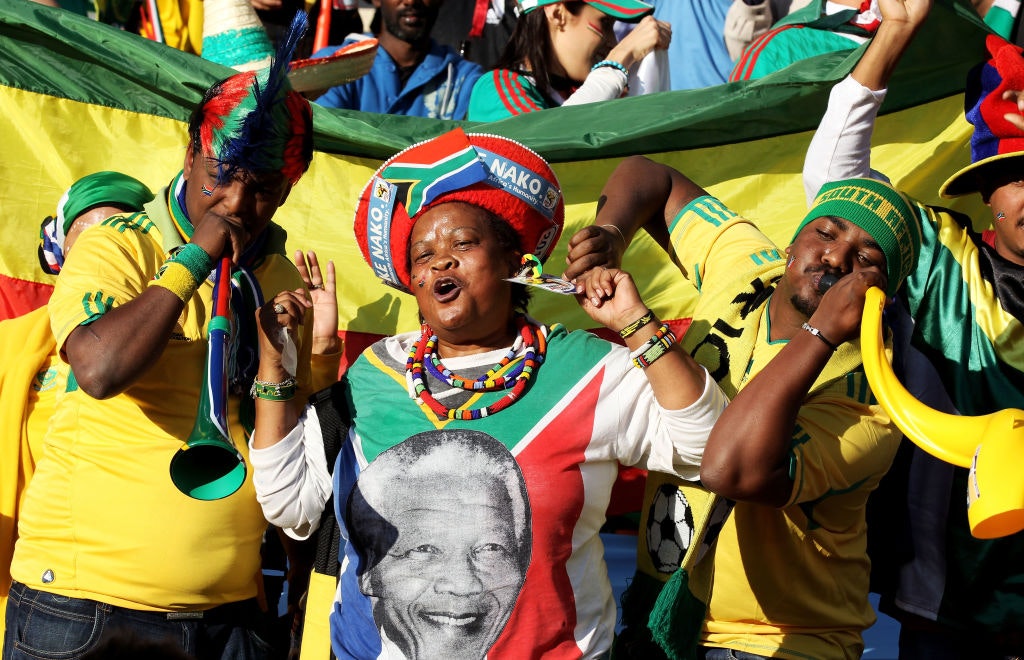
Secondly, the country mobilised locals in support of the event. Creating and promoting specific songs, dances and campaigns – such as “Football Friday”, where residents were encouraged to wear the national team’s football jersey – created social cohesion even before the event kicked off. This also provided a welcoming environment for visitors and a greater sense of security for all.
The third key strategic focus was in leveraging partnerships to cooperate and align strategically around South Africa’s messaging and branding. Stakeholders I interviewed claimed that the event created opportunities for different government levels, the tourism industry, and the private sector to partner and align far better than they had done before.
Nation branding is built on multiple acts of communication and activities by a broad array of private and public sector stakeholders, media and citizens. It’s regrettable that it often takes a mega-event to create the impetus for such cooperation. My interview respondents hoped that such partnerships would be sustained after the World Cup.
So what can Qatar learn?
In the short term, Qatar should be encouraged that pre-event negative media issues have given way to more balanced and factual reporting now that the football has taken centre stage and visitors have arrived. Qatar could experience very positive branding gains from the World Cup, especially with a more nuanced understanding of the nation, its culture, history and development.
Read more: Can an African team win the World Cup? New football study crunches the numbers
Most importantly, Qatar and future hosts need to acknowledge that a sport mega-event in itself is no guarantee of a positive nation branding legacy. It will take strategic leveraging actions that are sustained over time to do so.
While South Africa clearly benefited from the mega-event, stakeholders acknowledged that negative global perceptions of the country, primarily linked with corruption and politically led state capture in the years that followed, have diminished this effect.
This is a reminder that while nation branding portrays a strategic vision for how a country would like to be perceived, this image needs to be consistently reinforced by actions aligned with this image over time.


