How a forgotten poll in a South African church 70 years ago affected millions:
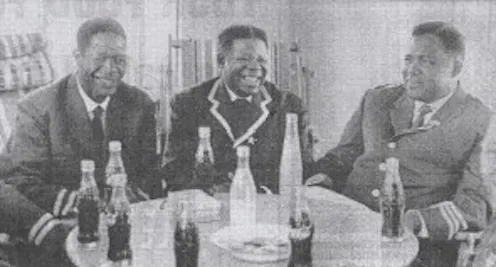
Until 1994, black South Africans were systematically denied any right to vote by the forces of colonialism, segregation and apartheid. Lack of representation and equality, in turn, led to systematic oppression and injustice.
But decades before that — in 1949 — a large group of black South Africans voted for their leaders in a free and fair election – an election that has been totally forgotten.
On June 1, 1949, less than a year after the Nationalist Party assumed power and began to implement its apartheid scheme, somewhere between a third and a quarter of the members of the Zion Christian Church (ZCC) descended on their spiritual capital, Zion City Moria. They they voted to install Edward Lekganyane (1922-1967) as the successor to his father, Engenas Lekganyane (1885-1948), who had founded the church in 1925.
Although the choice of Edward as successor caused a permanent split in the ZCC, the vote for him was a pivotal, wise and successful one. Edward not only enjoyed the backing of the majority of the membership, he also showed true genius during his tenure as bishop. Under his guidance, membership skyrocketed and finances boomed. It enabled the ZCC to become South Africa’s largest, wealthiest, and most visible religious body.
Growth of the church
The ZCC grew out of the Pentecostal movement which arrived in South Africa from America in 1908. It emphasised emotional forms of worship featuring faith healing, dancing, prophesying, singing, and speaking in tongues, especially in raucous all night services.
Before long, African-run “Zionist” offshoots emerged. These typically prohibited the consumption of alcohol, tobacco, drugs, pork and medicine.
Although it ultimately became by far the largest and most successful independent African church in Africa – currently over 10-million-strong – during Engenas Lekganyane’s time it was playing catch up with other Zionist and independent African churches.
But that changed after Edward’s election.
Death of a miracle worker
During the last few years of his life, the increasingly alcoholic Engenas lived a secluded life on his private farm east of Polokwane, which he had renamed Zion City Moria. By this time, the ZCC was not yet South Africa’s biggest Zionist church, although it was growing rapidly.
Zion City in the northern part of South Africa, was a rare oasis of black spirituality, completely separate from white-run churches, where believers could visit periodically for healing and spiritual renewal. Although Lekganyane was increasingly unwell, his fame as a miracle worker was never greater.
Nevertheless, Engenas was drinking alcohol in contravention of church rules. He was also receiving care from white doctors, another outlawed practice in a church that insisted on faith healing. As his debility worsened, church duties were increasingly performed by ministers and members who were not family members.
Barnabas (1919-49), his oldest son, was generally seen as the natural choice as successor.
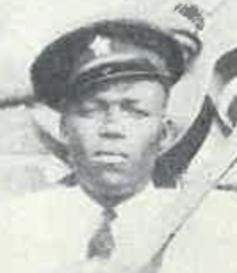
Edward, the second born, was intelligent but reluctant to engage in church duties. In 1946 he absconded to Natal where he lived under an alias. His younger brother Joseph (1931-72), still a teenager, became a favourite of Engenas’s entourage.
Engenas eventually died on May 31, 1948, and was hastily buried by his inner circle the next day. All expected the oldest song, Barnabas, to be the next bishop, until he died of smallpox in January 1949. At the age of 30, he was a victim of the ZCC’s anti-vaccination stance.
Factions
With the succession race now thrown open, the exiled Edward found a hostile reception at Zion City. He based himself in the greater Johannesburg area and was welcomed by the migrant worker membership and leadership there. This group declared itself the “Eastern” faction, and opposed the “Western” membership now led by his brother Paulus and the inner Lekganyane circle. The Western faction controlled Zion City Moria and the church apparatus after Engenas’s death.
Eastern faction members went en masse to the annual Easter conference at Moria, where they pressed Edward’s claims as the next Kgosi (Chief) or Morena (Lord) of the ZCC. They gave him the final, keynote address at the event.
However, Paulus and the Western faction were still not ready to accede, and agreed to have an election to settle the matter.
The election
On June 1, 1949, 12 349 members of both sexes arrived at Zion City to cast their votes between Edward and Paulus. Travelling by bus, lorry, train and foot, the Eastern faction prevailed and won a majority for Edward.
The electoral process was fair, and supervised by one “Sergeant Kotzee” (sic) of the South African Police and a multiracial group of constables. Less than two weeks later, Edward was installed as ZCC Bishop and the election result was published in the Bantu Mirror newspaper.
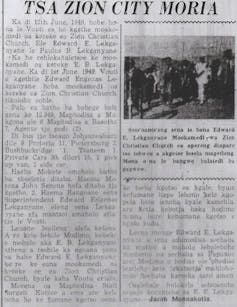
Although Paulus accepted the verdict, the 18-year-old Joseph did not. He maintained that his father had left a will anointing him his successor and giving him all the church property. This will has yet to publicly surface.
When Joseph’s supporters refused to accept the verdict, they were driven by force onto his inherited section of Moria. Several months later, on September 15, he established the rival St Engenas ZCC.
Despite that, the ZCC election of 1949 led to a truly “democratic” outcome. The church’s favourite, Edward, became bishop, and under his leadership non-family members were elevated to all key posts in the organisation. Before Edward died in 1967, his dynamic organisation had grown tenfold in only 20 years, while its new business empire flourished.
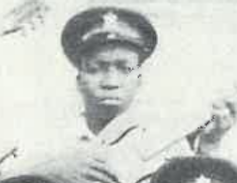
In particular, Edward proved adept at catering to the needs of the millions of migrant workers. Today Edward’s “Star” section of the ZCC has some 10 million members, while Joseph’s “Dove” section remains smaller with an estimated six million. The doctrinal and organisational differences between the two are small. Nevertheless they maintain an intense rivalry.

Barry Morton receives funding from NIHSS
Source: The Conversation – Articles (AFRICA)
Read more on The Conversation.
Join the fun: Add Your event | Submit a Press Release | Add your listing.


