COVID-19 has radically changed South African lives. Low-income communities have been particularly hard hit by the strict lockdown rules. Many are facing a loss of income, food insecurities and challenges in infection control due to the absence of individual water taps and toilets.
The country is now gradually opening up, economic activities are resuming and children are going to school. But the situation in disadvantaged neighbourhoods, or townships, is fragile. Many have been hit by months of lost income and exposure to the novel coronavirus.
The unique challenges of the pandemic did, however, change the way community organisations work for the better. Organisations that worked in silos during other emergencies bundled their expertise and resources to form collaborative networks.
Since 2015, we’ve been working in Gugulethu, one of Cape Town’s most under-served communities. Our study, the iALARM project, aims to link men to HIV care. We work closely with academic partners as well as nongovernmental organisations based in the area.
One of them is the Movement for Change and Social Justice. The organisation has its roots in HIV activism. It leaned heavily on this background to support the community during the pandemic. But the organisation also had to adapt to challenges posed by the novelty of COVID-19.
Our relationships with the activists allowed us to follow the organisations’ community engagement efforts during the COVID-19 outbreak. Their work provides lessons on how to improve coordination of community engagement activities during health emergencies.
The organisation effectively reached and mobilised community members during the strict COVID-19 lockdown. It also showed how to strengthen South Africa’s health system by creating meaningful collaborations between communities, health workers and research institutes and building a “healthy public”.
Existing networks and new approaches
In Gugulethu, one of the oldest urban settlements once reserved for black people in South Africa, the Movement for Change and Social Justice teamed up with Médecins Sans Frontières (MSF) and the Activist Education and Development Centre to set up a rapid COVID-19 mobilisation campaign in April.
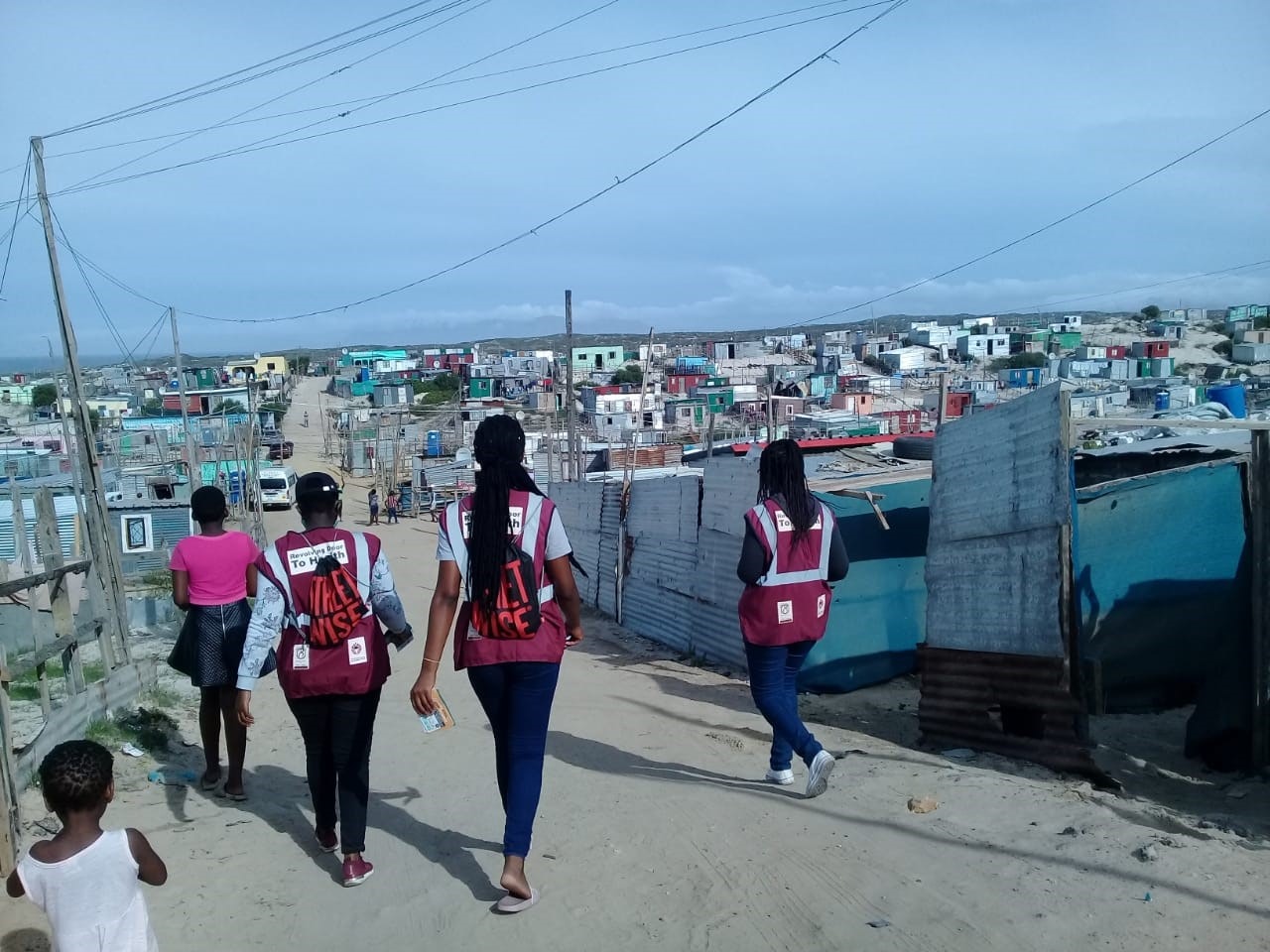
For the COVID-19 campaign, they focused on handing out masks to at-risk groups, and translating and delivering pamphlets. The collective also engaged in contact tracing and helped patients to get their chronic medication from nearby clinics.
This approach moved beyond traditional public health community engagement efforts. Most of the activists in the organisation have a strong background in HIV organisations. This experience proved essential in shaping their outreach campaign, going door-to-door to share COVID-19 information.
They also used personal testimonies from patients who had recovered from COVID-19 to educate residents about the virus and how to link to testing centres. These testimonies encouraged symptomatic patients to get tested and addressed fears about being “taken away” to isolation facilities provided by the state.
The Movement for Change and Social Justice also used existing links with individuals and other NGOs. This helped them to obtain free cloth masks, food vouchers and pamphlets, which were distributed in the community. The organisation’s longstanding relationships with health personnel in local clinics proved essential in their COVID-19 response. The Movement for Change and Social Justice assisted the national health department with patient contact tracing and managed queues in clinics. In turn, the organisation received a steady supply of pamphlets from the government and was constantly updated about new infections and recovery rates.
The Movement for Change and Social Justice applied strategies from previous AIDS activism campaigns developed by the Treatment Action Campaign. The campaign fought successfully for affordable treatment and better HIV care in South Africa through mass mobilisation and health education programmes.
But mobilising communities during the COVID-19 lockdown also forced activists to work in new, innovative ways. In an interview, the organisation’s founder, Mandla Majola, explained:
We want to build an active community response, but we cannot be close to each other, so we need alternative approaches. We need to collaborate with traditional and religious leaders and to support the health staff.
Majola added that before COVID-19, he would regularly mobilise people at funerals to destigmatise HIV and promote testing. Now social media platforms are used to collaborate, mobilise and share reports.
At times, you can reach more than 1,000 people at one funeral, but these HIV strategies are impossible now, everyone needs to stay home.
Creating a healthy public
The Movement for Change and Social Justice’s rapid, innovative and flexible COVID-19 response is an example of effective community engagement. It worked closely with multi-sectoral partners including government, NGOs, religious organisations and health workers to inform people in affected communities and avert stigma. This approach was similar to the HIV response.
During the HIV pandemic, strategic partnerships like this were often facilitated through donor funding and formal “expert-led” communication strategies. But during the COVID-19 epidemic in South Africa, responses and relationships have arisen more organically.
Knowing this, responses to public health emergencies should focus on building strong, meaningful and well-funded local partnerships. It’s part of creating a “healthy public” that can support locally relevant, inclusive and sustainable responses.


