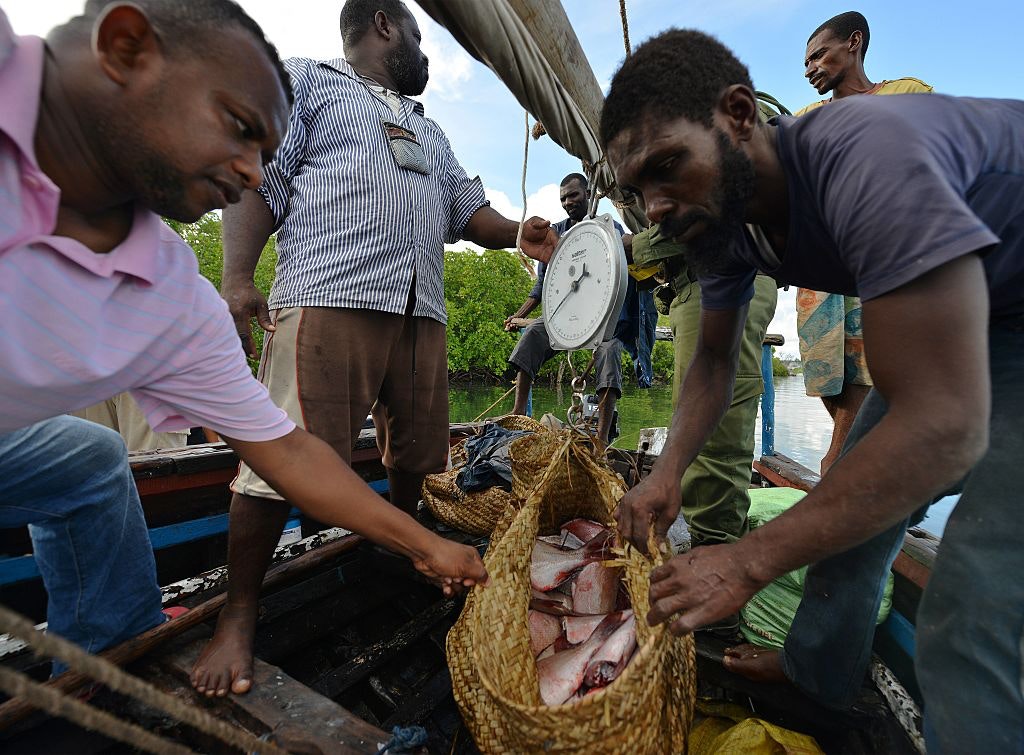
Fisheries support the livelihoods and well-being of millions of people around the world. Before the COVID pandemic, global fisheries production had reached a record high. Fast forward to 2021, and the pandemic has greatly altered the fisheries sector – increasing vulnerability and exposing weaknesses in fisheries food systems at both local and international levels.
The Kenyan coastal fishery supports more than 23,000 fishers catching over 16,000 tonnes of fish annually. The fishery is considered a key sector, providing monetary income and animal protein to about 70% of the coastal communities.
In our recent study, we set out to assess the impact of COVID-19 on Kenyan fisheries, and hear what fishers and traders did to cope. We interviewed people in five coastal communities to find out about COVID-19 impacts on markets, livelihoods, food security and well-being, and what they did in response.
We found fishers, fish traders and coastal communities faced severe livelihood and food security challenges as a result of the pandemic. The biggest impact came from the restrictions on movement mandated by the Kenyan government. Our findings highlight the severe effects pandemic measures had on households and communities, and offer lessons as the pandemic continues to unfold.
Restrictions imposed
The Kenyan government introduced over 120 policies to contain COVID-19. These included curfews and bans on travel and public gatherings. Restrictions were imposed between March 2020 and November 2021.
In all five study sites, communities were subject to various social distancing rules, movement restrictions and curfews. Limited numbers of people were allowed in boats and vehicles and people were told to minimise non-essential interactions. There were social distancing requirements in markets and stores, and reduced market and shop opening hours. Community gatherings were banned. Traders and transporters, especially, faced challenges such as accessing markets and long waits for East African cross-border trade.
We found that COVID-19 severely affected food security in all communities, though some people fared worse than others. All households told us they ate less (reducing meal sizes or skipping meals altogether), and ate less well (consuming less meat and vegetables and primarily consuming staple carbohydrates such as ugali (cornmeal).
Although foods were available in shops, their loss of income meant they couldn’t afford to buy. Before the pandemic, fishers average income per day was about US$9. This decreased substantially to about US$4 during the pandemic because fishers spent less time fishing. Several people had lost jobs, or knew people who had.
The overall demand for fish sharply reduced by more than 50% and prices fell for many species, particularly those that are important for the hotel, restaurant and catering industries. The drop in demand, and in some cases big price drops of fish and fish products, put a halt to or reduced the activity for many fishing fleets; their work became unprofitable. Fishers were also constrained when suppliers of industry inputs like ice, gear and bait closed, or stopped providing credit.
COVID also disrupted communication and connections with other fishers, traders, and customers. It greatly disrupted local market dynamics at landing sites, within the communities, and connections to more distant markets.
In some communities, people who had lost informal work – for instance in the tourism sector hit by COVID – turned to fishing. With changing numbers and abnormal markets, fishing and fish trade became very uncertain.
There is still uncertainty about the duration and severity of the pandemic, but a prolonged market downturn can be expected even after current restrictions are lifted or relaxed.
Government interventions and coping strategies
To cushion vulnerable communities, such as those involved in fishing and fish processing, the government of Kenya provided direct financial assistance including cash stipends via mobile funds transfer, relief food, and tax relief. However, many people we talked to in the five communities had very different experiences in receiving aid and support.
Some traders received a small portion of aid in the form of food. Some community leaders were involved in organising donations from other community organisations to deliver a one-off food aid package to fishers that included maize flour, beans, sugar, and soap. For others, there were delays, confusion or absence of support. Several people said that that while they had heard talk of government or other support, they had not received aid, even after registering.
Most households coped with the shocks of COVID-19 by decreasing the variety and quality of food they ate to conserve money. People stopped buying in bulk, used up existing savings, borrowed money (when there was still enough money in the community for people to lend), or swapped fish for goods directly. None of the strategies could be sustained in the long term.
Next steps for policymakers
Before the COVID-19 pandemic, the fisheries sector was considered one of the fastest-growing sectors. During COVID-19, the Kenyan economy shed an estimated US$1.6 million in GDP contribution (down by 28.6%), and lost up to seven thousand industry jobs compared to 2019 levels. The COVID-19 pandemic, and efforts to curtail it, has been devastating to the fishing industry.
Our study highlights how each stage of the fisheries supply chain -— from catch, to trade, to consumption -— is susceptible to disruptions from COVID-19. Only by protecting each stage of the supply chain can human consumption of fish and fish products be achieved. Rules that disrupt fisheries livelihoods ought to be coupled with measures to support communities (such as food support). And they should reach people in a timely manner and be easy to access.
Treating small-scale fisheries as essential services (like exempting them from curfew), and facilitating ways of communicating and trading that do not involve large gatherings, will help support fisheries livelihoods.
Kenya’s domestic fisheries sector, much like the global fisheries industry, faces a multifaceted challenge. Multiple stakeholders need to be involved in the fisheries recovery process, including national governments. There is a need to harness financial, human and technical resources to support fisheries recovery, and at the same time to efficiently roll out vaccination programmes and responsibly reopen the economy to domestic and international markets.
Dr Nyawira Muthiga contributed to the research and drafting of this article.


