How data collected from mobile phones can help electricity planning:
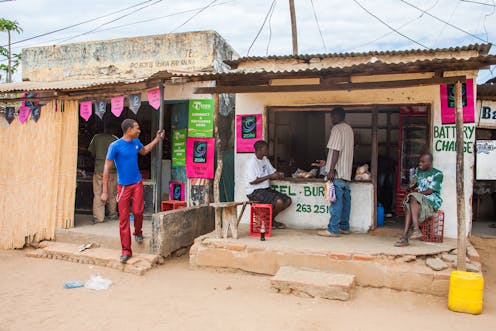
Access to reliable and affordable electricity brings many benefits. It supports the growth of small businesses, allows students to study at night and protects health by offering an alternative cooking fuel to coal or wood.
Great efforts have been made to increase electrification in Africa, but rates remain low. In sub-Saharan Africa only 42% of urban areas have access to electricity, just 22% in rural areas.
This is mainly because there’s not enough sustained investment in electricity infrastructure, many systems can’t reliably support energy consumption or the price of electricity is too high.
Innovation is often seen as the way forward. For instance, cheaper and cleaner technologies, like solar storage systems deployed through mini grids, can offer a more affordable and reliable option. But, on their own, these solutions aren’t enough.
To design the best systems, planners must know where on- or off-grid systems should be placed, how big they need to be and what type of energy should be used for the most effective impact.
The problem is reliable data – like village size and energy demand – needed for rural energy planning is scarce or non-existent. Some can be estimated from records of human activities – like farming or access to schools and hospitals – which can show energy needs. But many developing countries have to rely on human activity data from incomplete and poorly maintained national census. This leads to inefficient planning.
In our research we found that data from mobile phones offer a solution. They provide a new source of information about what people are doing and where they’re located.
In sub-Saharan Africa, there are more people with mobile phones than access to electricity, as people are willing to commute to get a signal and/or charge their phones.
This means that there’s an abundance of data – that’s constantly updated and available even in areas that haven’t been electrified – that could be used to optimise electrification planning.
Senegal data
We were able to use mobile data to develop a countrywide electrification strategy for Senegal. Although Senegal has one of the highest access to electricity rates in sub-Saharan Africa, just 38% of people in rural areas have access.
By using mobile data we were able to identify the approximate size of rural villages and access to education and health facilities. This information was then used to size and cost different electrification options and select the most economic one for each zone – whether villages should be connected to the grids, or where off-grid systems – like solar battery systems – were a better option.
To collect the data we randomly selected mobile phone data from 450,000 users from Senegal’s main telecomms provider, Sonatel, to understand exactly how information from mobile phones could be used. This includes the location of user and the characteristics of the place they live.
Data was gathered on the number of texts and calls, duration of call, and the locations where the texts and calls were made. This was compared to electricity profiles and consumption in urban areas and available information about the location of villages, schools and hospitals from the World Bank.
We found that mobile phone data produces an accurate representation of electricity demand through distinct patterns. For instance, when there are schools or hospitals nearby, there’s a huge spike in the number of calls and texts in the evenings – when people are at home.
This information gives us vital information for electrification planning. It lets us know how many people there are, the area’s electricity demands and the distance to the closest electricity grid. This allows us to then cost different electrification options – for instance if the grid should be extended or solar energy used – and select the cheapest option.
There’s huge untapped potential in mobile phone data as a source of human activity data. It opens up new possibilities to improve infrastructure planning in general. It can help increase electrification rates, but can also be used to make the provision of water, food, education, health and other valuable services more effective.

Joseph Mutale receives funding from the Engineering and Physical Sciences Research Council of the UK. He is affiliated with IEEE Power and Energy Society of USA and IET of UK.
Eduardo Alejandro Martínez Ceseña, Mathaios Panteli, and Pierluigi Mancarella do not work for, consult, own shares in or receive funding from any company or organization that would benefit from this article, and have disclosed no relevant affiliations beyond their academic appointment.
Source: The Conversation – Articles (AFRICA)
Read more on The Conversation.
Join the fun: Add Your event | Submit a Press Release | Add your listing.


