Most of the 54 countries in Africa are unitary – the power to govern them resides mostly in a centralised government.
Only Ethiopia and Nigeria are fully federal while others like South Africa, the Comoros, Sudan, South Sudan, the Democratic Republic of Congo, and Somalia have some features of federalism.
Federalism involves the division of power between a central government and regional governments. Each level has specified political power over different areas and regional governments have power to determine local policies and raise their own revenue.
Ghana is not known as one of the federations in Africa. However, it’s life as an independent state in 1957 began as a loosely formed federation with fairly high levels of regional autonomy included in the constitution.
The rules set down for changing that arrangement were very strict because the proponents of federalism wanted guarantees against unilateral changes by the government.
Yet, more than six decades later regional government officials have no direct powers to determine their own policies. The regional ministers are appointed by the president, regional policy is controlled by a central government ministry, and regions are funded directly from central government administered funds.
How did this come about? In Africa, the conventional expectation is that drastic shifts like this only happen when a government is overthrown – and the country’s constitution abandoned – through coup d’états.
But my research shows that gradual changes contributed to this outcome in Ghana.
I traced Ghana’s journey over the past 60 years (1957 – 2018) as it moved from a federal to an entrenched unitary arrangement. I found that during this period, there has been a steady erosion of regional autonomy.
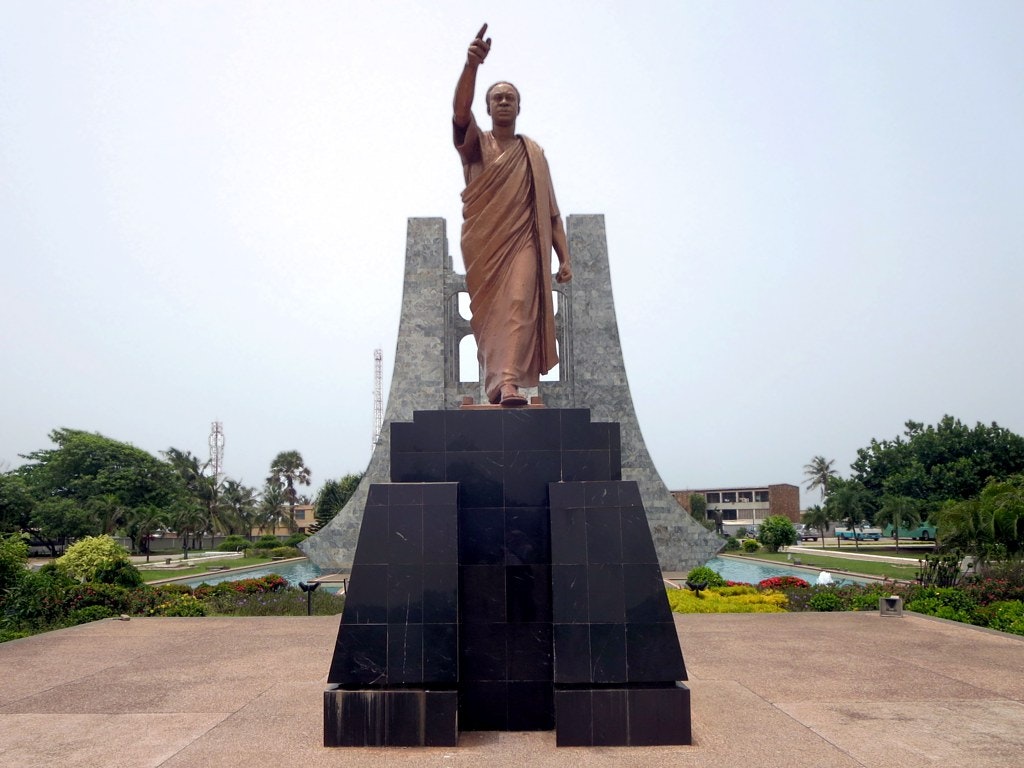
This happened through several changes to the constitution – most notably those drawn up in 1960 when Ghana became a republic, and 1969 after the country’s first president Kwame Nkrumah was overthrown .
I conclude from my findings that constitutional guarantees should not be taken for granted. They are subject to change, but the way they change depends on the decisions that stakeholders make.
These findings – and the realities of politics – suggest that other federations in Africa might well be at similar risk.
Ghana’s federal beginnings
The territory known as Ghana was formed in 1957 by a union of four regions: the British colony of the Gold Coast, Ashanti, Trans-Volta Togoland and the British Protectorate Northern Territories. This composition implied that federalism was the most practical way forward.
But the federal idea was a key bone of contention in the run-up to independence from British colonial rule.
On one side of the dispute was the the Convention People’s Party led by Kwame Nkrumah, who wanted full unitarism. On the other side was the opposition alliance led by the Asantes and their political wing, the National Liberation Movement together with the United Party led by K.A Busia, who wanted full federalism.
This contest was settled by a compromise in the 1957 constitution, giving regions autonomy. Headed by the native chiefs, regions had their own regional assemblies. These were responsible for directing financial expenditure, by-laws, and other government services in their regions. Referendums were required to alter the boundaries of a region. Any changes to this constitutional arrangement needed to be approved by two-thirds of the regional assemblies themselves.
However, in the 1960 constitution, these regional assemblies and the referendum requirements were abolished and replaced with national parliamentary approval.
Moreover, chiefs were demoted as heads of regions and replaced with centrally appointed regional commissioners. The referendum requirement reappeared in less-stringent forms in the 1969 and 1979 constitutions but neither the regional assemblies nor chiefs as their heads were re-instated.
The current 1992 constitution maintains the referendum thresholds contained in the 1979 constitution but still does not reinstate the regional assemblies or chiefs to regional headship. Nor do regional administrations have the executive, legislative, and financial autonomies they had at independence.
In view of this lost regional autonomy, a constitutional review commission in 2011 recommended that the regional government “should be designated as part of central government” (page 504).
The why and the how
Based on my research, I conclude that Ghana lost its federalism as a result of a mistaken political choice and missed opportunity by supporters of federalism.
First, politicians who supported federalism failed to take steps to stop the introduction of a unitary state.
This started shortly after independence in 1958 when the main opposition boycotted national polls to elect members of the regional and national assemblies. As a result, the ruling party won a huge majority in the assemblies.
This meant that the ruling party had sufficient numbers to vote to abolish regional assemblies when a bill was introduced to this effect in the national assembly in 1959.
The constitution adopted in 1960 declared, for the first time, that Ghana was a unitary state. Other changes included the removal of chiefs as the head of the regions and their replacement by regional commissioners appointed by the president.
A critical opportunity presented itself to reverse this trajectory between 1966 and 1969.
Some of those behind the coup that ousted Nkrumah in 1966 were supporters of the pre-independence notion of autonomous regions. Hence, a new constitution-drafting process was led by those who had called for federalism. Yet, instead of reversing the trajectory, the new leaders maintained the status quo.
The new constitution proposed and adopted in 1969 still maintained that “Ghana is a unitary republic” and made no specific naming of regions. It failed to re-instate the original mandate of the regional assemblies or the chiefs as regional heads.
All subsequent constitutions have consolidated Ghana’s unitary status.
Lessons
There are lessons for other countries that have federal structures, or any form of power-sharing arrangements.
The discussions around federalism in Nigeria or Ethiopia are enough to show that when (federal) rules are made, they do not stay the same. Stakeholders are always looking for opportunities to change, keep or improve them.
If the changes reflect the interests of opposing political actors, as seen in Ghana’s case, then the change process is smoother with less violent outcomes. For instance, in Ghana today both the political parties that evolved from the opposing ‘Nkrumaist’ (mainly the National Democratic Congress ) and ‘Busiaist’ (mainly the New Patriotic Party) political traditions at independence have united around unitarism. Without such shared political interests, the campaign for change becomes a violent and protracted struggle, as seen in the reform-related conflicts in Ethiopia.
Another case in reference is Burundi where in 2014, news emerged that the power-sharing arrangements were under threat of being dismantled through well-calculated steps by the ruling government.
So, can such power-sharing arrangements stand the test of time?
My central argument is that changes are inevitable. However, the lesson from Ghana is that perhaps when proposed changes reflect the common political interests for key stakeholder groups in the arena of governance, the outcomes are less problematic.


