Climate change is touching every aspect of our lives – including our daily cups of tea. Kenya and Malawi are the African continent’s largest tea producers and exporters, together accounting for about 27% of global tea trade.
Tea producers in the two countries have already seen what damage climatic shifts can do, as damaging droughts, frost and high temperatures are already becoming more common. This threatens tea yields and the countries’ economies. It also affects people whose livelihoods are dependent on tea estates and farms, and the wider value chain.
African tea producers have typically not found generic climate projections useful. That’s because these projections focus on changes in average conditions. But tea crop production is at the greatest risk of temperature extremes. Tea growers need information that is specific to the tea variety they grow and where they grow it compared to average temperature and rainfall over a large region.
Knowing what future conditions will be like is particularly important for tea growers, because the tea plant has a long lifespan, of more than 80 years. That means it is critical to take decisions now that will continue to be sound in the future, like replanting with better and resilient cultivars, planting shade trees and crop diversification.
We have developed novel, site-specific climate information for Kenya and Malawi’s tea-growing regions. This, we hope, can better inform tea producers about the range of climate conditions they can expect in the future – specifically, the 2050s and 2080s.
Our research shows that the nine locations we studied will see more heatwave days. This will create heat stress for the tea plants and affect yield. At the same time, tea quality could be adversely affected by the fact there is also likely to be a significant decrease in the number of cold nights by the 2050s. The specific impacts will vary dramatically from location to location, depending on the site-specific projected conditions. Some sites will see only small rises and others might see increases of more than 100 heatwave days per year.
The significant difference in future projected conditions underlines why such tailored climate information is important. It enables tea farmers and managers to select adaptations that are appropriate for the conditions and the desired outcome. These adaptation options can be selected according to the tea variety that is grown and the scale.
Modelling projections
We partnered with tea growers in Malawi and Kenya so we could understand the particular climate information that would be useful to them in managing and planning their farming practices to maximise yield and quality.
The tea plant is sensitive to heat; it can only withstand a short period of time above certain temperatures before it is damaged. This temperature threshold is specific to different locations and tea varieties. For example, in Kenya tea growers want to know about consecutive days with temperatures exceeding 27°C. In Malawi, tea growers asked for 35°C as the threshold beyond which their tea bushes face heat stress.
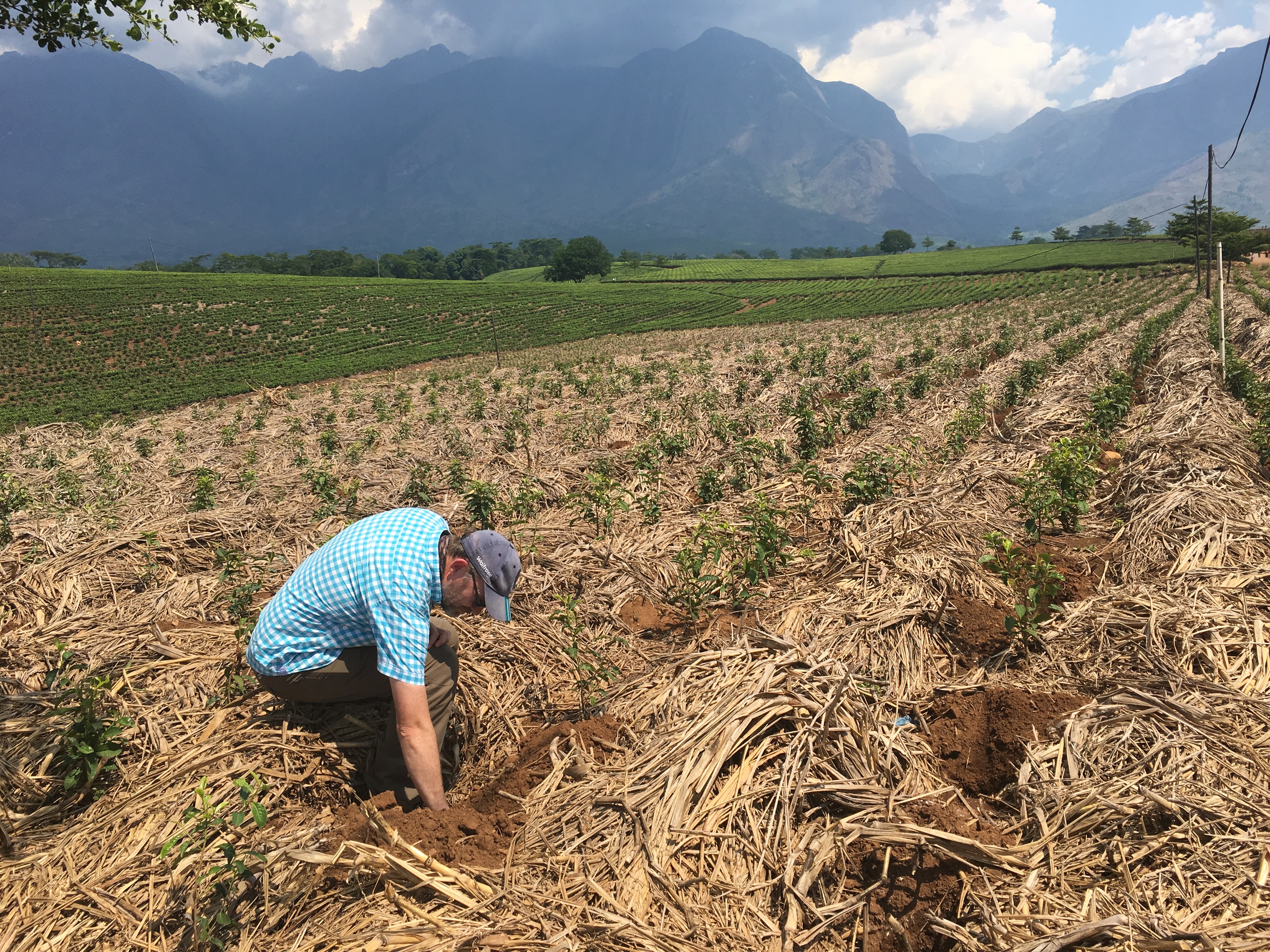
We then combined two sources of information. The first is hidden weather data – observations of temperature and rainfall held in tea estate weather station records. The second is future projections for the 2050s and 2080s from the latest high resolution climate models, including a new convection-permitting model vital for predicting climates in mountainous regions. These models better represent small-scale atmospheric processes responsible for extreme weather events in such regions.
Projections from a suite of 29 global climate models were used to explore uncertainties in future temperature and rainfall changes. These projections were combined with a novel high resolution climate model (4.5 km), CP4A, the first high resolution model for Africa. It can capture the local, small scale atmospheric processes that give rise to micro-climates.
These micro-climates are essential to tea growth, but are typically not discernible in the resolution of standard global climate models. As a result, the average conditions projected by global climate models over large areas aren’t of much use to tea farmers.
We integrated these model projections with the local historical evidence of past weather conditions to map out climate risk several decades into the future.
Adaptations
We have shared the projections with tea growers. They say that these, together with other feasibility criteria including social and environmental benefits, and economic viability, helped them identify emerging risks and potentially suitable adaptation strategies.
The tea growers also pointed out that having more detailed information about what might happen to the local climate means they’re better able to garner government support for preferred adaptation options including afforestation and crop diversification.
Continuing such discussions to identify and prioritise adaptation investments is vital to ensuring that risks to tea production and quality are minimised, and the sector remains vibrant. Hidden weather data and new climate models will help to sustain our daily cup of tea – and, more importantly, support economic growth and livelihoods in both Kenya and Malawi.


