How Kenya’s mega wind power project is hurting communities:
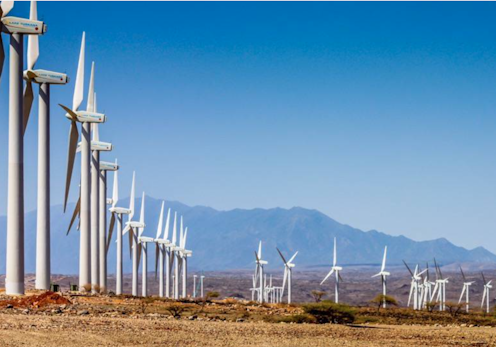
Kenya recently launched the Lake Turkana Wind Power project, Africa’s largest wind energy project and the biggest public-private investment in Kenyan history. The wind farm will produce 300MW of low-cost renewable energy for Kenya’s national grid.
Kenya is already a leader in green energy; 70% of its electricity comes from renewable sources, all part of the government’s plans to promote renewable energy in line with the national development strategy, Vision 2030. The Lake Turkana Wind Power project is a key component of this vision.
Lake Turkana Wind Power project occupies a vast concession of over 607km2. The wind farm development occupies 162 km2 of that larger concession. It’s located in the Sarima valley in Marsabit County, northern Kenya, on the shores of Lake Turkana. This is a long neglected part of the country and the communities living there have been deeply ambivalent towards the project.
The concession is home to Rendille, Samburu and Turkana pastoralists who use the land to seasonally graze livestock and for its water points. There is a long history of pastoralist migrations here and it’s a culturally significant area.
The concession is the location of the Rendille’s Galgulame ceremony, which takes place every 14 years and celebrates the transition of young people into adulthood. A Samburu clan also traces its origins to a water pool in Sarima. Additionally, a Turkana village which was next to the wind turbines was relocated by the company.
Lake Turkana Wind Power is part of a wider trend for large scale infrastructure projects in historically marginalised, pastoralist regions, including oil exploration in Kenya’s Turkana County and the Gilgel Gibe 3 Dam on the Omo River in Ethiopia. Previously considered peripheral to national development, these areas are now taking a central place in national economic plans.
We wanted to better understand the experiences of the people who continue to live within, and use, the project’s concession area. Specifically, how the wind farm has affected relationships between community members and how they view the wind farm.
Drawing on field work and interviews during the project’s construction, we found a complex picture of aspiration, disenfranchisement and tension. For residents it raised emotive questions about who has a rightful claim to the concession land and who is entitled to benefits from the investment.
In the context of a global climate emergency, it’s right to celebrate Africa’s largest wind power development. But, our research shows how a large scale renewable energy projects can be plagued by many of the same troubling effects on local communities as oil and extractive industries.
Exclusion
Much of the corporate narrative around the wind farm suggests it is bringing development to a previously empty space, and one which needs investment. But this belies a more complex past. Rendille, Samburu and Turkana communities lived on the concession land and shared – and sometimes fought – over its resources.
The consortium that makes up Lake Turkana Wind Power (a mix of four private investors and several national development funds) failed to properly take this into account. And it has been accused of infringing on the rights of the communities living there.
Local people experienced several forms of exclusion during the construction of the wind farm. For example, the project decided not to recognise the Rendille, Samburu and Turkana people who live within the concession as “indigenous”. This was in contravention of international definitions of indigeneity. The decision meant that the company could avoid implementing a process of Free Prior and Informed Consent, which would have helped to safeguard the economic, social and cultural rights of affected communities during the development of the project.
Communal land
Lake Turkana Wind Power – like many companies making large-scale land acquisitions in Africa – benefited from historically weak legislation protecting communal land. The land was leased with minimal local consultation by the now defunct Marsabit County Council. A court case was eventually opened alleging that the land was leased illegally.
There are also concerns over tensions the project has fuelled between communities – as residents assert their right to access jobs and goodwill investments from the consortium – in an area already troubled by local conflict and retaliations over land rights.
The area is not connected to the national grid and will not receive the energy produced by the project. So the benefits people seek are access to employment and corporate social responsibility investments. The communities make their claims to benefits by asserting their custodianship of the concession land.
Lake Turkana Wind Power has brought an ongoing programme of corporate social responsibility, including providing new water sources, and there has been some job creation. But there are also high expectations and unmet needs. The result is widespread dissatisfaction and a belief that some communities are being favoured over others.
Elite complicity
The issues are not entirely external. In our interviews we heard how local people suspect a significant degree of local elite complicity in the alienation of the concession land; for example, in the decision of the former Marsabit County Council to grant the original lease.
What’s clear from this and other mega projects is that, for residents, there is a serious risk that their impact on local politics, livelihoods and conflicts is being overlooked. For people living on Kenya’s resource frontiers, the drive for national development is often a process of exclusion rather than inclusion.
Abdikadir Kurewa, Research Scientist at the National Museums of Kenya, contributed to the writing of this article

Zoe Cormack receives funding from The Economic and Social Research Council.
Source: The Conversation – Articles (AFRICA)
Read more on The Conversation.
Join the fun: Add Your event | Submit a Press Release | Add your listing.


