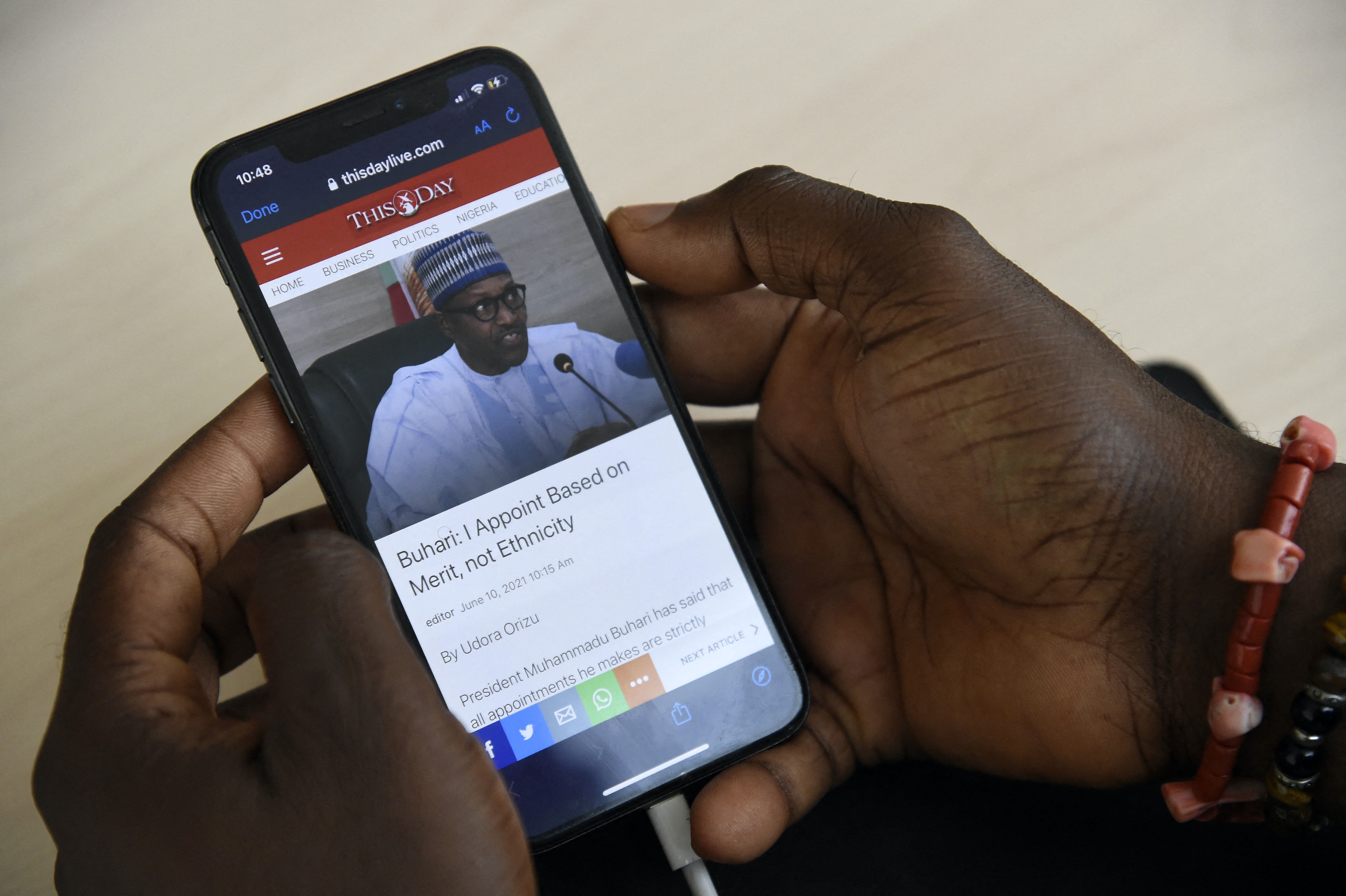
Conflicts and disasters around the world have forced millions of people to move from their homes. By the end of 2020, about 11.1 million people were internally displaced in sub-Saharan Africa.
Displaced people are excluded in many ways from the social, economic, cultural and political life of their new communities. Mobile technologies are one way to overcome this exclusion. Mobile phones have been described as being as important as food and water for displaced people.
In studying how displaced people use mobile technologies to enhance social exclusion, most scholars have focused on refugees in developed countries. Little is known about the sub-Saharan African context.
My study looked instead at displaced people forced to flee from the Boko Haram insurgency in north-eastern Nigeria. I found that mobile phones provide them with four key opportunities: income generation, social support, education and political participation. The findings show that governments, nongovernmental organisations and donor agencies should do more to provide displaced people with mobile connectivity.
This will help displaced people to meet their needs and integrate better in their new communities.
A camp in Abuja
By February 2021 there were over 2.1 million internally displaced people living in camps and communities across Nigeria.
My study focused on people who had fled from Boko Haram in the Gwoza and Bama communities in Borno State and were living in a camp in Abuja, the federal capital of Nigeria.
The camp is a private one that was founded by a group of internally displaced people in 2014. About 3,000 people live there. The camp is congested and lacks basic health amenities, hygiene, education, food, shelter and electricity. Internet connectivity is unreliable. About 80% of the 500 households earn less than 20,000 naira ($25) a month. My study participants said the government did not care about their predicament.
I collected data from 21 displaced people in this camp in June 2019 and May 2020. Their demographic profiles were diverse. Most of the participants owned a mobile phone – some were basic and others were smartphones.
Forms of inclusion
The internally displaced people in the study were using their phones to make an income, to get emotional and psychological support from family and friends, to study online and to follow political news and participate in discussions. They were also able to seek financial help from the public through social media.
One of the participants, who owned a small makeshift shop selling things like groceries and phone cards, said:
I was a painter back in Bama, and I was hoping I will get a job in Abuja. There are thousands of painters like me here, unemployed … I always have customers gathered around my shop chatting since I always have my generator on charging their phones. I also play our local music to keep the mood good.
People said the violence and traumatic events they had experienced had affected their mental and emotional health. Locating and keeping in touch with family and friends was very important to many. One highlighted the importance of a WhatsApp Bible study group.
Every Sunday, I know there are people out there that will be around me in the spirit to cheer me up and remind me I am not alone.
The Boko Haram insurgents disrupted access to education. The camp had no formal education facilities in place. Those who had completed their secondary school education were able to enrol for the distance learning programme with the National Open University in Nigeria. They could get the learning material using their mobile phones, as described by one of the participants:
I am working full-time as a motorcycle driver, but because I still want further my education, my friends advised me of the open university. … Now I am in my second year studying psychology and hope to be psychologist soon. With my smartphone, I am able to access my entire course content online and interact with fellow course-mates … some have become close friends.
Some respondents reported the importance of their mobile phones for political participation. On election days, some who couldn’t go back to Borno State to vote said that they monitored the elections using Facebook and WhatsApp on their mobile phones.
After the voting, many of us made sure we took pictures of the results at our polling units and shared it on Facebook and WhatsApp and, during the collation of the result, we went on Facebook live so that others could see the live collation of the result. When we did this, it was challenging for any agent to manipulate the result in favour of his candidate.
Women participants said mobile phones had given them opportunities they would not have had before, when their gender roles were more prescribed. They mentioned using phones to market their products, access government business loans and listen to women’s radio programmes.
I know how to send messages and call my sister and neighbours. I also … listen to BBC Hausa and sometimes I also use this phone to call my daughter’s teacher to find out about her learning in school.
Self-help and connection
Our findings showed that internally displaced people were using phones for individual and collective purposes. A mobile phone is a self-help tool not only to overcome disconnection from the home community but also to function better in the host community.
The high cost of maintaining mobile phones, infrastructure and theft within the camp were challenges, however.
Efforts by humanitarian actors to enhance the social inclusion of internally displaced people need to understand the opportunities and the factors that constrain their freedom to effectively use mobile phones.


