How resistance led to London’s Selous Street becoming Mandela Street:
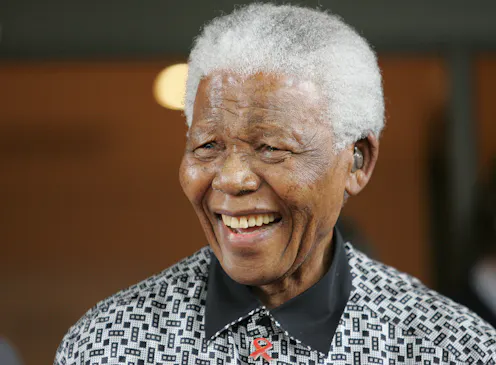
The Duke and Duchess of Sussex recently attended the opening of “Nelson Mandela: The Centenary Exhibition” in London. It was one of many global events to celebrate Mandela’s 100th birthday and his legacy.
What shouldn’t be forgotten is that establishment support for Mandela and the struggle he represented was not unanimous during the apartheid years. For example, under Margaret Thatcher the British government supported Pretoria and secured Britain’s economic and political interests in the region.
Yet a network of organisations and activists, anti-colonial groups, students, trade unionists and anti-nuclear groups on the left offered support for the struggle. Local authorities – in big cities such as London as well as smaller towns such as Ipswich and Chatham across the UK – were part of the mix of anti-apartheid protests. Located between government and grassroots organisations, local authorities paved the way for an official rejection of apartheid.
Their legacy of resistance is worth revisiting for two reasons. Firstly, because this form of politics is often overlooked when we concentrate on the demonstrations, sanctions and concerts in Mandela’s name. And secondly, because it could be seen as a precursor to contemporary movements calling to remove statues commemorating the colonial past in South Africa and in the UK.
Act of protest
From the early 1980s, local governments in the UK began renaming streets, housing estates and community centres after Mandela as an act of protest – both against apartheid and the British government.
In August 1981, the City of Glasgow awarded the imprisoned Mandela the Freedom of the City. That year, the Lord Provost of Glasgow also initiated a Declaration of Mayors for the immediate and unconditional release of Mandela and all other political prisoners in South Africa. The campaign led to 2264 mayors from 56 countries signing the declaration.
On the 20th anniversary of Mandela’s arrest on August 5, 1982 the United Nations Special Committee on apartheid called for an expansion of the campaign. On the heels of this call, came an initiative by the Greater London Council to rename Selous Street, home to the offices of the British Anti-Apartheid Movement in London, Mandela Street.
In the application to the Director-General of the Council in March 1983, it was explained that renaming the street was,
a particularly public and enduring way of honouring Mr. Mandela and of demonstrating support for the cause for which he is fighting.
My research at the Anti Apartheid Movement Archives at the Bodleian Library at Oxford University shows many objections to this proposal.
Resistance
The street was quite small and entirely commercial. A survey from 1982 listed seven commercial firms, one charitable organisation, some council offices and a garage.
A letter from the council’s valuer and estates surveyor shows that there was apprehension about renaming the street. It could, the surveyor argues, harm local businesses because “deliveries and new customers” would get confused by “incorrect information on maps”.
Some businesses did write to the council pointing out that they faced additional expenses such as having to order new stationary as well as advertisements.
The Post Office also objected. Its representative argued that the initiative confer “additional work, inconvenience and confusion” and that all records, maps and postcode books would need to be updated. Would it not be better, the official suggested, to name a future street after Mandela rather than an existing one?
A last challenge to the street’s name came from the far-right group the National Front in 1988. The group distributed pamphlets calling for “British names for British places!” It proposed renaming Mandela Street after a different Nelson – Horatio Nelson. No action was taken.
A more personal appeal came from Commander GMB Selous who informed Camden borough’s director of planning and communications that his family “were slightly horrified” by the initiative. He pointed out that Henry Courtney Selous, after whom the street had been named, was the renowned painter of “The Opening of the Great Exhibition by Queen Victoria” from 1851, and his brother was a known dramatist. As a family, they would be,
absolutely horrified if a link with England’s history should be removed at the whim of people who are, after all, visitors within our normally peaceful shores.
This was a misleading description of the anti-apartheid movement, a British organisation peopled with volunteers mostly of British descent. Commander Selous also forgets to mention his most famed ancestor, Fredrick Courteney Selous who was an imperial explorer of South Africa, assistant to Cecil Rhodes and game hunter. Frederick Courtney’s exploits in South Africa and in Zimbabwe were hardly peaceful.
Commander Selous wrote a similar account in a letter published in The Spectator on 16 July.
Reports in the press about the initiative, and the objections to it, caused a stir. To avoid this criticism, the council promised small grants to cover advertising and stationary costs. It was also agreed that the street sign would retain the older name in addition to Mandela’s. The change was approved in time to celebrate Mandela’s 65th birthday.
The following year, the Greater London Council strengthened its commitment to anti-apartheid protests. In January 1984 it presented its own anti-apartheid declaration to a delegation from the UN. The statement declared London an “anti-apartheid zone”.
The street naming controversy exemplifies the tensions over the attempt to inscribe Mandela’s nonracial politics on the ground in the UK. It shows the power of local government to shape politics and mobilise change, even in opposition to national government.
The controversy also shows how the built environment can be used as an effective tool of education.

Tal Zalmanovich receives funding from the European Research Council under the European Union’s Seventh Framework Research Council grant agreement 615564
Source: The Conversation – Articles (AFRICA)
Read more on The Conversation.
Join the fun: Add Your event | Submit a Press Release | Add your listing.


