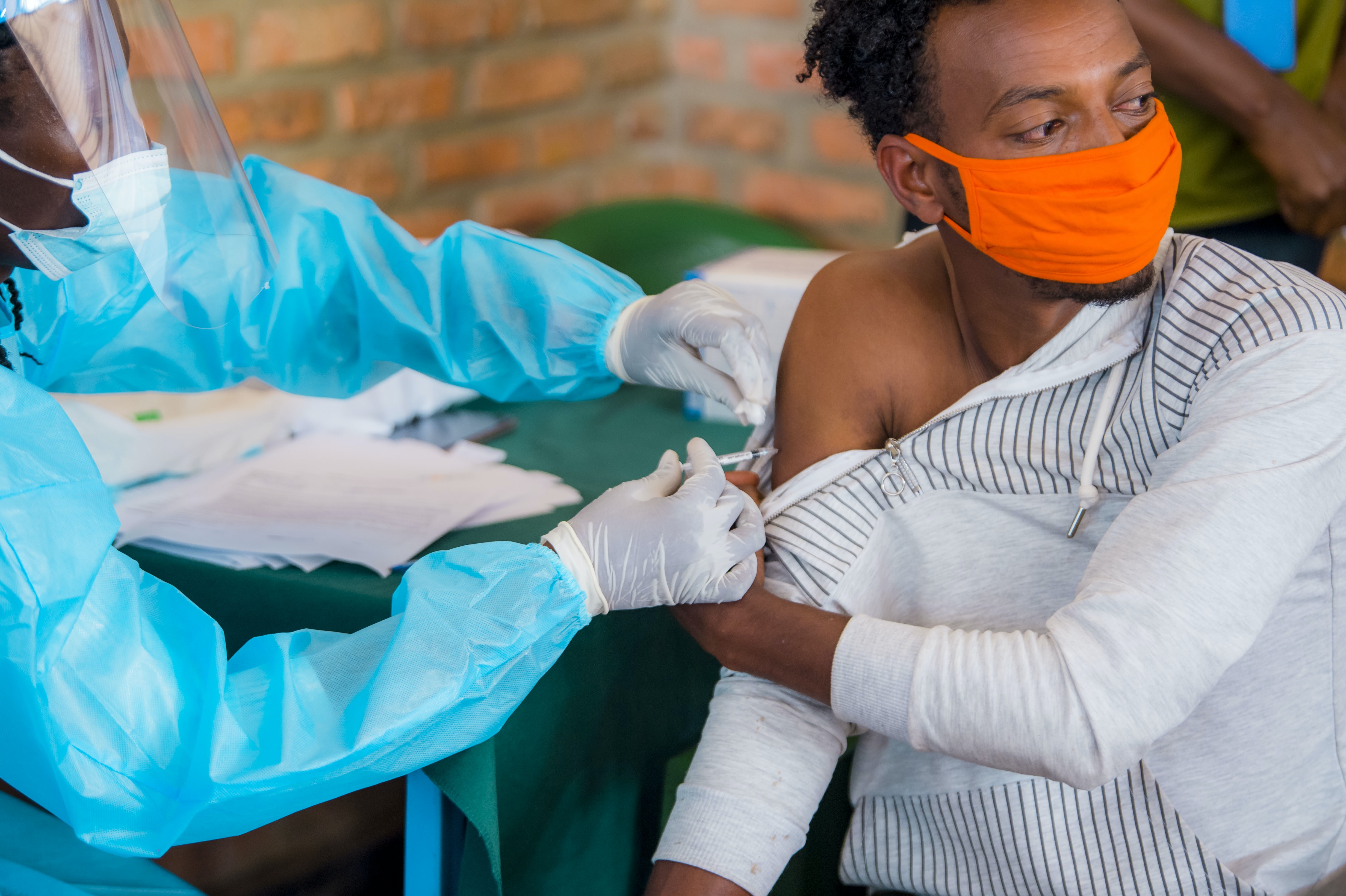
It’s been over a year since COVID-19 was declared a pandemic. In an amazing feat of science and technology, a number of safe and effective vaccine candidates have been developed. Most developed countries are well-advanced in rolling out vaccinations. The process is much slower in developing countries. In Rwanda, the government set a target of vaccinating 60% of the population – of nearly 13 million – by the end of 2022. To unpack Rwanda’s rollout strategy Ina Skosana from The Conversation Africa spoke to public health expert Professor Agnes Binagwaho.
What is the country’s COVID-19 vaccination strategy?
Rwanda’s strategy was developed based on scientific evidence and was rooted in the ideals of equity. This is much like Rwanda’s overall COVID-19 preparedness and response efforts.
The Ministry of Health defined a clear vaccination plan as soon as an agreement was finalised with COVAX, a global initiative aimed at equitable access to COVID-19 vaccines, and well before the vaccines from COVAX were delivered.
The plan had a priority list to ensure that essential workers and people most at risk of infection and COVID-19-related death would receive the vaccine first. The list of 3 million included frontline healthcare workers, the elderly, individuals with underlying conditions, and people living in crowded settings such as refugees and prison populations. Other essential workers such as teachers and women and men in uniform were also included.
Individuals were vaccinated across the country starting with healthcare workers, including the nearly 60,000 community health workers.
Weeks before the vaccines arrived in the country, the Ministry of Health prepared its storage and distribution capacity. In addition to preparing regular refrigerators used for other vaccines, Rwanda purchased five ultra-low refrigerators to store the Pfizer vaccine at -70 degrees Celsius.
This early logistical planning meant that Rwanda had the capacity to store 5 million doses before the vaccines arrived. The country also purchased refrigerated vehicles to ensure that all corners of the country could be reached.
Everyone in government and implementing partner institutions, such as UNICEF and the World Health Organisation (WHO), understood their role and were ready to start the campaign when the vaccines landed. To ensure equitable access to vaccines and remove any geographical barriers, Rwanda set up vaccination sites at health centres (one in each sector) and district hospitals. Healthcare workers in these sites were also trained before the arrival of the vaccines.
Rwanda put a lot of effort into fostering demand for the vaccines. The health ministry collaborated with civil society, faith-based organisations, local authorities and young volunteers to disseminate a one-page fact sheet with information on the vaccines. Radio and TV channels were also used to provide further information on the vaccines, with the Minister of Health and other health sector officials engaging with the public.
Lastly, to target vaccine hesitancy the government set up a toll free number so that people could report side, effects, or share positive stories.
What is the progress so far?
Rwanda received the first batch of vaccines in early March from the COVAX initiative: 342,960 Pfizer and AstraZeneca vaccines. Rwanda also received 50,000 donated doses from India on March 5th, 2021.
These were distributed within 48 hours to all district hospitals, which in turn distributed them to all health centres using trucks and military helicopters for hard-to-reach districts.
Within two days Rwanda had started its nationwide vaccination campaign. Vaccines were first administered to frontline healthcare workers as planned.
While both types of vaccines require two doses, Rwanda provided the first dose of AstraZeneca to as many people as possible, with the expectation of receiving more vaccines in time for the second dose. This allowed the country to maximise the number of people who were vaccinated. Rwanda is expecting to receive the second batch of COVID-19 vaccines before the end of April.
As of April 11th, 2021, 348,925 people in Rwanda had received their first dose of vaccines. This is nearly 9% of the 2021 target for vaccinated individuals.
What are the challenges?
Equitable distribution of vaccines continues to be a challenge across the world.
It is estimated the many people in low-income countries will have to wait until 2023 to be vaccinated.
Various factors contribute to this inequity. High-income countries are hoarding vaccines. Canada, for example, has secured more than 600% of the doses it needs to vaccinate its entire population. Moreover, these same countries are unwilling to share the vaccine technology.
These factors contribute to delays in getting vaccination programmes off the ground in developing countries. This is stalling the achievement of global herd immunity and preventing a quicker return to a state of normalcy.
In Rwanda, this delay can exacerbate an economy that has been pushed into recession during the pandemic, further affecting the economic well-being of individuals and businesses.
Unless high-income countries share the vaccine technology and decentralise the production of approved vaccines, we will all continue to face the repercussions of the COVID-19 pandemic.
What needs to happen next?
To meet its target of vaccinating 60% of the population of nearly 13 million by the end of 2022, Rwanda will need to procure more vaccines.
The country hopes to achieve this through international deals, through the African Vaccine Acquisition Task Team of the African Union as well as through the COVAX initiative.
Rwanda is closely following the evidence emerging about the safety of various vaccines and will continue to review the data regularly to ensure that the vaccines administered in the country are safe and effective.
The country will also continue to strictly enforce COVID-19 regulations such as mask wearing and social distancing given the limited supply of vaccines available in the country. These measures will also ensure the protection of the country in case of delays in vaccine delivery.


