How South African churches can make LGBTIQ people feel safer:
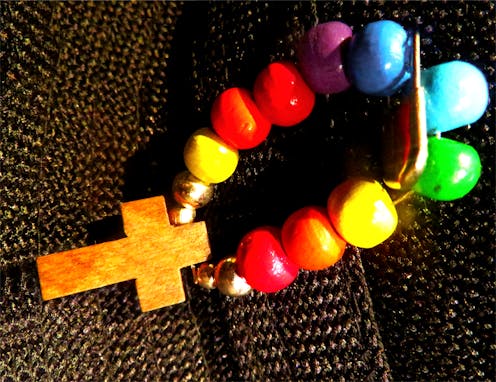
Research shows that many churches in South Africa remain “hotbeds of homophobia”. This is despite the fact that the country has enshrined LGBTIQ rights in its constitution and was the first African country to legalise same sex marriage – in 2016.
But there’s still a gap between the law and social norms. This is visible in the country’s churches too. These tensions were underscored in a recent court case when the country’s High Court handed down a judgment in support of the 12, predominantly queer, plaintiffs from the country’s biggest Afrikaans-based church – the Dutch Reformed Church. The 12 had contested the controversial 2016 reversal of their Synod’s 2015 progressive decision to allow ministers in a same-sex relationship to be ordained, and to be allowed to carry out same-sex weddings.
In 2016, theologian Gerald West suggested that “a queer thing is happening in South African churches” with a vocal minority of local congregations and theologians seeking full inclusion. However most churches could do much more to become accommodating, safe spaces that are inclusive and nurturing. In doing so, they’d be showing a similar attitude shift that research in 2016 has found in wider South African society.
We have done research at the Unit for Religion and Development Research to understand, document and share positive lessons learned from LGBTIQ people, ministers and other congregants within these ‘vocal minority’ churches. The findings show that despite a deadlock at the top levels of many traditional denominations, at local level some congregations are bravely creating alternative models where LGBTIQ people and their partners can feel safe and be accepted.
The research
The research focuses on eighteen in-depth interviews with ministers and long term members within five local congregations in the city of Cape Town. Four congregations offer an alternative to their wider denomination’s non-inclusive stance by advocating full LGBTIQ inclusion. These safer spaces remain a “minority” church position. But they are nevertheless offering creative ways of doing theology from below. Instead of waiting for their whole denomination to change, they are taking the lead by educating their members on the need for an inclusive stance.
My findings offer lessons on which LGBTIQ civil society organisations that work with churches, such as Inclusive and Affirming Ministries, and The Other Foundation can build their activism.
The five congregations in which I did my research were geographically, linguistically and racially diverse. They included suburban, inner city, and township congregations serving Afrikaans, isiXhosa and English-speaking communities as well as migrants from other African countries.
Four of the congregations were attached to traditional denominations – United Congregational Church, Uniting Presbyterian Church, Methodist Church of Southern Africa, Dutch Reformed Church. One, Good Hope Metropolitan Community Church, was an LGBTIQ-specific denomination.
The study explored a number of core themes: church ethos, leadership, theology, visibility, advocacy, challenges and opportunities. It identified 10 promising practices emerging from the congregations’s experiences and the LGBTIQ voices among them.
The findings
The LGBTIQ people I interviewed said that some of their previous churches claimed to be welcoming, but that this wasn’t true in practice. They said they often got strange looks when they went to church with a same-sex partner or stepped up to the pulpit. On top of this they were often unable to celebrate important moments such as marriage and baptism.
Yet, all said that they had found genuine acceptance – personally and theologically – in their current local congregations which many had joined after bad experiences elsewhere.
From my interviews I learnt that the way in which Scripture is interpreted plays a key role in building welcoming environments. Instead of sticking to the various “terror texts” such as Leviticus 18 verse 22 that have been used to suggest that only heterosexual sex is natural in God’s eyes, these churches had elected instead to highlight the human dignity of all God’s people.
Other promising practices we identified included:
-
Focusing on the talents of LGBTIQ people and what positive contribution they could make to the church;
-
Developing positive theologies that celebrate diversity and inclusion, in line with Jesus’s teachings;
-
Using a social justice lens that doesn’t see LGBTIQ issues in isolation;
-
Identifying courageous church leaders who can open up safe spaces for LGBTI people; and
-
Avoiding “double talk” where LGBTIQ orientation is “accepted” but is not allowed to be practised.
These interventions resulted in a number of LGBTIQ people explaining how they were able to end years of exclusion or compulsory counselling by moving to a congregation where they were accepted and could be involved in leadership.
As one lesbian congregant put it:
The big shift was me accepting that I was okay, born in love, by love and for love … the biggest revelation I have ever had. I do not have to be ashamed.
These stories offer valuable lessons for other churches. The church ministers we interviewed said that fear of losing congregants or their job often lay behind a refusal to change. One minister noted that:
many ministers do not want to crucify themselves at the altar of human sexuality to a point where they lose an income.
Setting an example
This study shows that alternative congregations do exist as safe spaces where LGBTIQ people can flourish. More congregations and denominations could follow their lead to make churches a welcoming space for all.

Selina Palm works for the Unit for Religion and Development and is the author of this research report. She is a member of one of the church congregations researched. This study received some funds from The Other Foundation
Source: The Conversation – Articles (AFRICA)
Read more on The Conversation.
Join the fun: Add Your event | Submit a Press Release | Add your listing.


