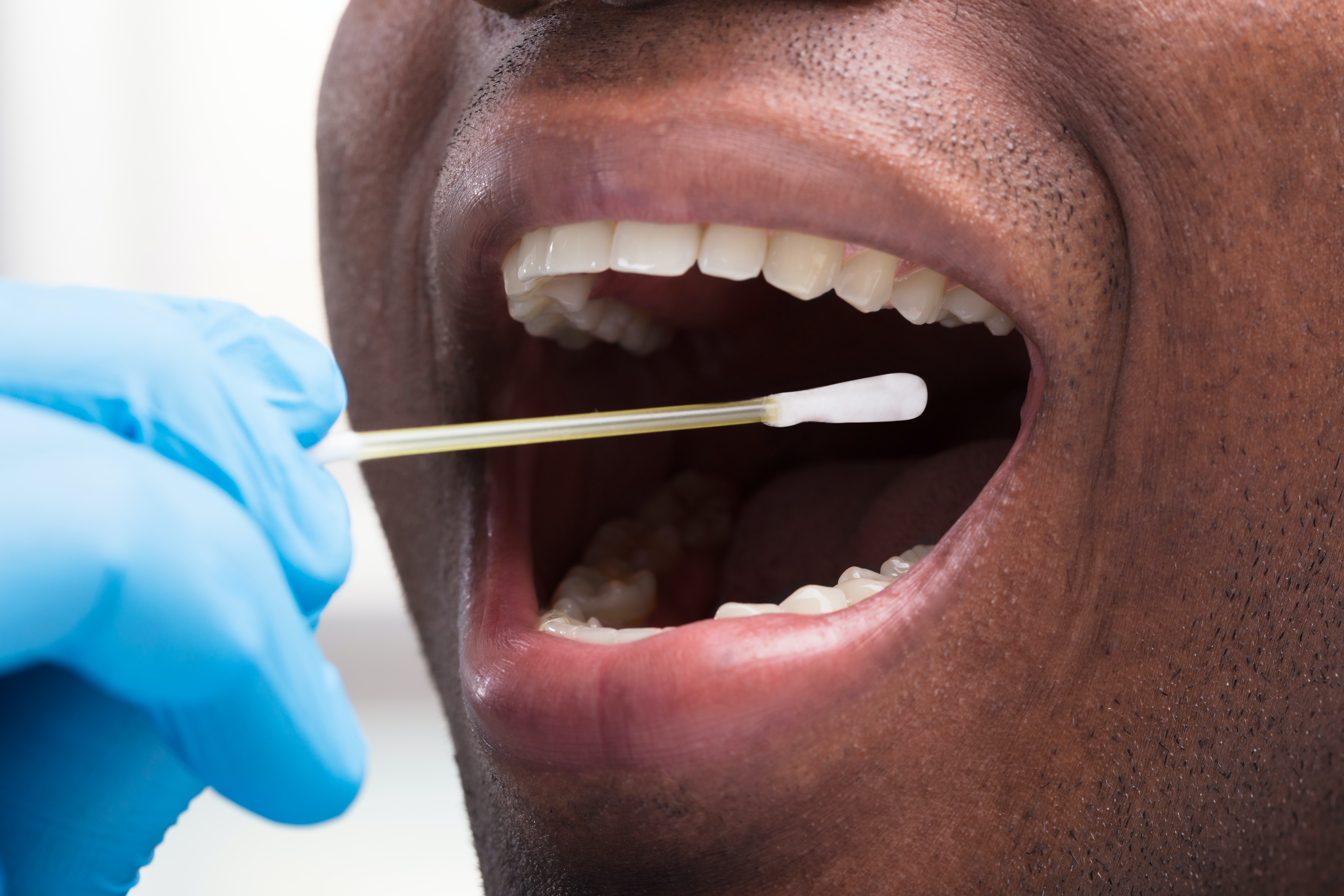
In the past few years, people have become fascinated with using their DNA to learn more about themselves, their origins, family trees, predisposition to health conditions and quirky traits. This has been enabled by the rise in popularity and the relative affordability of direct-to-consumer ancestry testing in places like the US. This testing allows people to swab their mouths to collect cells containing DNA, which are then sent off to companies for testing and analysis.
Today sites like AncestryDNA, 23andMe, MyHeritage and FTDNA dominate the European and US markets. But until recently, this service has been inaccessible to most South Africans. That’s because testing using overseas companies can be expensive, and there are logistical hurdles to shipping sample collection kits into and out of South Africa.
Recently, local companies like DNAnalysis and Be Happy To Be You have started to offer genetic testing, ranging from ancestry to nutrigenetics (what your genes say you should and should not eat) and health screenings.
Many potential clients are, however, sceptical about using these services. They view them as sub-standard and more expensive than some of the larger, overseas competitors. There are also concerns regarding privacy.
So, is supporting local businesses – and getting your DNA analysed – worth it? My opinion, as a human population geneticist who has researched the role that extensive genetic testing can play in mapping diseases, is “yes”. As more clients choose a local service provider for direct-to-consumer testing, the accuracy of the service will increase, the costs will decrease and the resulting data generation can be used to boost medical research efforts.
Addressing concerns
The process of completing a direct-to-consumer ancestry test is fairly simple. When you visit a site and request a test, you will be required to sign a consent form, fill in your personal information (contact details and address) and then wait for your test kit to be couriered to you. This kit is used to swab the inside of your mouth. The swabs are then sent back to the company for further processing, which involves extraction of your DNA and then computational analysis. An ancestry report is generated by comparing your genetic data to data of other worldwide populations.
But what of people’s concerns around accuracy, cost and privacy?
Firstly, there is no evidence that the services offered by local companies are sub-par. In fact, they should be more accurate because of the context in which the data is analysed. Local companies will have databases of South African data that other overseas companies do not. For example, instead of containing two different southern African populations (in line with overseas companies), local companies might have 10 and therefore be able to provide more detailed, granular reports.
Furthermore, scientists who work in local companies have acquired local knowledge and are therefore able to work with South Africa’s unique genetic diversity better than anyone else.
Secondly, testing in South Africa is for the most part not more expensive than overseas. If South Africans use an overseas company, they’ll generally have to pay for courier fees to get a sample collection kit delivered and sent back to the company as well as potentially paying import taxes. There’s also a risk that the sample collection kit might get held up or even lost in either direction of the courier process. This may add to the overall cost.
Typically the price for direct-to-consumer ancestry testing in the US is between $69 and $99. Adding approximately R800 (around $50) for courier charges brings the cost for an international test to between R1,900 and R2,400, compared to between R1,000 and R2,499 locally (courier fees included). And, as more and more people start using local resources, the products and services will become cheaper over time.
Read more: What we’ve learnt from building Africa’s biggest genome library
With regard to data privacy, confidentiality and anonymity, South Africa has some of the strictest laws that govern personal data, particularly the Protection of Personal Information Act. All local companies are required to adhere to this.
There is another aspect South Africans should consider when they’re thinking about using local services for genomic testing: the importance of creating a genomic citizenship movement.
Benefits for all
When you send your DNA to a direct-to-consumer genetic testing company, you are investing in a product and service that benefits others. By making your de-identified genetic data available for use in local companies’ databases and for research purposes, you directly contribute to scientific development by increasing the accuracy of these services for other clients and in some cases, for yourself and for your family members.
Scientific researchers can use that de-identified data to investigate, for instance, why some individuals get sick and others don’t. An example of this has been seen during the COVID-19 pandemic. Genetic data from direct-to-consumer genetic testing has been used to investigate how the disease progresses and why some patients are asymptomatic while others succumb to the disease. This was made possible by individuals who allowed researchers to use their genetic data for this purpose.
Over time, with an expansion of genetic data, it will be possible to diagnose patients with genetic diseases that would not have been diagnosed otherwise. Scientists will be able to answer questions regarding the efficacy of medications in some patients and speed up the development of gene therapies that could save countless lives.
The rise of direct-to-consumer services is an opportunity for South Africans to contribute, in their own way, to a greater genomic future.


