How the DRC’s Ebola crisis has led to children dying from measles:
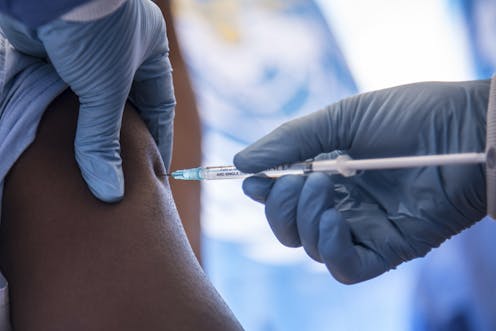
Forty-five years ago, the World Health Organisation launched the Expanded Programme on Immunisation. It covered six diseases – measles, tuberculosis, polio, diphtheria, pertussis and tetanus. Since then, anti-measles vaccines have been distributed to millions of children across the world, leading to a massive reduction in illness and death. For example, between 2000 and 2017, it was estimated that global deaths from measles had reduced by about 80% due to vaccination.
Success in the fight against measles is down to the delivery of at least two doses of vaccines to about 95% of children in the world. Vaccination is critical to preventing the disease because there’s no treatment for measles. During an outbreak, measles mainly affects unvaccinated children, but also adults who have never been vaccinated. The measles virus spreads when patients cough or sneeze, and remains active in the environment for several hours. The symptoms include high fever, dry cough, runny nose, inflamed eyes and skin rash.
The global measles elimination target was set to be achieved by 2020. Sadly, this target is increasingly looking unattainable. There’s been such a deterioration in vaccine reach that this year the World Health Organisation declared refusal or delay in agreeing to be vaccinated (vaccine hesitancy) as one of the top ten threats to global health. Hotspots include Ethiopia, Georgia, Kazakhstan, Kyrgyzstan, Madagascar and Sudan.
The Democratic Republic of Congo (DRC) is on that list too, due to the Ebola crisis in parts of the country, which has fuelled a measles outbreak of unimaginable proportions.
The main reason for this is that healthcare resources have been diverted to deal with the Ebola outbreak, which still hasn’t been brought under control. As a result, people don’t have access to routine healthcare such as vaccination programmes.
A combination of factors – increased violence, growing mistrust towards medical teams in the wake of the Ebola outbreak as well as the diversion of resources to deal with Ebola – have resulted in reduced vaccination coverage in general. When measles vaccination coverage is low, the disease outbreak is always imminent.
Ebola and measles
How could an Ebola outbreak fuel a measles outbreak?
The most recent Ebola outbreak in the DRC was declared in August 2018. Despite the Ebola response teams in the country having more advanced tools and prior experience relative to previous outbreaks, new cases continue to be reported.
Community mistrust towards the outbreak response team has been cited as one of the challenges. Another is the high levels of insecurity due to battles between the army and armed groups. This has affected access to health services by communities.
In addition, resources – including human resources – have been diverted from routine services, such as vaccination programmes, to the Ebola response task.
According to the latest measles surveillance data from the World Health Organisation, new cases of measles rose by 300% in the first four months of this year. Across Africa, the number of cases rose by 700%.
And, according to Médecins Sans Frontières (MSF), between January and May 2019, more than 1,500 measles-related deaths were officially recorded in the DRC. Numbers like this would be considered unimaginable in any other country outside Africa.
Compare these figures with the US, where in the first four months of this year 704 cases – not deaths – of measles were reported, according to the Centres for Disease Control and Prevention.
What next
A massive response to the measles outbreak in the DRC is currently underway.
A key step to any disease outbreak is an establishment of strong partnerships to mobilise resources and coordinate the response. The DRC’s Ministry of Health has received considerable support from several partners, among them, the World Health Organisation.
The response plan has included setting up emergency response strategies, strengthening surveillance, investigations and preparedness response. Given that safe and effective vaccines against measles are available, the ultimate success of the response team will depend on the ability to supply and administer these lifesaving interventions to all those who need them.
To achieve this, the MSF is appealing for a massive and urgent mobilisation of national and international partners.
A key lesson must be learnt from the loss of thousands of children’s lives in the DRC due to measles. Vaccine programmes in Africa are vulnerable to crises, yet, these immunisation programmes are a key strategy to reducing infant mortality. African leaders have endorsed the regional immunisation strategic plan, in recognition of the vaccination benefits. But they need to go further: they must urgently develop effective policies that can mitigate the negative effects of crises on vaccination programmes in the future.

Benjamin Kagina does not work for, consult, own shares in or receive funding from any company or organization that would benefit from this article, and has disclosed no relevant affiliations beyond their academic appointment.
Source: The Conversation – Articles (AFRICA)
Read more on The Conversation.
Join the fun: Add Your event | Submit a Press Release | Add your listing.


