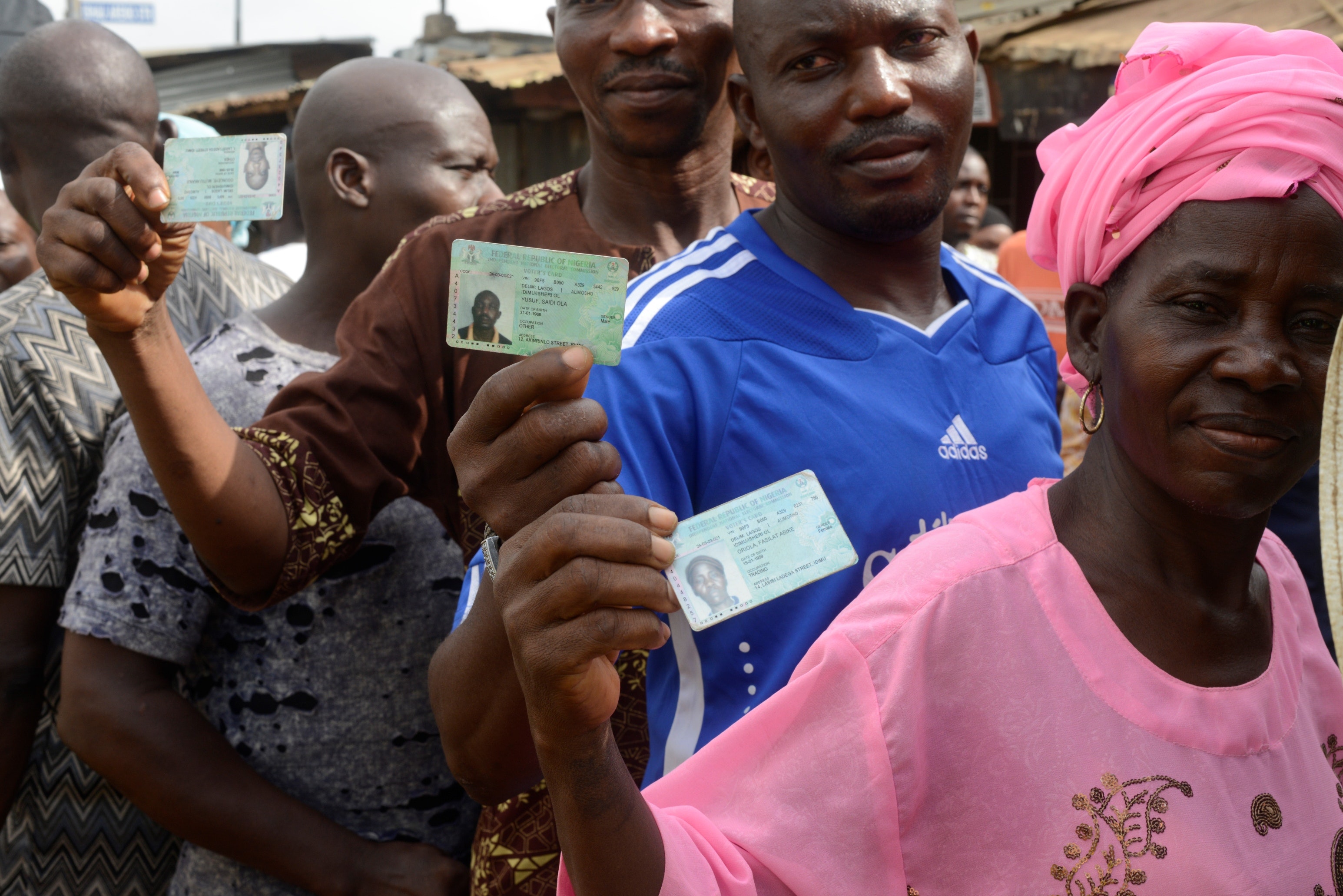
Nigeria’s electorate, which the Independent National Electoral Commission put at 93.5 million on the voters’ register, are expected to come out in their numbers in 2023.
They will be electing the president and members of the National Assembly on 25 February and governors and members of the State Houses of Assembly on 11 March. It is Africa’s biggest election.
To vote in the elections, Nigerian citizens must be at least 18 years old and must have collected their permanent voter’s card by 5 February. The electoral commission has not yet released the number of people who have collected their cards. The number will determine the actual number of people that can be expected to vote in the election.
Nigeria spends about 2% of its GDP on elections.
Logistics, security challenges and malpractice in past elections have led to a focus on the reform of election administration.
The Electoral Act 2022 has given legal backing for any voter accreditation technology that the electoral commission uses. If any technical device used in the election fails to function and isn’t replaced, the election will be cancelled for that voting station and another scheduled within 24 hours. The law also allows the commission to transmit election results electronically. These steps greatly reduce the ability to rig results, compared with manual methods.
Still, the logistical challenges for the 2023 elections are huge, given the fact that 18 political parties are contesting, the security environment and the number of contestants at various levels.
There are 18 presidential candidates, 1,101 candidates for the Senate and 3,122 candidates vying for federal constituencies in the House of Representatives. The elections will be conducted across 176,606 polling stations.
The presidential election could end in a run-off election because it’s a three -horse race. Candidates of the ruling All Progressives Congress, People’s Democratic Party and the Labour Party command a large national following, as shown by several pre-election polls.
Read more: Nigerian elections: Eight issues young people want the new government to address
The logistics
A total of 1,265,227 officials will be trained and deployed for the elections. They include presiding officers and collation and returning officers, as well as 530,538 polling unit security officials.
The Independent National Electoral Commission will issue 1,642,386 identification tags for the polling and collation officers, and provide 176,846 Bimodal Voter Accreditation System (BVAS) devices and 17,618 BVAS machines for back-up. These devices verify the identity of voters by checking fingerprints and facial features electronically.
In December 2022, the electoral commission signed a memorandum of understanding with transport unions that will help deploy over one million personnel and large quantities of election materials to 774 local government areas, 8,809 electoral wards and 176,846 polling units across the country.
Over 100,000 vehicles and about 4,200 boats, accompanied by naval gunboats, will be used.
These have to be deployed under the current state of insecurity in the country as well as scarcity of fuel.
Challenges of 2023 polls
The success of the 2023 general election will largely depend on the degree to which citizens can vote without impediments. But there are challenges.
Voter apathy: Nigeria has a history of voter apathy, where a significant number of registered voters fail to show up on election day. For the 2019 general elections, the country had 84 million registered voters. Voter turnout in the presidential election was only 35.66%. In 2015 it was 43.65%. These figures put Nigeria among the 10 countries with the lowest voter turnout in the world. Rwanda recorded 98.15% voter turnout in 2017, the highest in the world.
Naira redesign and scarcity of fuel: The electoral environment has been bedevilled by scarcity of fuel and naira notes. The shortages have led to public demonstrations and heightened tension which might deter some voters from coming out on election day.
Insecurity: Fifty-two electoral commission offices were destroyed or burnt between 2019 and 2022. Secessionist movements and militants from the southern regions and religious extremists and bandits in the north have besieged electoral facilities. This may discourage prospective voters.
Read more: Africa’s largest democracy goes to the polls amid rising insecurity
The voting process
There are four steps in the voting procedure to be followed on election day: accreditation, voting, sorting and counting, recording and announcement of results.
Accreditation: Voters, armed with their permanent voter’s card, must be present at the polling unit where they are registered between 8.30 am and 2.30 pm. They need to queue up in an orderly manner for accreditation. Voters present their card to the assistant polling officer, who will use the BVAS device to check that voters match their cards. Where the fingerprint fails to confirm the match, the BVAS will be used to verify the facial identity of the voter.
Voting: After accreditation, voters are given their ballot paper. They go to the voting booth to make their choice on the ballot paper in secret by thumb printing. Then they put the ballot paper in the ballot box in full view of everyone present, without disclosing how they voted. Voting is declared closed when the last voter in the queue has voted. Voters may remain at the polling unit to watch the vote.
Sorting and counting: The ballots are sorted and counted in full view of everyone at the polling unit.
Recording and annoucement: The results are filled into the result sheet and announced by the electoral commission officer at the polling unit. The results from the polling units are taken to the various levels of collation. The sum of the results is recorded and at the final level, the candidate who meets the criteria is announced as the winner of the election.
Read more: Nigeria’s 2023 presidential election: 10 factors that could affect the outcome
Conclusion
To vote validly, the voter must be aware of the process of voting beyond being registered to vote and collecting the permanent voter’s card.
Invalid ballots during the vote count are widely attributed to inadequate civic and voter education. Thus, voter education is central to increasing voter turnout and reducing incidents of invalid votes.
For these reasons, the Independent National Electoral Commission made a plan for voter education. It has a voter education manual and frequently asked questions. Observer organisations have also tried to help prepare voters.
For a peaceful, free, fair and credible election, citizens must stay up to date about developments. They must know the location of their polling place before election day, and contribute to keeping the peace.


