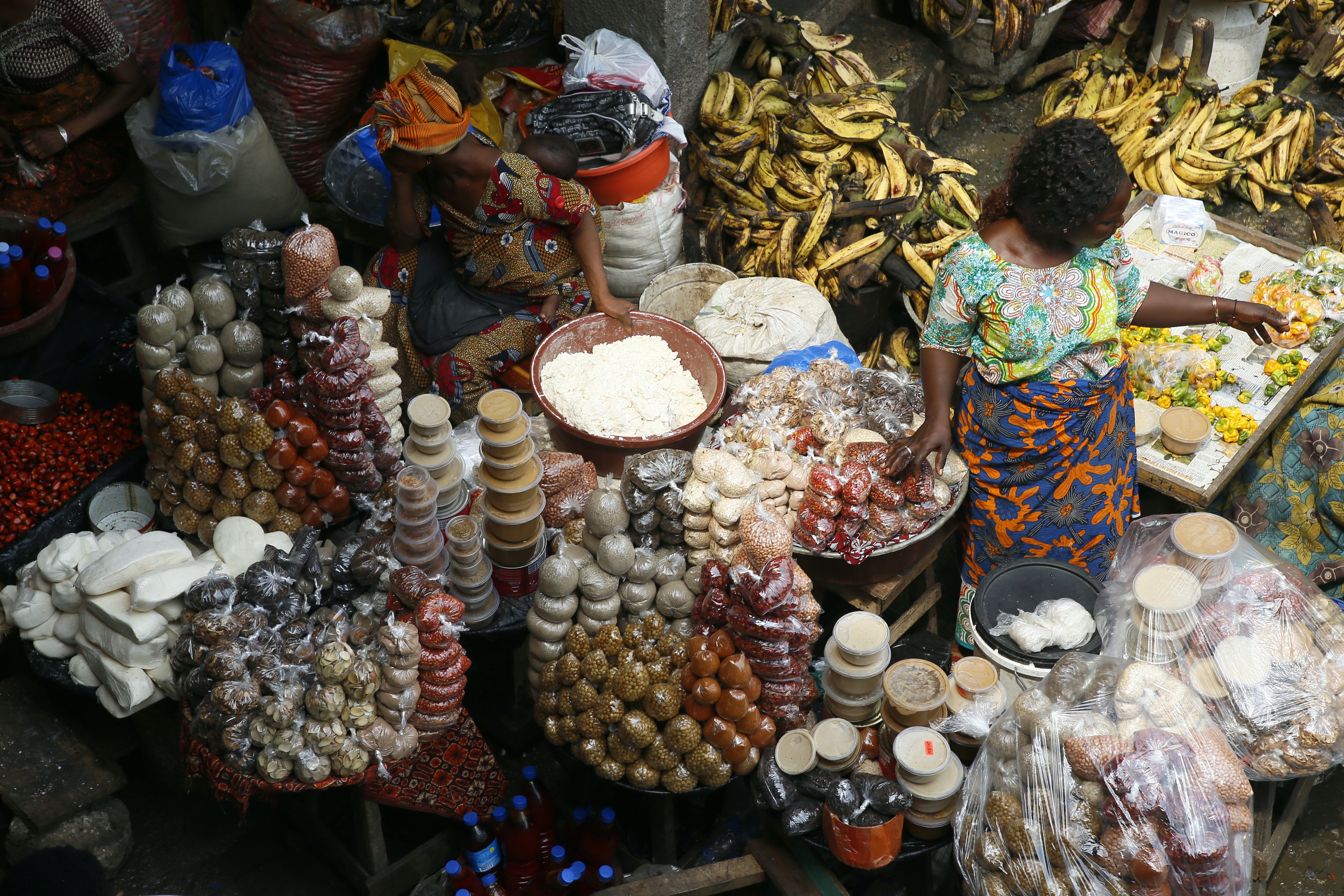
The number of hungry people in the world grew by a staggering 161 million people in 2020 to 811 million. More than one third of these people live in Africa. One of the main reasons for this increase is the COVID-19 pandemic, coupled with the cost of healthy diets and high levels of income inequality.
More concerted efforts are needed to address the problem of food security. Empowering women is often said to be the key. In the past, researchers have looked to their specific disciplines to suggest how women could be empowered to improve food security.
Some have focused on increasing women’s income because women spend more of their income on household nutrition. Others have focused on providing women with nutrition education because women carry the primary responsibility for preparing food.
While these studies are valuable for improving food security and nutrition, we also need to consider what shapes women’s participation in different aspects of the food system.
Globally, experts are beginning to recognise that focusing on one aspect of food overlooks the trade-offs or sacrifices people make. For example, women’s economic empowerment may mean that they spend more time on economic activities, and less time preparing food.
Studies have shown that as a result, many women rely on convenient fast foods to feed their families. This food is typically low in nutritional value.
The need to look at food in its entirety has put more attention on the concept of food systems. That includes the inputs used to produce food, its production, how it is transported and consumed, and the type of food that people choose to eat.
Read more: COVID-19 recovery is a chance to improve the African food system
While some frameworks exist to describe food systems, we could not find one that considered these issues from a gender perspective. We aimed to develop a framework that could help show how to improve women’s participation in and benefit from all areas of the food system.
Our study
Our study enhanced an existing food systems framework by integrating a gender perspective. A food systems framework is a set of things you need to think about when looking for ways to make better food available to more people.
It helps us understand how things interact – making it easier to see how one intervention might negatively or positively influence another aspect or activity in the system. We chose to work on the Global Panel on Agriculture and Food Systems for Nutrition (Glopan) framework because it was user-friendly. Glopan is a global panel of experts on food security and nutrition.
This framework looks at agricultural production, market and trade systems, people’s ability to buy food, how to transform food, the types of food people are likely to consume and healthy diets. The framework does not integrate gender issues.
We studied 18 global and pan-African commitments – such as the Sustainable Development Goals and Africa Agenda 2063 – to identify gender policy actions that could be taken in each of the areas of the Glopan food systems.
We found that generally, there is a consensus in the documents on specific actions that can be taken to advance gender equality in the food system. Our study brings together these policy actions to provide a way of understanding how they fit together and interact.
We also found that governance and social systems constraints – that are not necessarily part of the food system, but affect men’s and women’s capacity to participate in the food system – need to be addressed.
For example, maternity leave policies are important to ensure that women can work without experiencing discrimination or pay cuts. Paternity leave is also important to challenge the idea that only women are responsible for child care.
We developed an enhanced framework that helps policy makers identify how gender can be integrated into parts of the food system.
An enhanced framework
The framework we developed is an initial step to understanding the interactions between existing policies and the potential trade-offs. For example, improving women’s access to markets might have implications for the amount of time they can spend at home. Limited time spent at home may reduce breastfeeding – which is critically important for children’s health. Policy makers might consider building daycare facilities close to markets to support women to breastfeed.
Many of the policy options proposed in our study are consistent with study findings across African agriculture and nutrition research. These show that women face constraints in access to land, services and markets.
Read more: Food security in African cities needs a fresh approach – our book sets out the issues
Our framework proposes several priority actions for policymakers:
-
Improving women’s access to markets and trade systems. An example would be daycare facilities near markets.
-
Improving women’s social protection. Social grants or food parcels are examples.
-
Improving women’s access to nutritious food. This makes an important difference to maternal and child health, particularly during pregnancy.
Unlocking food security
One challenge our study identified was that globally, policies still overemphasise the role of women in agricultural production and diets. Their role in markets, consumer demand and consumer purchasing power is not as highly prioritised.
Women’s access to resources and services is also overemphasised, overlooking issues of control. For example, policies may promote women’s access to agricultural technologies. But cultural restrictions prevent women from using these technologies.
Eliminating hunger will require that research and policies empower women to participate effectively in the food system. Research or policies that focus on one discipline will not suffice to achieve this goal. It’s also essential to understand what gender policy actions can be taken.


