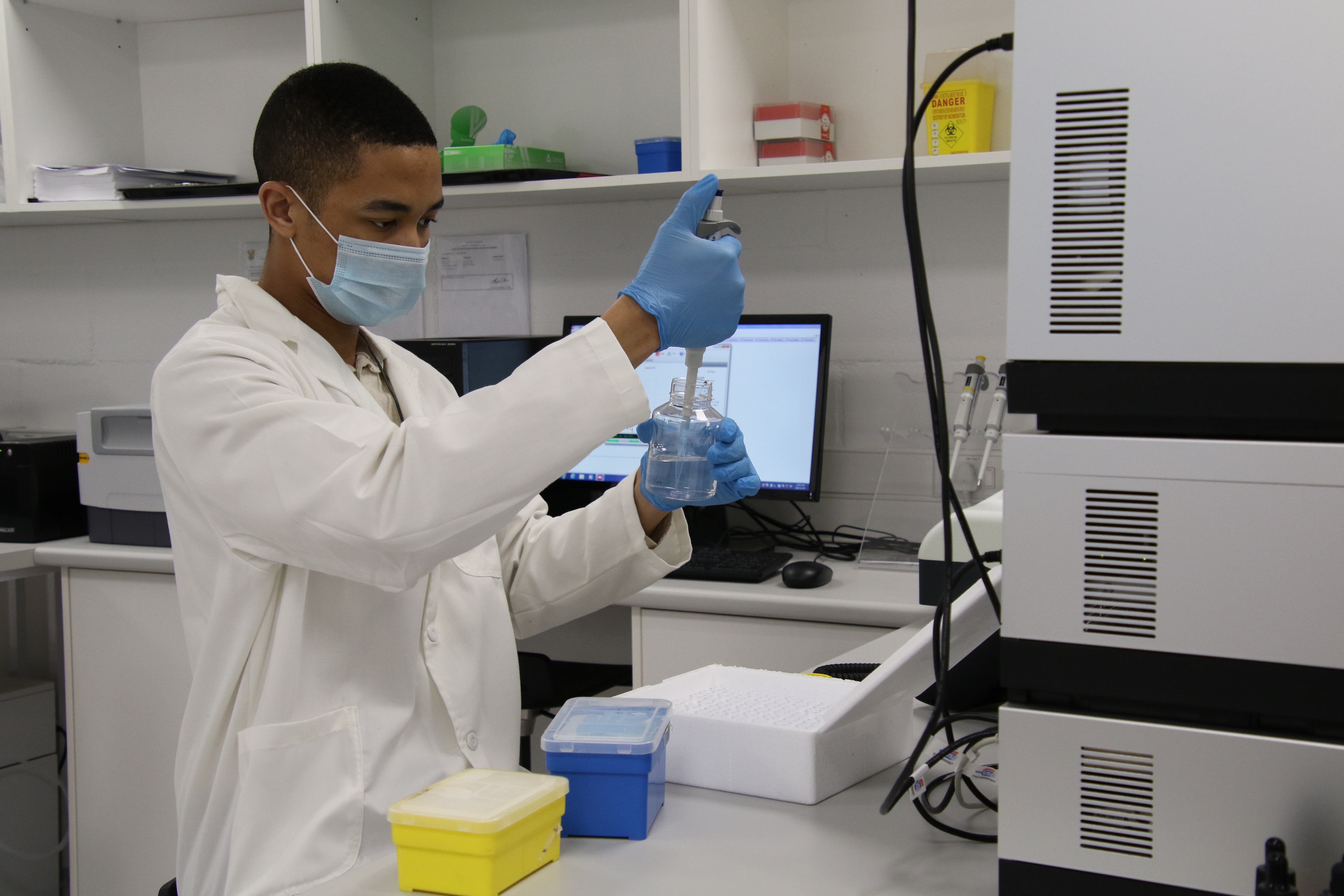
The World Health Organisation (WHO) has announced the first six African countries that will receive technology to produce messenger RNA (mRNA) vaccines. This comes off the back of the news that a South African consortium – part of the WHO’s technology transfer hub set up in 2021– had successfully replicated Moderna’s COVID-19 vaccine. Ina Skosana spoke to Professor Kelly Chibale about the significance of the replication of the vaccine and what the next steps are.
What does the WHO technology-transfer hub do, and why is it significant?
The World Health Organisation (WHO) technology transfer hub initiative aims to fight COVID-19 vaccine access inequality by making it possible for low-income countries to manufacture their own vaccines. Currently, Africa has only 11.69% of the continent’s population fully vaccinated while over 70% of the high-income countries have already vaccinated more than 40% of their people.
This initiative – through skills and technology transfer – potentially increases Africa’s chances of providing COVID-19 immunisation to the continent’s entire population by 2024. On 3 February, Afrigen Biologics and Vaccines – a Cape Town based biotechnology company and a partner in the hub – announced that it had successfully produced the continent’s first-ever messenger RNA (mRNA) vaccine.
Read more: Africa’s first mRNA vaccine technology transfer hub gets to work
This landmark was achieved in partnership with the University of the Witwatersrand using publicly available information to replicate Moderna’s COVID-vaccine “formula”. It shows that Africa has got the skills and technology needed to produce this type of vaccine. The hub has made it clear that it will not infringe on patents.
I believe that Afrigen’s achievement gives renewed hope for the continent’s biotechnological aspirations.
How does this advance WHO’s technology transfer initiative?
Afrigen is part of a consortium selected by the WHO last year for a pilot project to provide information on how to make COVID-19 vaccines for low- and middle-income countries. Afrigen’s success is a major win for South Africa as well as for the entire continent. It means that the goal to scale up mRNA vaccine production in the targeted countries can be achieved. This development will advance the WHO’s initiative for the training hub to build capacity for manufacturing.
Read more: Messenger RNA: how it works in nature and in making vaccines
It promotes self-reliance in the targeted countries. With the manufacturing capacity and access to relevant technology, African countries can reduce the dependency on international manufacturers for medicines, vaccines and supplies while building stronger health security. Also, it has been proven that African countries have scientists and experts who are equal to the task. This will reverse the narrative that Africa is not a source of health innovation as it relates to drug and vaccine discovery and development.
What are the next steps?
The first should be to demonstrate that the Afrigen produced vaccine is biologically equivalent (that is, bioequivalent) to the Moderna vaccine that was replicated.
The second is to figure out how to scale up manufacturing under good manufacturing practice conditions for accelerated clinical trials of the bioequivalent vaccine. If bioequivalence cannot be demonstrated, then long term clinical trials will be needed to demonstrate efficacy and safety of the Afrigen vaccine.
Read more: Vaccine production in South Africa: how an industry in its infancy can be developed
For large scale manufacturing Afrigen will share the information with Biovac – a state-owned South African vaccine producer and collaborator in the WHO hub initiative. Biovac will be the first recipient of the technology and would look into large scale good manufacturing practice. Thereafter, Afrigen is expected to share the knowledge with other local producers.
The recipients will be contributing to the collective effort to boost local vaccine production. It is anticipated that countries will be legally obligated to produce the vaccines locally. The WHO plans to scale the production of the vaccine to a commercial level at the conclusion of the approval process that is expected to come through in 2024.
Moreover, Afrigen has committed to sharing the knowledge it has by supporting the training of biotech companies in South America. Additionally, the hub intends to shift its attention to developing a variant of the mRNA vaccine that will not require cold temperatures for storage, which is a requirement for some COVID-19 vaccines.
Most importantly, the efforts don’t end here. The company is building capability and capacity on the mRNA platform for future vaccines for diseases of high burden such as HIV and TB. This is just the beginning of building sustainable and capable infrastructure for Africa.


