Image from page 287 of “Journal of the Department of Agriculture, Union of South Africa” (1920)
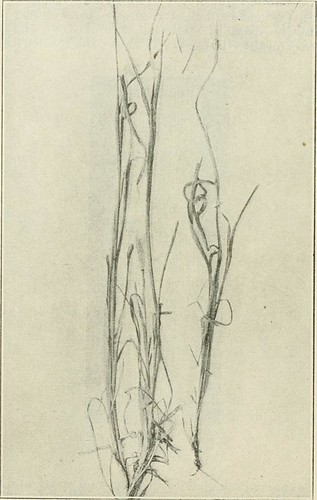
Image by Internet Archive Book Images
Identifier: journalofdepartm01sout
Title: Journal of the Department of Agriculture, Union of South Africa
Year: 1920 (1920s)
Authors: South Africa. Dept. of Agriculture
Subjects: Agriculture Agriculture — South Africa
Publisher: Pretoria, Govt. Print. and Stationery Off.
Contributing Library: The LuEsther T Mertz Library, the New York Botanical Garden
Digitizing Sponsor: The LuEsther T Mertz Library, the New York Botanical Garden
View Book Page: Book Viewer
About This Book: Catalog Entry
View All Images: All Images From Book
Click here to view book online to see this illustration in context in a browseable online version of this book.
Text Appearing Before Image:
Fui. 2. and No. Ill those whicli had formed normal ears, and on which noindications oT the disease were visible. The actual numbers ofdiseased and of healthy stools in the product of this square yard wascounted, and was as follows : — Healthy stools 33 Ears produced by the above 85 Diseased stools 20 Partially diseased stools T Healthy ears produced by the above 9 Diseased stalks 10 Thus the actual percentage of stools showing disease, as comparedio llie number of healthy stools in this field, would be 45 per cent.10 254 Journal of the Department of Agriculture. General Characters and Symptoms. The disease first becomes visible to the naked eye as black streakson the leaves, parallel with the veins, and extending along- the lengthof the leaf blade. (See Fig. 2, which is an enlarged drawino- of aportion of a leaf.) ^ The whole plant is stunted, and the leaves frequently becomemuch twisted and distorted. The whole stool may be diseased, in
Text Appearing After Image:
Fig 3. which case it is killed outright, or else only some of the shoots of thestool, the rest forming normal ears, though undersized ones. Thegeneral appearance of a typically diseased wheat plant reminds oneot a comnion cattle tulp plant, and it is from this similarity in appear-ance which has given rise to the South African name of fulp brand i ^^^^^lisease (Fig. 3). Fig. 4 is a photogi-aph taken in a wheat-fieldwhere the disease is prevalent, and shows in the foreground a normalstool on the right, and a diseased one on the left; the latter is less than FLA(i Smut of Wheat 255 half the height of the former, and has made no evident attempt toform ears. As a riile the plant is attacked so severely that it is unableto produce even young ears; sometimes a diseased stalk does form anear with grain, but usually the ear is attacked while still very youngand enclosed in its leaf sheath. Cause of Disease. Flag smut of wheat is caused by a fungus, Urocystis fritisi,Koern., and is ne;iily rel
Note About Images
Please note that these images are extracted from scanned page images that may have been digitally enhanced for readability – coloration and appearance of these illustrations may not perfectly resemble the original work.
This South African Flag image was automatically curated and published with WP Robot plugin – CLICK HERE to learn more about WP Robot for WordPress – a massive time and money saver.
Visit the MyPE YouTube Channel.


