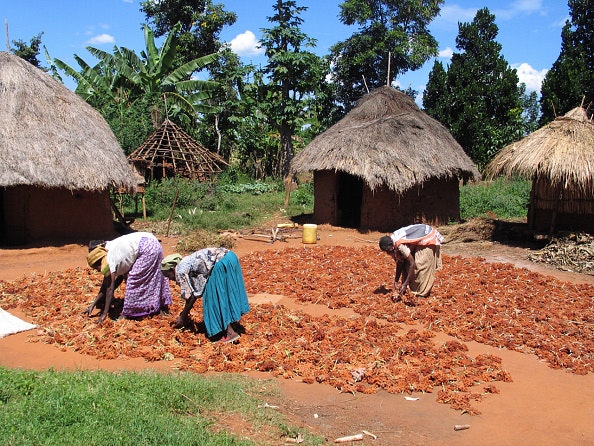
Economic activity and development are unevenly distributed across regions of the world and within any country. In other words, where someone lives can determine their economic and social well-being.
Take gross domestic product (GDP) per capita – the total value of a country’s economic output per person. In 2020, North American and Europe’s GDP per capita was more than ten times that of sub-Saharan Africa.
More than a third (38%) of people in sub-Saharan Africa were living in extreme poverty in 2019. The estimate for the rest of the world was less than 10%.
But there is limited research analysing levels and trends of spatial disparities in sub-Saharan Africa. This is due to a lack of comparable data on income and consumption across countries.
In a recent analysis, we used comparable data from demographic and health surveys to evaluate spatial inequality between regions within a country – such as disparities among South Africa’s nine provinces. We also studied inequality between individuals in more than 24 sub-Saharan African countries.
We examined multiple dimensions of inequity. Our analysis considered assets as well as access to basic services. This is a useful way of measuring the extent and patterns of inequalities in sub-Saharan Africa.
The results show that spatial inequality remains significant in a number of countries in the region. Most have high levels of spatial and overall national inequalities. There are large variations among countries.
High and persistent spatial disparity within a country has a number of negative consequences. It means poverty doesn’t respond to economic growth. It also has implications for political and social stability.
Public policies that promote investment in infrastructure and basic services, as well as human capital and skills development, are critical for reducing spatial inequality.
The research
First, we used data from 24 sub-Saharan African countries totalling over 1.6 million observations. Indicators of living standards – for example ownership of durable assets like land and livestock, and dwelling conditions – formed the basis for comparing households.
Secondly, we used data on basic services, such as clean water and electricity, as a narrower measure of living standards. We also used this data to examine inequity trends across time. We used data from 27 countries, comprising around five million observations, from 1995 to 2018.
Read more: Pandemic underscores gross inequalities in South Africa, and the need to fix them
In each country, we used the first administrative units (regions or provinces) as our spatial units.
Our research differed from recent studies that have used night-time lights data from satellites to analyse spatial inequality.
Night-lights data is useful in predicting economic activity in cities. But it tends to underestimate spatial inequality in areas where primary activities such as agriculture are the main economic activity. This includes many sub-Saharan African countries.
Findings
Our analysis reveals high levels of within-country spatial and overall national (interpersonal) asset inequalities. Countries varied a lot.
Countries with high regional inequality included Mozambique, Ethiopia, Kenya and the Democratic Republic of Congo.
In 18 countries, regional inequalities accounted for at least one-fifth of overall national inequality.
These findings show that, in most sub-Saharan African countries, reducing spatial inequality can do a lot to reduce overall national inequality.
Read more: Unequal power relations driven by poverty fuel sexual violence in Lake Chad region
We show that spatial and national inequalities in access to basic services have declined significantly over time in most of sub-Saharan Africa. But the level of inequality and the change over time varies across countries.
Spatial inequalities in access to basic services remain relatively high in Sierra Leone, Mozambique and Niger. They are comparatively low in Gabon, Malawi, Comoros and South Africa.
Reducing spatial inequalities
Spatial inequality is a key component of national inequality in most countries in the region. So lowering spatial inequalities can reduce economic and social inequities.
There is some consensus that three factors contribute to spatial inequalities in developing countries. These are:
-
Initial differences in geography, such as environmental factors, natural resources and access to trade routes
-
The concentration of skills, economic productivity and amenities in a few locations
-
Political and fiscal policies
But there is disagreement about which policies work best to reduce spatial inequalities. It’s important to understand a country’s context to identify solutions. High levels of initial economic inequalities, among other factors, are an obstacle to reducing poverty in sub-Saharan Africa. And regional disparities within a country are frequently associated with social divisions such as religion and ethnicity. This leads to conflicts.


