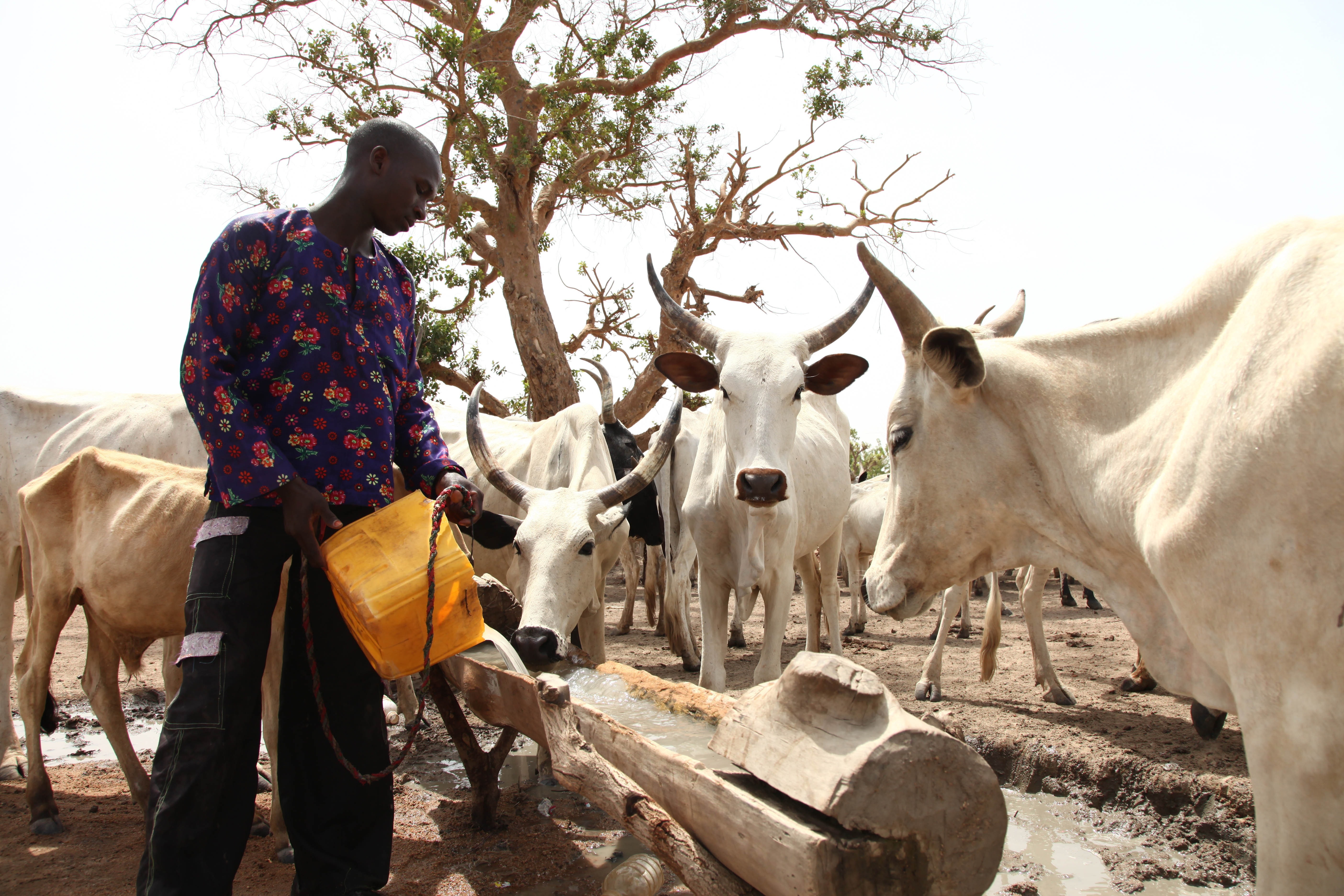
The Fulani in the Ibarapa community of Oyo State, southwestern Nigeria, are mostly migrants from the northern part of the country. A small number come from neighbouring Chad, Niger, Benin Republic and Cameroon. These settlers mostly live in settlements, far away from the host communities.
The emergence of Fulani in Ibarapa dates back to the early 20th century. For the most part, the men herd cattle while the women produce and sell dairy products. Both men and women are involved in crop farming as well as other entrepreneurial activities. Some are involved in a combination of two or more economic activities.
The Fulani clans in Ibarapa include the Barugu’en and the Bororo’en. While they both speak the Fulani language, Fulfulde, there are differences in dialect.
We conducted a study into these Fulani people’s access to basic social amenities such as water and healthcare facilities.
We collected data through observation as well as interviews. Between January and March 2018, we interviewed 22 people, drawn from 12 different Fulani settlements and three Yoruba communities.
We found that Fulani settlers were disadvantaged in their access to basic social amenities such as potable water, healthcare facilities, electricity and schools. Research has established that these necessary amenities are widely inadequate in urban and rural areas of Nigeria. But our findings show that the Fulani settlers in Ibarapa are particularly badly off. There are no infrastructural facilities available in most of their settlements.
Although Fulani settlers have been in Ibarapa for decades, their migrant status and strained relationships between them and their host communities have contributed to their disadvantaged access to infrastructural facilities in the study location. This also has its place in understanding the latest face-off between communities in southwestern Nigeria and Fulani settlers.
The alienated Fulani in Ibarapa
Our research was conducted in 12 out of the over 100 different Fulani settlements in Ibarapa. Each settlement is made up of an extended family of an average of 20 people, related by blood or marriage.
The settlements are remote and road links to the nearest host communities are in bad condition.
Over time, there has been an erosion of the goodwill between host communities and the Fulani in Ibarapa due to incessant clashes between the cattle herders and farmers. These have mainly been as a result of cattle encroaching on farmlands. The destruction of farm produce by cows usually translates to loss of livelihood for farmers who have invested time, money and effort.
As a result a good number of farmers have stopped farming. This has also affected the availability and price of farm produce in the area.
We spoke with Yoruba farmers from the host communities who shared their stories with us. These included tales of deliberate and wilful destruction of farmlands, breaking of demarcating hedges, raping of women, arson by burning barns and storehouses and the use of firearms by the herders. Some alleged that their people had been abducted at gunpoint and in some extreme cases, people had been killed on farms.
Their stories gave insights into the factors behind the violence that is endemic in the region.
In retaliation to the encroachment by cattle, some farmers said they had sprayed poison on the farmland which had led to the death of cows. Due to the strong value placed on cattle, the farmers’ actions sometimes trigger retaliation from the cattle herders.
Read more: What’s triggered new conflict between farmers and herders in Nigeria
The Fulani have also been accused of rape, kidnapping, armed robbery and murder in the area. In support of the robbery accusation, a Yoruba community leader mentioned how some years back, the son of a popular Fulani leader in Igboora, a town in the Ibarapa region, was arrested for criminal activities by the police.
While not absolving the Fulani of the accusations levelled against them, some members of the Fulani community argued that not all Fulani were criminals. In addition, they complained that they were also victims of farm encroachments and other criminal activities perpetrated mostly by the Bororo (a clan of Fulani).
A Fulani settlement head who was interviewed said:
The Bororo Fulani are regarded as violent, harsh and often the perpetrators of the various violent acts attributed to the Fulani. They usually do not stay in one place and thus cannot be held accountable. Even if you catch them, some of us Fulani are scared of confronting them.
A Fulani opinion leader recounted how he escaped death in the hands of Bororo herders while he was working on his farm. He had resisted attempts by the herders and their cattle to encroach on his farmland. In retaliation the herders attempted to maim him with a cutlass, despite the fact that he is a Fulani.
The opinion leaders and other Fulani interviewees agreed that most of the perpetrators of crimes were Fulani who crossed into Nigeria from Chad, Niger, Cameroon and Benin Republic, through the porous borders.
Speaking on cattle encroachment, an opinion leader who is a Yoruba traditional healer argued that Fulani sometimes got away with their crimes because some locals engaged the services of Fulani in rearing their cows.
He further submitted that the traditional mode of settling disputes between Fulani and the host communities, in which owners of cattle that destroy farmlands and crops are mandated to compensate the aggrieved farmers, which had been effective in the past, was no longer popular. Rather, the Fulani now preferred going to the police. But the police have been accused of taking sides with the Fulani.
This has further eroded the relationship between the host communities and the settlers.
The incessant clashes between farmers and herders in Nigeria are old and steeped in history. While these problems have an overriding arc of insecurity, new challenges have contributed to the latest violence. One of these is that the pasture available to Fulani pastoralists is shrinking as a result of changing weather patterns brought about by climate change.
Read more: Conflict between herders and farmers: Nigeria needs to accept there are victims on both sides
Next steps
The government will have to come up with workable and clearly defined solutions. To start with, the imbalances in the provision of facilities need to be addressed, especially with a view to bridging the gaps between settlers communities and others.
Place making – settling and making homes in places different from your place of origin – is the right of every citizen. People who have done so should not be discriminated against, regardless of where they are domiciled in the country.
In addition, the government will need to address the problem of porous borders as a way of checking the inexorable flow of illegal migrants into the country. This is necessary as there are pointers that some of the pastoralists that perpetrate crimes are not from the stock of Fulani settlers who have been living in different host communities for decades.


