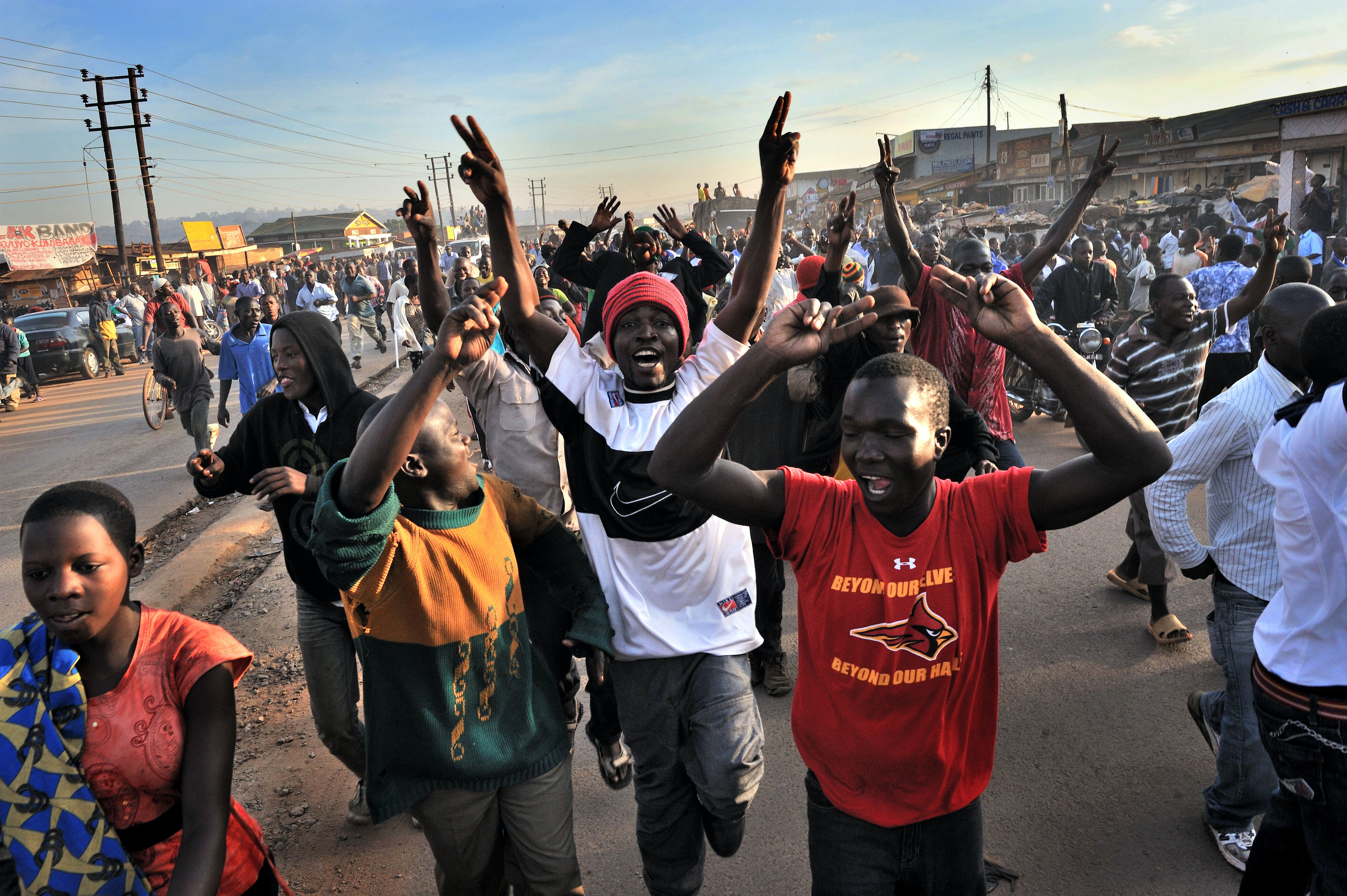
Uganda’s pop star-turned-politician Bobi Wine, whose real name is Robert Kyagulanyi, continues to face harassment and arrest in Uganda. This is clearly because he has amassed a popular following of young people who hope that political change will enable more representation of their grievances. One important grievance is unemployment.
The Ugandan constitution defines “the youth” as those between the ages of 12 and 35. These constitute 78% of the country’s population, or about 27 million people. But between 64% and 70% of these old enough to work are unemployed.
And every year about 400,000 young Ugandans come onto the job market to compete for approximately 52,000 available formal jobs each year.
The Ugandan government’s most significant intervention to address the youth employment challenge is probably the National Youth Policy. Under the policy, launched in 2001, micro projects conceived by small groups of young people are directly funded by government. Between 2012 and 2017 the government invested over 265 billion Uganda shillings (about US$100 million) in 116,169 youth group projects under the “youth livelihood programme”.
Under guidelines issued by government, applicants must be part of a group (which they form themselves) of between 10 and 15 members. Members also have to be unemployed, or involved in part-time work. Each group is expected to present its business proposal, which is assessed before funding is approved.
Most of the projects funded so far focus mainly on agriculture and associated sectors. This is because it was perceived to be a sector with more opportunities for both formal and informal workers, and also to encourage more young people to stay in rural areas.
But the programme hasn’t met its targets to increase youth employment, highlighted by a large number of unemployment protests and figures. Only 1.3% of those granted loans have been able to pay them back in full.
I carried out a study of 370 young people who were beneficiaries of the youth livelihood programme’s funds. The study was undertaken from 2015 up to 2018 in Kampala and Mukono districts.
Major challenges were found in the implementation of the programme. This meant that the young people didn’t fully benefit from the loans. We set out changes that we argue should happen for the programme to meet its desired goals.
The programme
The youth livelihood programme has three components aimed at enhancing young people’s ability to manage a business: skills development, livelihood support, and institutional support.
I found that businesses in urban areas were mostly trade-related such as fabrication and welding, bakeries and hair salons. Those in the rural areas were agricultural activities such as growing maize, rearing pigs and making charcoal briquettes.
But there were problems from the start. Some young people who were interviewed said that there were long lags in applying for and receiving funds. Given that the rate of inflation in 2014 was 3.08% and in 2015 was 5.41% in comparison to the previous year, the prices of some items would change before they received the money.
Another issue I identified was that groups weren’t always properly aligned over their objective. This needs to be more rigorously monitored. The lack of cohesion around a common goal meant that some groups quickly disintegrated.
Also, the loans advanced to the groups didn’t take initial expenses – such as identifying and renting a work space – into account. The handing out of loans in phases depending on their progress meant that in some most instances repayments kicked in before production had started.
Another challenge related to the interest on the loans. According to the conditions of the fund, when groups obtain a loan they’re not charged interest if they repay all the loan money in one year without interest. If they went past the one year period, they faced 5% annual interest. This provision was to ensure repayments were made and that more funds could be distributed to other groups. But it was a challenge for recipients to keep up with this expectation because of their start-up costs.
The livelihood programme’s monitoring systems of the loans may have further affected the success rates of job creation. As many as 80 districts – constituting 71% of the total districts – that received the loan failed to monitor youth projects. Without strict monitoring the youth groups may not have been as disciplined with repayments as they should’ve been. This is seen by groups breaking up as soon as the money was received, while other projects did not take off well.
Way forward
There are several changes that need to happen.
The payment of interest – starting with the 13th month – should happen only after the full loan has been disbursed. This would mean that loan repayments aren’t affected by delays in disbursement and give the business a chance to create a profit.
The recipients should also be trained on how cash-flows work. This would enable better management of the loan and help them to better understand operating expenses, wages, loans and taxes.
The young people also need a clear strategy and plan on loan repayment. They need to plan for the return of funds within a year of accessing the full loan or in case of eventualities to pay both principal and interest within a known period of time.
And applicants should be better supported in the process of forming groups and even after they receive loans. Also loan repayments should only kick in after all funds have been received.
The project is now managed by the president’s office, having been moved from the Ministry of Gender, Labour and Social Development in 2019. This was because of complaints that the strategy had not achieved its objectives, and to allow better management of the programme. It’s still too early to tell if things have actually improved.


