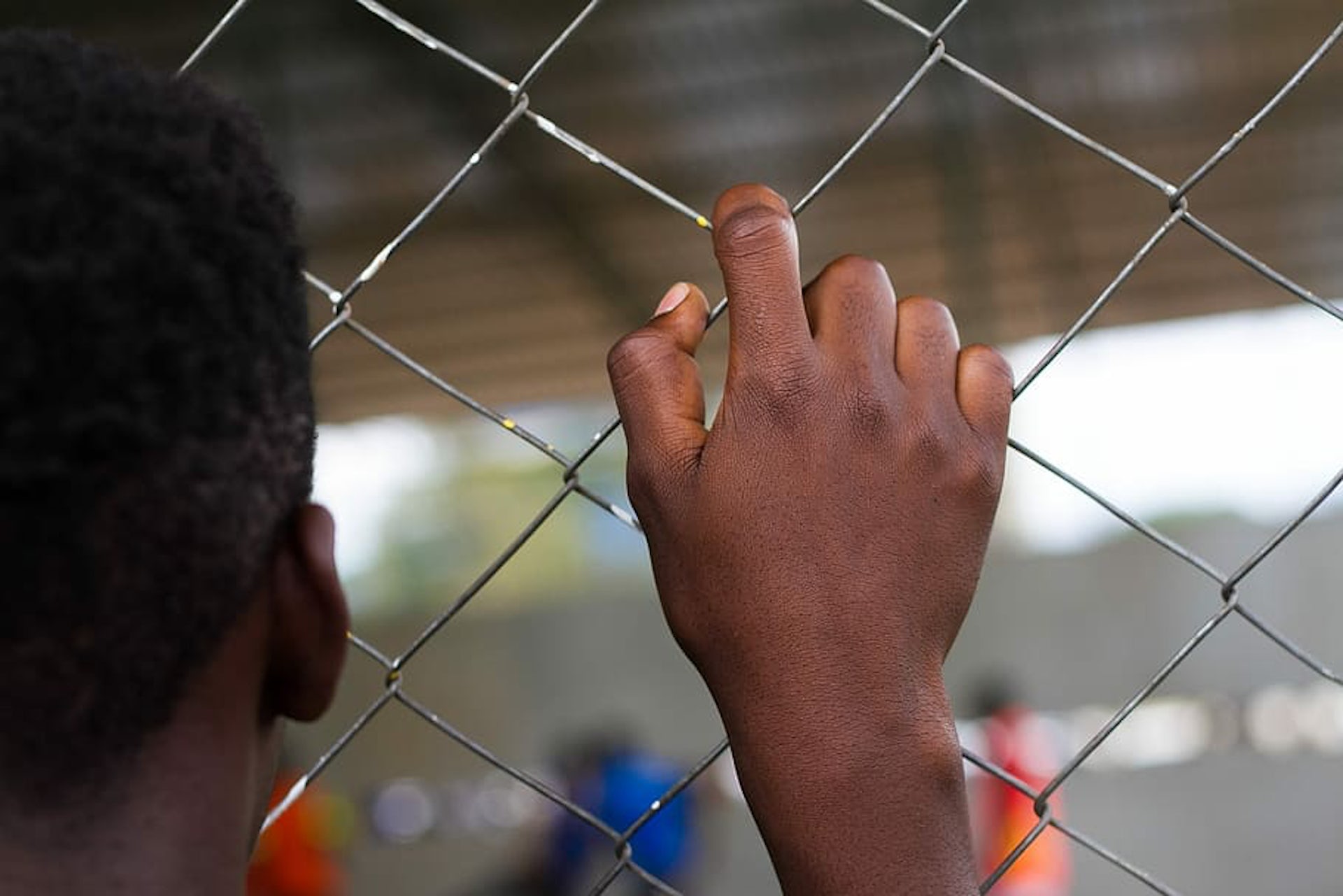
Globally, about one million children are held in police custody annually; 410,000 of them are held in detention and remand centres. On any day, it is estimated, remand homes around the world hold about 160,000 to 250,000 children.
Time in prison can have lasting impacts on the lives of young offenders. It can affect social, emotional and other areas of development.
The Convention on the Rights of Children requires that incarceration should be a measure of last resort. The African Charter on the Rights and Welfare of the Child also provides guidelines; article 17 specifically deals with juvenile justice.
In Ghana, correctional centres are intended to help juvenile offenders gain vocational skills to help them become productive citizens after serving their sentence periods. They also receive religious and moral guidance. But there’s little follow-up of what happens to them.
As a social work researcher and volunteer in Accra, Ghana, I constantly interact with the senior correctional centre and remand home. I became worried about the number of male teenagers I encountered there and the sometimes seemingly trivial offences that had got them into trouble. Ghana as at April 2023 had 254 male juvenile offenders in detention. I wondered about what the future held for these teenagers once they rejoined society.
The literature says very little about the experiences of juvenile offenders in Ghana after their release. I therefore conducted a study to explore this. I wanted to know more about the challenges they encountered and what had contributed to these challenges.
Knowledge about their experiences may be useful in designing policies and
effective strategies to mitigate the harmful impacts of imprisonment on young people’s lives.
In my view the results of my study highlight the need for a more effective and holistic approach to juvenile justice reform – one that considers the long-term impact of detention on young offenders. Ghana needs a more rigorous and comprehensive reintegration programme. And existing policies must be put into practice.
Life after detention
I interviewed 12 young men who had completed their sentence at Ghana’s senior correctional centre. I wanted to understand, in a qualitative way, the varied challenges they faced post-release and how that affected their lives.
The age range of participants at the time of the interview was between 19 and 28 years (average 22). All of them had entered the correctional centre as juveniles (some as young as 15) and exited as adults. They served an average of two years at the correctional centre.
Eight participants received skills training and education while at the centre – skills like general electrical, ceramics, carpentry and tailoring. The other four attended school while at the correctional centre.
Six participants had been charged with defilement, three with stealing, two with assault and one with unlawful entry.
One participant had a diploma, six had either started or completed junior high school, and five had either started or completed senior high school.
The study participants told me that they faced stigma after their release. Constant reminders of their offending history from friends and family led to feelings of shame, guilt and isolation. Indirectly, the confidence of these youths was challenged. They felt people saw them as beyond redemption and unsuitable for society. This feeling affected their social relationships with friends. One said:
People are saying many things about me. I don’t have friends anymore in the area. So, though I live with my parents comfortably, I feel very sad and alone in that area.
The participants had given up on continuing their education. Some felt it was better to do something else. Others could not afford schooling in financial terms.
The correctional centre didn’t offer formal transitional programmes and support. This is one of the major threats to the successful reintegration of released juvenile offenders into society. Ghana has a Justice for Children policy, which outlines strategies such as the use of district probation officers and social workers to reintegrate young offenders, but it lacks proper implementation.
When released, the young men in my study returned to a background of poverty. This seemed to be what was contributing to the initial offence committed. Poverty limited the kind of help a family could provide for them. And they were unable to get work because employers were not willing to give them a chance.
For those who had acquired certain skills at the senior correctional centre, financial limitations made it hard to start a business. One said:
I have plans to open my shop to start an electrical business but I have got no help. It has been very difficult and disturbing.
It meant they were unable to break the cycle of poverty, making reintegration even more difficult.
A call to do better
The successful reintegration of released juvenile offenders into society requires the implementation of formal transitional programmes and support such as Ghana’s Justice for Children Policy.
Comprehensive strategies for education, employment and financial support must be put in place to ensure that these youths can establish meaningful lives after release. They need opportunities to start businesses or gain vocational skills that allow them to break free from poverty cycles.
Justice should not end with detention. Reintegrating ex-offenders should be an essential part of restorative justice efforts aimed at reducing recidivism and increasing public safety and social cohesion.


