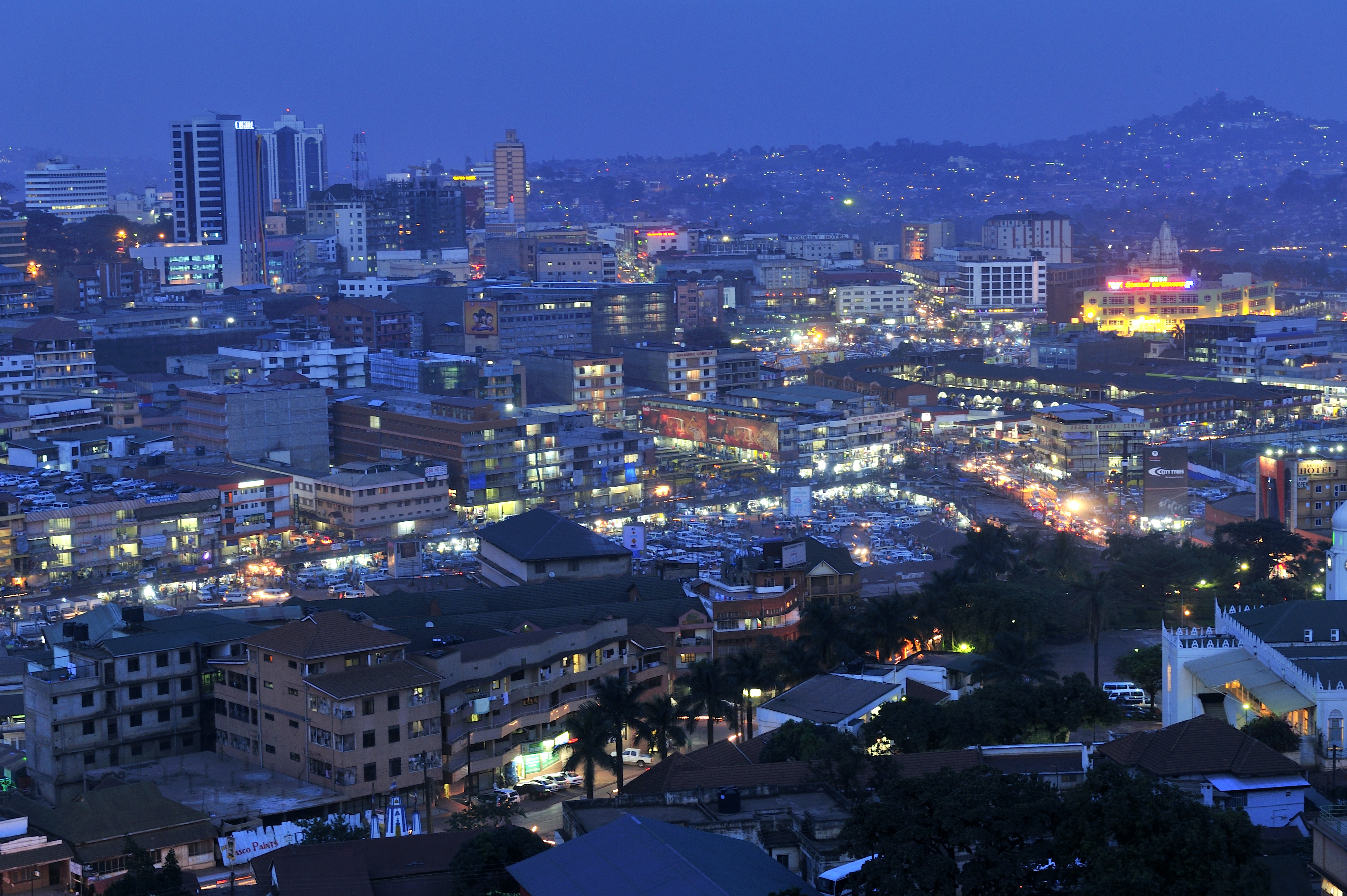
Kampala, the Ugandan capital where I live, is naturally the city I have studied and worked on the most as an urban economist. Yet even with this background, reading Tom Goodfellow’s recently published book, Politics and the Urban Frontier: Transformation and Divergence in Late Urbanizing East Africa, I learned astonishing new facts about Kampala.
I also learnt a great deal about the urbanisation processes of two other major East African cities – Addis Ababa, the capital of Ethiopia, and Kigali, the capital of Rwanda.
Goodfellow is professor of urban studies and international development at the University of Sheffield. His research focuses on the political economy of urban development and change in Africa. He has also worked with universities across Africa.
In this review I provide a glimpse of the comparative analytical journey Goodfellow takes across these three cities. I also make the case that anyone interested in East Africa’s dynamic urbanisation process should have this book as a core part of their reading list.
Three cities
At the start of the 2000s, Addis Ababa, Kampala and Kigali were some of the least urbanised cities in the region. And, for different reasons, they didn’t command much attention from national policy makers.
Fast forward to 2023, and all three cities are undergoing an urban transformation that has little historical precedence in terms of speed or scale. They have become, for differing reasons, central to national, regional and in some senses even global, policy making.
Based simply on this fact, the cities are unique.
The histories that shaped them include their colonial pasts, or resistance to it in the case of Ethiopia, their struggles for independence and post independence political and economic policies.
Take the varied approaches that Ethiopia, Rwanda, and Uganda adopted to the World Bank’s structural adjustment programmes in the 1980s and 1990s. The Bank’s misguided neoliberal approach continues to have lingering after-effects on each of them. This is particularly true when it comes to the composition of their urban economies. In particular, the increased privatisation promoted by the programmes led to cuts in formal employment opportunities in the public sector as well industry, pushing people into informality.
Another consequence was the sharp decline in public service provision, particularly in urban areas.
They have also been influenced by external economic forces. East Africa, as a global latecomer to the urbanisation process, is urbanising at a time when globalisation has resulted in significant flows of capital. For example, East Africa as a region receives one of the largest shares of development assistance. It is also a central focus for China’s Belt and Road Strategy.
As Goodfellow illustrates, these forces of globalisation are continuously reshaping East Africa’s cities in terms of the infrastructure investments that are currently taking place. Influence can also be seen in the new patterns of commerce, employment and entrepreneurialism within them.
A granular comparison
Goodfellow’s most formidable achievement in the book is that he has been able to draw clear comparisons between three very different cities. At the same time he hasn’t lost critical details that have shaped each one of their unique and complex systems.
To do this, he employs a comparative framework with four dimensions. They are:
-
each city’s urban planning vision, including major infrastructure projects, which has affected political outcomes
-
changing patterns of urban property development (propertyscapes) and how these interacted with and have been shaped by the underlying institutions
-
the diverse and powerful forces of the urban marketplace, generically termed “the informal sector”, as centres of urban working lives and livelihoods
-
the forms political mobilisation has taken in each of these contexts and how these have been institutionalised and therefore generally resisted change.
Throughout Goodfellow’s book he keeps drawing on the theme of infrastructure creating property value, while property, shaped by several prevailing forces, creates the demand and need for infrastructure.
For example, he illustrates how the affordable housing crisis has played out in each city. There are differences of course, which can clearly be seen in Addis Ababa’s immense public condominium construction project compared to Kampala’s near lack of government engagement in the housing space.
But there are also similarities. For example, across all three cities construction costs are substantial and much of the housing finance being provided is coming from the domestic and diaspora elites. This partially reflects constraints across the banking systems in the three countries.
A further similarity is the prevalence of expensive international aid worker housing resulting from substantial inflows of development assistance. This has skewed property markets in all three cities to an oversupply of high-end properties. The extent of this is huge. For example, the average rent for someone working in the diplomatic corps or an international institution in Kigali is usually upwards of US$4,000 a month. In contrast the annual GDP per capita of Rwanda is currently about US$822.
New and dynamic forms of urbanism
Over the past years all three cities have been experimenting with new forms of urban visioning. This has shaped, and been shaped by, property, infrastructure and the underlying state-society relations in highly contested political spaces.
Perhaps this is most aptly illustrated by the Kigali Urban Master Plan that was developed by Singaporean firm Surbana Jurong. The plan aspires to transform Kigali into a type of Singapore of Africa – essentially proposing to replace the existing city with something entirely new.
In Addis Ababa, the vision is epitomised by a major infrastructure investment, namely the light rail train system. A Chinese company constructed the rail system at a cost of US$475 million for 34km. This was an expensive undertaking that has reorganised the economic form of the city.
Similar spatial disruption has occurred in Kampala through the Chinese constructed expressway that connects it to the airport in Entebbe. This is now the most expensive road per kilometre in the world.
The devil is in the complex details
Goodfellow’s book is a must-read for those who are working in policy or project development within any of these cities.
It manages to show why attempting to supplant models from urban development elsewhere, including “best practices”, will not work. Rather we need to understand local contexts and complex systems.
The imperative for this is clear: East Africa is one of the fastest urbanising regions in the world, but it’s still in the early phases of this process. There’s a major opportunity to get the region’s cities right.


