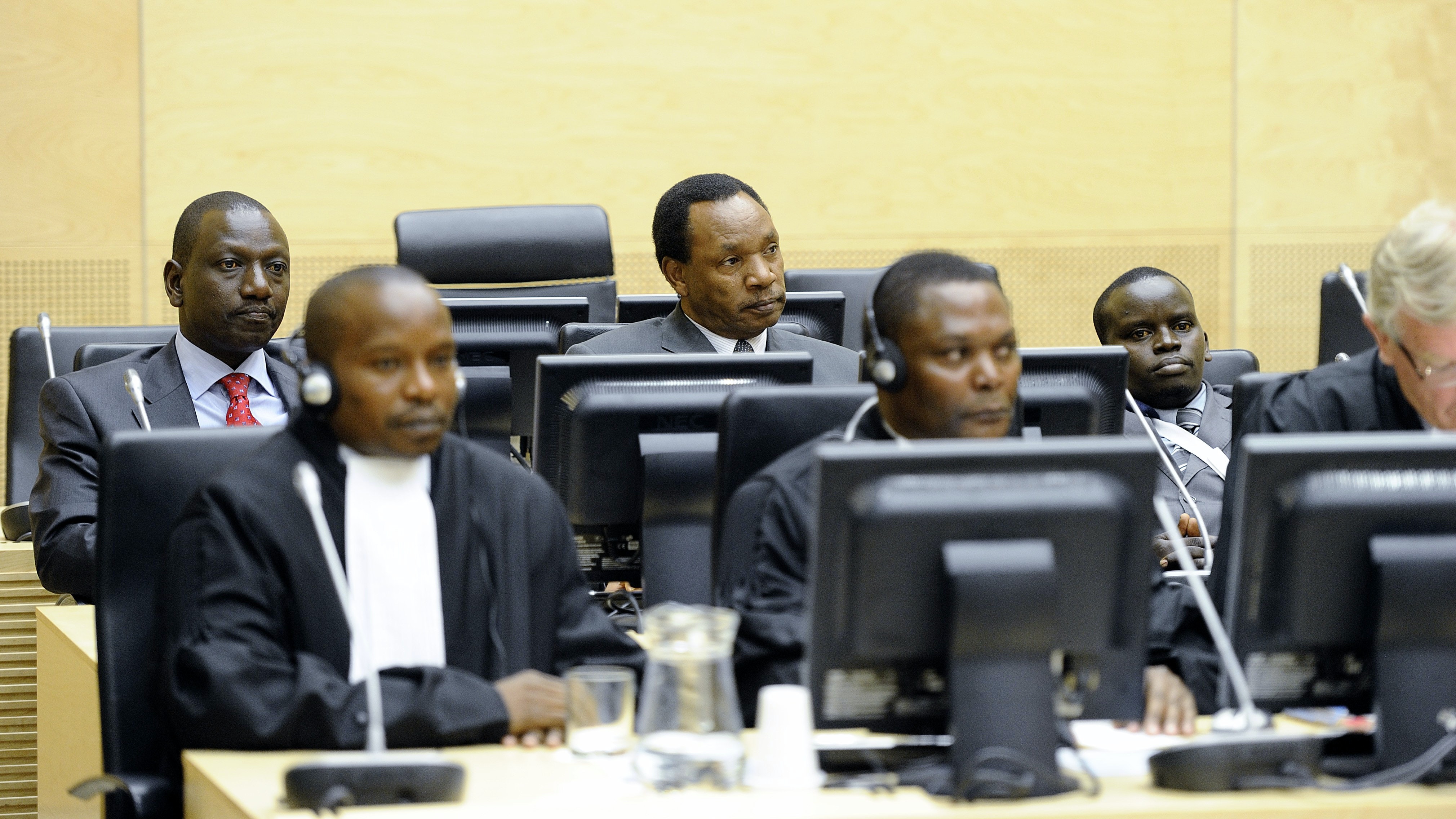
Kenyan lawyer Paul Gicheru, one of the people accused of interfering with witnesses in the case involving President William Ruto before the International Criminal Court (ICC), was recently found dead at his home in Nairobi. He was awaiting the ICC’s verdict.
The ICC intervened in Kenya after allegations were lodged about crimes against humanity committed in the post-election violence in 2007/2008. The cases have dragged on since then. In 2011, the court’s chief prosecutor, Luis Moreno-Ocampo, issued summonses for six high-profile Kenyans who became known as the Ocampo Six. The list included Ruto and former president Uhuru Kenyatta. Both travelled to The Hague to defend themselves against the allegations, with Kenyatta making history as the first sitting head of state to appear before the ICC. The case against Kenyatta collapsed in 2014, and the one against Ruto collapsed in 2016, mostly due to insufficient evidence.
International criminal law expert Tonny Raymond Kirabira answers four key questions about the cases.
What was the significance of Paul Gicheru’s case?
Gicheru and another Kenyan lawyer, Philip Kipkoech Bett, were indicted by the ICC prosecutor – and warrants of arrest were issued against them in 2015 – for offences against the administration of justice. Specifically, they were alleged to have corruptly influenced prosecution witnesses in order to frustrate the case against Ruto and radio presenter Joshua Arap Sang.
Gicheru surrendered to the ICC in November 2020. Since then he has been on trial in The Hague. On 1 February 2021, he was released from ICC custody and travelled back to Kenya, but under specific conditions that restricted his liberty. Until his death in Nairobi, he was still subject to strict limitations on travel and his ability to communicate to the public about the merits of his case at the ICC.
The court is yet to deliver its decision.
A key dimension in Gicheru’s case has been Kenya’s initially uncooperative approach towards the ICC. In November 2017 the High Court of Kenya lifted the ICC warrants of arrest against Gicheru and Bett, on the grounds that Kenya had not been consulted, and the country had the capacity to prosecute the cases domestically.
Even when Gicheru voluntarily surrendered himself, the Kenyan government still considered the 2017 High Court order that lifted his warrant as valid, implying that the ICC did not have jurisdiction to try him.
Amidst the legal dilemma, the ICC recognised Kenya’s unavoidable role in the case, when Gicheru was released from the ICC detention at the start of 2021. He was expected to travel back to Kenya and return to The Hague during the hearing of his case. However, it was after Gicheru signed a consent to surrender, as provided under Section 41 of Kenya’s International Crimes Act, that the government cooperated with the ICC to enforce the conditions of his interim release during his time in Kenya.
All in all, Kenya demonstrated its willingness to cooperate with the ICC by ensuring that Gicheru complied with the court’s conditions restricting his liberty while in Kenya.
Gicheru’s death raises concerns about the ICC’s future engagement with Kenya, considering that cases against journalist Walter Osapiri Barasa and Bett are still open.
The ICC requires cooperation and support from Kenya for the arrest and transfer of the suspects to The Hague, and protection of its staff and witnesses involved in the cases.
Before his death, Gicheru’s case was serving to mend Kenya’s fractious relationship with the ICC, in compliance with Kenya’s International Crimes Act and the Rome Statute. Equally, Kenya remains under an obligation to execute the request for arrest and surrender of Bett and any other suspect indicted by the ICC.
What does the case tell us about the weaknesses of the ICC?
Gicheru’s case is a clear demonstration that the ICC’s ability to deter international crimes and end impunity depends largely on two elements.
First, the nature of its intervention. For example, it’s a lot easier to investigate and gather the necessary evidence in state referrals, compared to situations where the prosecutor intervenes on their own volition, or at the behest of the UN Security Council.
Read more: Prosecution or compensation? What Kenyan choices tell us about international justice
The second element relates to the profile of suspects. Gicheru’s case had shown that trying mid-level officials as opposed to sitting heads of state offered better prospects for state cooperation.
What does Gicheru’s death mean for Kenyan cases at The Hague?
To be clear, Gicheru’s case has no direct links with the previous cases against Ruto and others. The charges in relation to the administration of justice against Gicheru are far from the core crimes that Ruto and others were accused of – crimes against humanity.
The fact that there are no victims involved in Gicheru’s case also means that the ICC’s verdict would not have a tangible impact on the court’s operations in Kenya.
Nonetheless, the conviction of Gicheru would justify previous claims that the Kenyan cases were frustrated by the political elite, as asserted by the prosecutor.
It is important to note that the ICC’s involvement with Kenya is not necessarily over yet. The prosecutor may bring fresh charges in the future when – and if – the necessary evidence is acquired. Ruto was not acquitted of the charges. What happened was that the court terminated the case against him. This means that there can be future prosecutions against him if the prosecutor finds the relevant evidence.
Likewise, the case against Kenyatta can be reopened if the prosecutor submits new evidence to the court.


