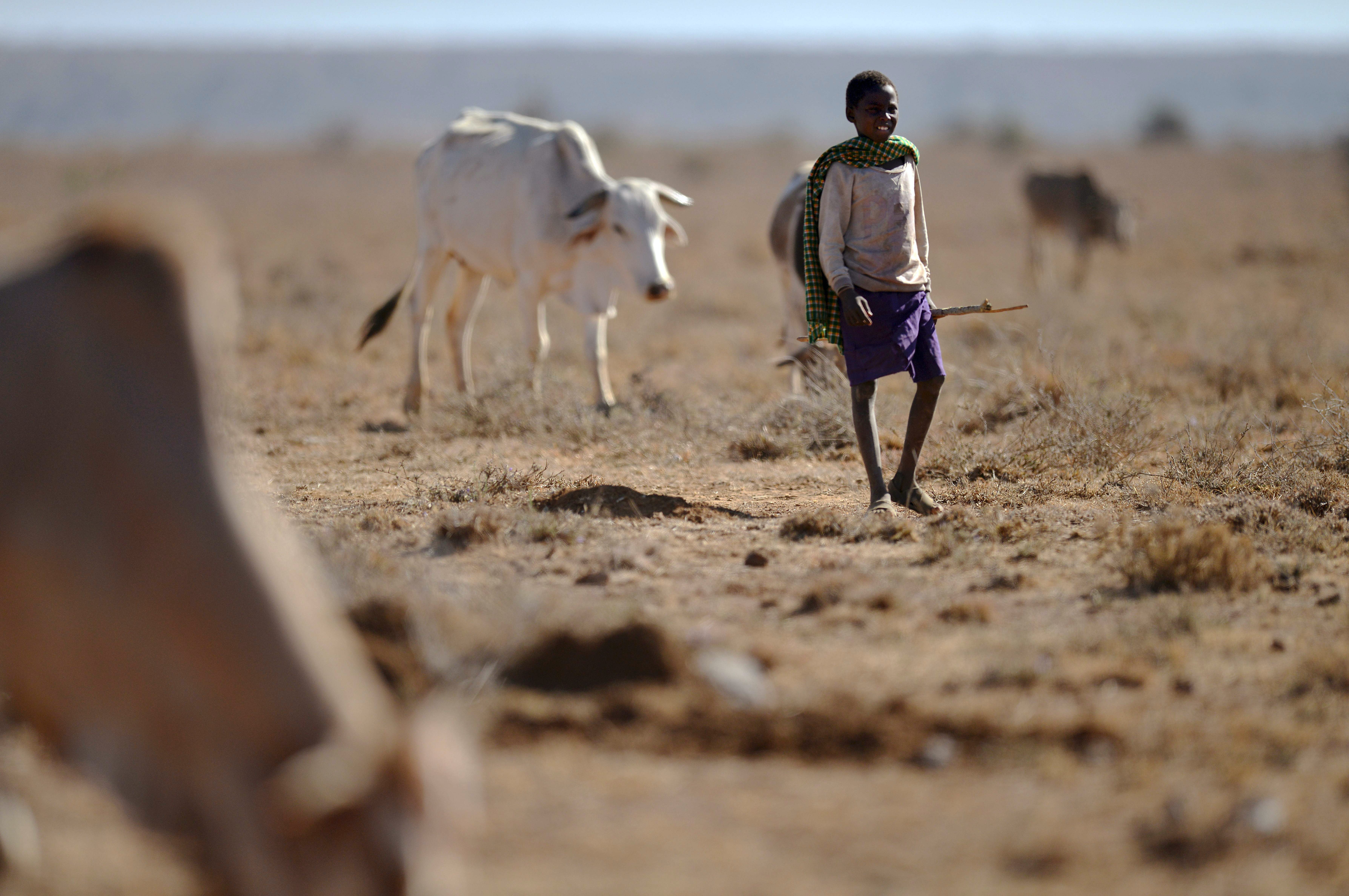
Across the arid landscape of northern Kenya, roadside signs proclaim projects aimed at creating “resilience” among pastoralist communities. This is a region where frequent droughts, animal disease, insecurity and structural exclusion all affect pastoral livelihoods.
Resilience – the capacity to transform or to recover quickly from challenges – is the idea behind the many externally funded projects and hundreds of millions of dollars spent over the past few decades.
Resilience projects across the drylands often encourage pastoralists – usually working together in groups – to “modernise” their production or get out of livestock keeping completely. Projects include livestock breed improvement, reseeding pastures, creating fodder banks, upgrading market facilities or offering livestock insurance. Such projects are combined with investments in water resources and roads, as well as an array of “alternative livelihoods” projects.
The value of this approach is under scrutiny amid one of the most severe droughts of the past century in northern Kenya. Over 2.5 million livestock have already perished for lack of food and water, and human lives are threatened. At least 4.5 million people are in need of external assistance. Decades of investment in “resilience” clearly hasn’t been working. The question now is whether there are different ways of supporting pastoralists’ ability to prepare for and respond to droughts and other shocks.
Over the past four years, we have been studying how Borana pastoralists in Isiolo county in northern Kenya manage drought, conflict and other uncertainties. In recent years, the area has suffered recurrent droughts, alongside locust and animal disease outbreaks.
Pastoralist livelihoods are increasingly vulnerable. Land is being encroached from all sides by neighbouring groups and conservation areas expanded. Building resilience has become increasingly essential.
Our research has pointed to the importance of local networks of mutual support, solidarity and redistribution that enable pastoralists to adapt to changing circumstances. These types of “moral economy” practices could be the basis for drought preparedness and response.
We have concluded from our research that, instead of the deluge of external interventions, ways must be found to build resilience from below, drawing on local practices and networks.
Why top-down projects haven’t worked
Our research has found that there are three main reasons that existing project interventions are failing to protect populations from recurrent drought and other shocks.
Misplaced narratives: Behind these interventions is the idea that pastoralism is outdated and that alternatives to livestock keeping must be found. Since the colonial era, controlling livestock movements and settling pastoralists have been central to policy prescriptions. Calls to encourage pastoralists to change their ways are always accentuated during and after major droughts.
Pastoralists, the argument goes, would do better if they settled in one place and farmed. The biases against pastoralism are very evident in education programmes, water investments for irrigated farming and livelihood diversification projects outside the pastoral economy.
Yet, despite the drought and the loss of animals, pastoralism can make the best use of highly variable dryland environments, where alternative ways to make a living are extremely limited. Supporting rather than abandoning pastoral systems makes much more sense.
Poor project design: All too often, development projects don’t fit the local context. Fancy new livestock markets promoted by donors are frequently in the wrong place, while dispersed “bush markets” are more accessible and cheaper to use. Many boreholes function for a while, but the cost of repairs is often high and so they fall into disrepair. The roads may go to the wrong places, diverting trade and transport from places that matter.
Not all development efforts are wasted. Take the new A2 highway built by the Chinese from Isiolo to the Ethiopia border town of Moyale and beyond. This has reduced travel times dramatically, allowing hay to be transported for hungry livestock across the region. Also, maintained government boreholes, now often with solar pump facilities, have been essential for keeping animals alive during the drought.
But the idea that resilience can be generated through a technical or financial fix is prevalent. In so many cases the same interventions that failed a few decades before are just being repeated with new branding.
Ignoring the social context: Since devolution in Kenya in 2010, there has been emphasis on decentralised activities led by county governments. Many groups and committees have been established by a plethora of projects. Too often these are focused on implementing an externally designed activity or feeding information upwards. This creates a lot of confusion.
Such projects seldom engage with the social context, involving local networks or mobilising local expertise and experience. Frequently the projects fold as soon as the funds dry up.
Towards resilience from below
In the drylands, drought is part of normal life in a highly variable environment. Climate change is making matters worse, as droughts are more prolonged and the pattern of rainfall changes. And shrinking access to land and water due to encroachment of other land uses make drought impacts harsher.
Yet, as our research has shown, herders have a long-established repertoire of drought responses. This is not just passive “coping”, but is well planned.
Pastoralists’ practices combine livestock movement, sharing and distribution of animals through loans, splitting herds and flocks, supplementary feeding and watering, careful herding, negotiating access to farmland or conservation areas, shifting species compositions, selective marketing of animals, and diversification to other income sources to support the herd or flock.
Rather than creating new resilience projects, separate from local practices, why not build on these responses?
Pastoralism, as described by researcher Emery Roe, can be seen as a “critical infrastructure”, where “high reliability professionals” ensure that the system doesn’t collapse. Such professionals are central to pastoral systems. They connect herders through diverse social networks; for example with motorbike transporters, those who offer credit, and local specialists such as healers and forecasters.
Our work in northern Kenya and southern Ethiopia is exploring more deeply who these “high reliability professionals” are and what they do to transform very uncertain conditions into a more stable, reliable supply of goods and services, so helping to avert disasters.


