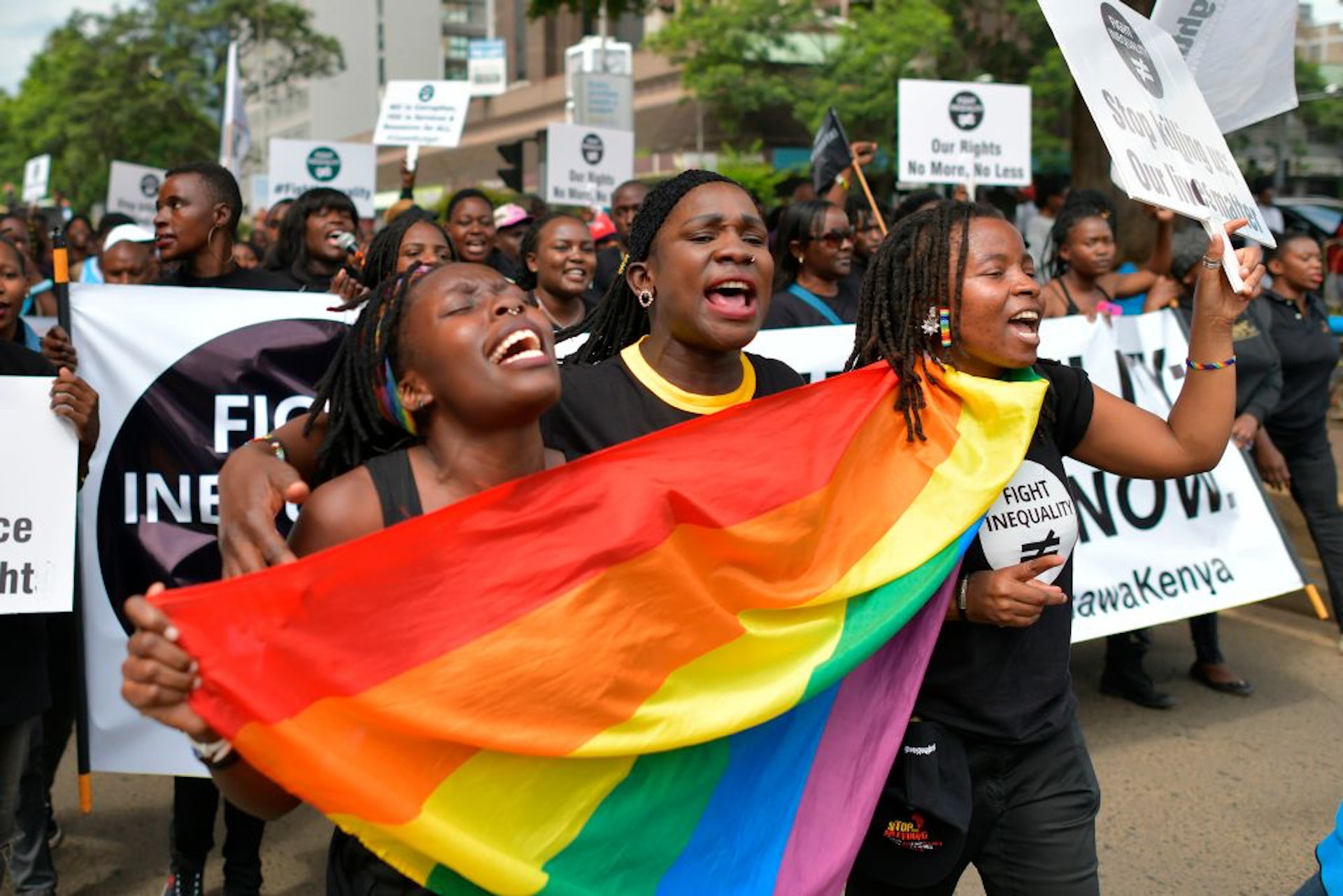
Kenya has recently seen the increasing visibility of sexual and gender minorities. However, this has been met with a growing backlash.
Religious and political leaders have been spreading homophobic and transphobic rhetoric. This has happened with the tacit approval of a law enforcement apparatus that’s supposed to guarantee the right to equal protection.
The continued criminalisation of same-sex sexual relations among consenting adults in Kenya worsens social disparities and inequalities. It fuels socioeconomic and health vulnerabilities.
It deprives members of these minority groups access to education, a livelihood, and basic services like housing and healthcare. Criminalisation pushes sexual and gender minorities to the margins of society.
Research has shown that sexual and gender minorities are consistently targeted for unfair dismissal from jobs or business opportunities. In our view as researchers on the politics of social exclusion, with a focus on sexual and gender minorities, homosexuality urgently needs to be decriminalised in Kenya.
The case for the decriminalisation of same-sex relations among adults can be argued based on the rationale of social integration. This promises social justice, which delivers inclusive development and improved health outcomes. It boosts safety and security, and an acceptance of diversity and equality.
Inclusive development for economic growth
Social inclusion is the process of improving the conditions for individuals and groups to participate in society. Social exclusion based on sexual orientation leads to lower societal standing.
This often leads to poorer outcomes in terms of income, human capital endowments and access to employment. People who are discriminated against tend to lack a voice in national and local decision making.
Decriminalisation of same-sex sexual relations would help address institutionalised stigma and discrimination. It would enhance access to equal opportunities by eliminating barriers to employment and other livelihood opportunities.
Read more: LGBTI refugees seeking protection in Kenya struggle to survive in a hostile environment
Research shows that sexual and gender minorities with access to income opportunities support their families financially. This is true even in cases where families aren’t accepting. People who are educated can also compete effectively in the job market. The exclusion of minorities, therefore, means the loss of a workforce and their contribution to economic development.
Better health outcomes
Social exclusion contributes to poor health among sexual and gender minorities. In 2020, 1.5 million people were newly infected with HIV. Those most vulnerable to infection include people who inject drugs, transgender women, sex workers, men who have sex with men, and their sexual partners.
These key populations accounted for 65% of HIV infections globally. In sub-Saharan Africa, they accounted for 39% of new infections.
Open for Business is a global research coalition that seeks to address the backlash against the LGBTIQ+ community. In a 2020 report, the group estimated that discrimination against sexual minorities costs Kenya up to Sh105 billion (US$782 million) annually in poor health outcomes.
Decriminalisation enhances access to healthcare. Our research shows, for example, better health such as decreased new HIV infections in societies that adopt laws that advance non-discrimination and decriminalise same-sex relationships.
Enhancing safety and security
In 2014, the African Commission on Human and Peoples’ Rights adopted Resolution 275. The resolution expresses grave concerns about increasing violence and other human rights violations – including murder, rape and assault – of individuals based on sexual orientation or gender identity.
Safety and security are some of the biggest challenges facing sexual and gender minorities in Kenya. Kenya has seen an escalation of negative rhetoric and violence targeting sexual and gender minorities, and related organisations. Hate speech, verbal and physical abuse, sexual violence, and police harassment have increased.
Read more: #JusticeForSheila highlights the precarious lives of queer people in Kenya
In Kenya’s coastal city of Mombasa, for instance, sexual minorities fled recent homophobic street protests. A 2019 report on the experiences of the LGBTIQ+ community in Kenya found that 53% have been physically assaulted and 44% sexually assaulted.
The criminalisation of same-sex sexual relations among adults contributes to a climate of violence and discrimination. Moreover, criminalisation supports the perpetrators of violence who take the law into their own hands.
Acceptance of diversity
Sexual and gender minorities are socially excluded because of the criminal label the law imposes on them. This affects their self-acceptance and mental health.
Homophobic acts are widespread even in countries where same-sex relations are legal. However, decriminalisation helps facilitate some level of acceptance among minority groups and within wider society.
Studies have found that decriminalisation reduces societal violence.
The way forward
Same-sex relations, or sexual and gender minorities, aren’t new in Africa. They aren’t a foreign ideology.
Social exclusion constitutes perhaps the most serious challenge towards attaining sustainable and inclusive development. The criminalisation of same-sex relations among consenting adults in Kenya’s penal code exposes the weaknesses of the constitution in ensuring inclusivity. The law must, therefore, be changed.
Repealing criminalisation clauses is an important step toward reducing stigma, violence and discrimination. It would certainly open a new chapter in the lives of sexual and gender minorities.
There’s also an urgent need to make sexual and gender minorities visible. Awareness campaigns can help debunk perceptions that they are “anti-religious” or “un-African”.
Read more: What does the Bible say about homosexuality? For starters, Jesus wasn’t a homophobe
There’s an equally urgent need to identify all forms of discrimination against sexual and gender minorities under domestic and international laws. This will help address the root causes of inequalities.
Decriminalisation of same-sex relations is imperative. It will help address widening disparities, inequalities in society and the gaps in social integration.
Nicholas Etyang, a senior policy advocacy officer at the African Population and Health Research Center, is a co-author of this article.


