President William Ruto has nominated Njuguna Ndung’u to head Kenya’s National Treasury. A Central Bank of Kenya governor for eight years between 2007 and 2015, Ndung’u is also an accomplished researcher and a University of Nairobi academic. He has extensive expertise in macroeconomics (inflation, economic growth, national income and unemployment) and poverty reduction.
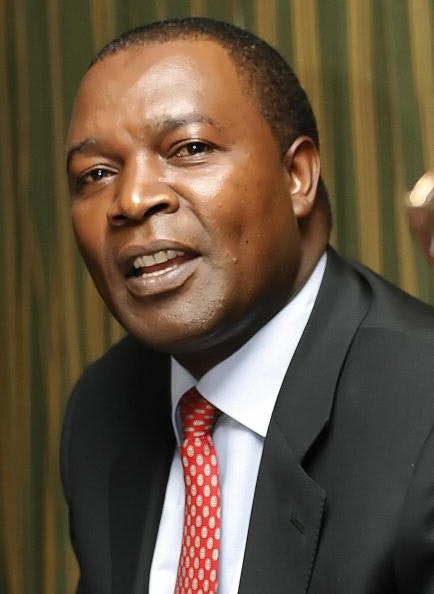
If parliament approves his nomination, Ndung’u will lead the treasury in difficult circumstances. The country is just emerging from divisive electoral campaigns. It also faces economic challenges.
The government is spending more than it gets in revenue, inflation is rising and the value of the shilling is tumbling against major currencies.
Ndung’u has his work cut out for him. Ruto campaigned on the platform of mending a broken economy and redistributing growth dividends to low-income earners.
With a PhD in economics, Ndung’u has a deep understanding of both local and global economic trends. His latest stint was as executive director of the Africa Economic Research Consortium, a research and policy think-tank.
He has been an advisor to international organisations, such as the Brookings Institution and the International Development Research Centre (Africa’s regional office).
The job at hand
The Treasury Cabinet Secretary (finance minister) manages the revenues and expenditures of the country.
The government gets its revenue from taxes, grants, debts and dividends paid by state-owned enterprises. The treasury (ministry of finance) delegates powers to raise such revenues.
On the spending side, the ministry has to contend with the dictates of other institutions like parliament, the central bank and multilateral organisations like the World Bank and the International Monetary Fund. Decisions have to be made about how the revenue is shared and used – for recurrent expenditure like paying salaries and debt, and for development such as building roads or hospitals.
In Kenya, the decision is complicated by another factor. The money must be shared with 47 counties.
What he brings to the position
Ndung’u will have to make Ruto’s bottom-up economics model work. That means focusing on the people at the bottom of the pyramid who lack capital and opportunities to run businesses. The expectation is that empowering this segment of society would create more jobs and give more citizens a higher standard of living. This model is contrasted with trickle-down economics, which gives resources to a few at the “top” in the hope that it spreads down to the masses.
Ndung’u previously worked at the Kenya Institute of Public Policy Research and Analysis, which advises government departments, including the National Treasury, on policy issues. In 2001, he helped develop a macroeconomics model to analyse Kenya’s economy.
He is back in familiar waters, having been a central bank governor at the chaotic start of Mwai Kibaki’s second term in 2008, when post-election violence and the global financial crisis slowed down the Kenyan economy. He was a member of the National Economic and Social Council that Kibaki put together to lift the economy.
His most valuable experience for the task at hand is, perhaps, his mastery of monetary tools as a central banker. His new role focuses on fiscal policy (spending, tax and debt).
He is likely to work in tandem with the central bank, avoiding fiscal policies that upset monetary measures (like interest rates). Harmony between fiscal and monetary policies would be good for stability of the currency (as the UK is finding out).
Ndung’u is also known to have championed financial inclusion, mainly through mobile banking. This implies mass access to affordable payments, savings, credit and insurance.
He was bold in getting banks to accept mobile money, which was unpopular at the time. This may be a quality needed to drive bottom-up economics. There will have to be institutional changes to accommodate bottom-up economics and some resistance is to be expected. Kenyans are used to trickle-down economics.
Missing in his tool box
But Ndung’u lacks political experience in a cabinet dominated by politicians. He is a technocrat and, as Uhuru Kenyatta’s first term showed, some technocrats find it hard to fit into a new political dispensation. Political experience matters even in the most technical of jobs. In addition, Kenyatta lost his political clout partly because his cabinet, dominated by technocrats, lacked the political weight to sell government programmes to his core support base.
Ruto, too, needs to be careful, in my view. The Treasury under his regime should give free markets a human face. For example, the removal of subsidies could be seen as heartless.
What may not change
I doubt debt taps will close during Ndung’u’s tenure. The debt ceiling may be raised again in the new administration. Given the country’s budget deficit, which is about 6.2% of annual production (GDP), borrowing is bound to continue.
Read more: Kenya has breached its public debt ceiling – how it got there and what that means
If there is change, it might come in the mixture of debt between long term and short term, as well as bilateral and multilateral loans.
At the moment, Kenya borrows equally from local and foreign lenders. Ruto wants Kenyans to save more, reducing the need for external borrowing. This is unlikely in the short run because of the poverty levels. People save after taking care of the basics, like food and shelter.
Inflation is also likely to remain an issue. Will interest rate hikes slow down inflation? Will government raise wages and salaries to cushion workers? Could cutting taxes be a better option despite fears of stoking inflation? The UK is a good case study – its tax cuts have led to a weaker currency, which implies higher inflation.
Finally, reliance on fiscal and monetary tools may not bear fruit. Kenya is a very informal economy. Tools like interest rate cuts may not work effectively when people borrow mostly informally.
Foreign direct investment and increased trade would be more effective than borrowing, as long as the business environment is attractive to investors.


