The land question was at the heart of the South African national liberation struggle. The 1913 Natives Land Act restricted black people from owning and occupying parts of the country, leading to whites owning about 87% of the land. This reduced the African majority to “pariahs in the land of their birth”, in the 1916 words of Sol Plaatje, the founding secretary general of the African National Congress, now South Africa’s governing party.
To reverse this injustice, in 2018 the national assembly acceded to demands from various pressure groups and began the process to amend section 25 of the constitution, which deals with restitution and redress of the dispossessed. Some had argued that the section hindered land expropriation. Parliament conducted public hearings across the country to get public input on the proposed amendments.
This process received extensive media coverage. But, the voices of ordinary people at the public hearings were severely underrepresented in the media. This amounted to denying them narratives resources to tell their own stories. In the process, the dispossessed and marginalised were forced to look at themselves through the prism of others.
As the land reform debate rages, there are signs that the commercial press marginalises anti-western alternative voices opposed to the current dominant political, social and economic outlook underpinned by capitalism. This is discernible in views such as that the debate causes “uncertainty” and investment jitters, primarily driven by business and government sources, are prevalent.
Commercial press in South Africa
South Africa’s press is vast and dominated by four conglomerates – Media24, Arena Holdings, Sekunjalo (Independent Media) and Caxton. While recent figures paint a bleak picture with plummeting circulation, the press still commands a sizeable readership. Circulation is estimated at 445,485 physical copies for dailies, 172,348 for weeklies and 550,416 for weekenders.
Though there have been changes in media ownership patterns since the end of apartheid, we argue in our latest journal article that the ethos of this press remains rooted in apartheid-like economic and ideological beliefs. Hence the voices opposed to the dominant ideas are marginalised. By elevating the views of economic elites over the dispossessed majority, the media perpetuate the past injustices.
Read more: Media literacy education in South Africa can help combat fake news – here’s what’s needed
Commercial factors such as ownership and funding result in unfair treatment of anti-west and anti-capitalist discourses. The media don’t treat the concerns of the dispossessed as legitimate.
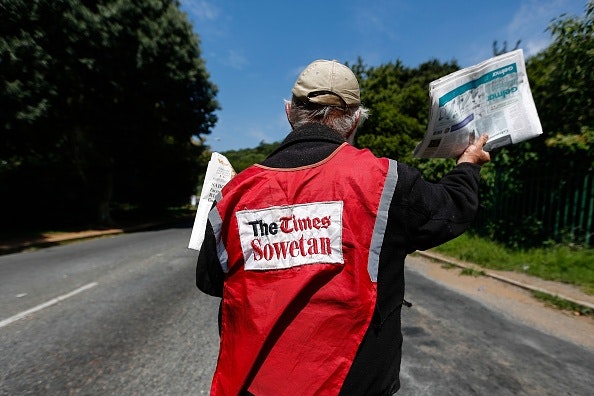
But how exactly do the print media represent the land debate? To answer this question, we analysed articles on “land expropriation” in the commercial press between January and December 2018. The newspapers we analysed include Business Day, Argus, The Citizen, Cape Times, Financial Mail, The Herald and Sowetan. What emerged was overwhelmingly negative coverage of the discourse, dominated by what we regard as elite sources. Instead of being impartial, the commercial press failed to play a democratic role. This erodes public trust in the media.
Framing land expropriation
This negative coverage is driven by five themes: land grabs, private property rights, food insecurity, negative consequences to the economy and investor confidence.
These themes betray the media’s slant towards ideas of the dominant class. Through a close analysis, it becomes apparent that the way the press represents the land debate is linked to its historical place in capitalist economy.
For example, through interviewing and quoting elitist sources from academia and business, the media employed the “land grab” frame to sound the alarm in numerous sensational headlines that the debate scares away investors and is damaging to the country. It’s suggested that the country would head down the same path of “ruin” as Zimbabwe if it pressed ahead with land expropriation.
Read more: Public trust in the media is at a new low: a radical rethink of journalism is needed
The “private property rights” frame was equally employed. The media leaned heavily on the European classical liberalism that perceives private property protection as the government’s primary purpose. Attempts to redress colonial injustices were portrayed as having dire economic consequences. The “private property” narrative remained unchallenged.
Description bias and narrow neoliberal framing
The framing of the land debate is guilty of “description bias”. This is when the media avoid unpacking underlying causes of important issues. The media fail to critically engage the land question and the broader redistributive justice debate in the country. Their claim to be neutral obscures a neoliberal bias.
Many stories analysed were written in a manner that did not support land expropriation. A narrow neoliberal frame was employed rather than one that recognised the dispossessed.
When parliament organised public hearings on the land debate in 2018 to give ordinary people a chance to air their views, their voices were severely underrepresented in the media. The dispossessed were compelled to look at themselves through the prism of others. The privileged spoke on behalf of the marginalised, reinforcing unequal power relations in society.
Capitalism and media ownership
Even though South Africa’s media ownership has gradually shifted to black-owned companies following democracy in 1994, the financial muscle to control and define the overall goals and scope lies in the hands of powerful corporations with ties to global capital.
Read more: How South Africa ranks in the press freedom stakes
The skewed reportage in the land debate can also be explained by the ownership and funding of the media. The causal relationship between ownership and media content is not always discernible. But numerous media scholars have found a strong correlation between ownership and media texts.
The framing of the land debate contributes to entrenching the injustices of colonialism and apartheid.


