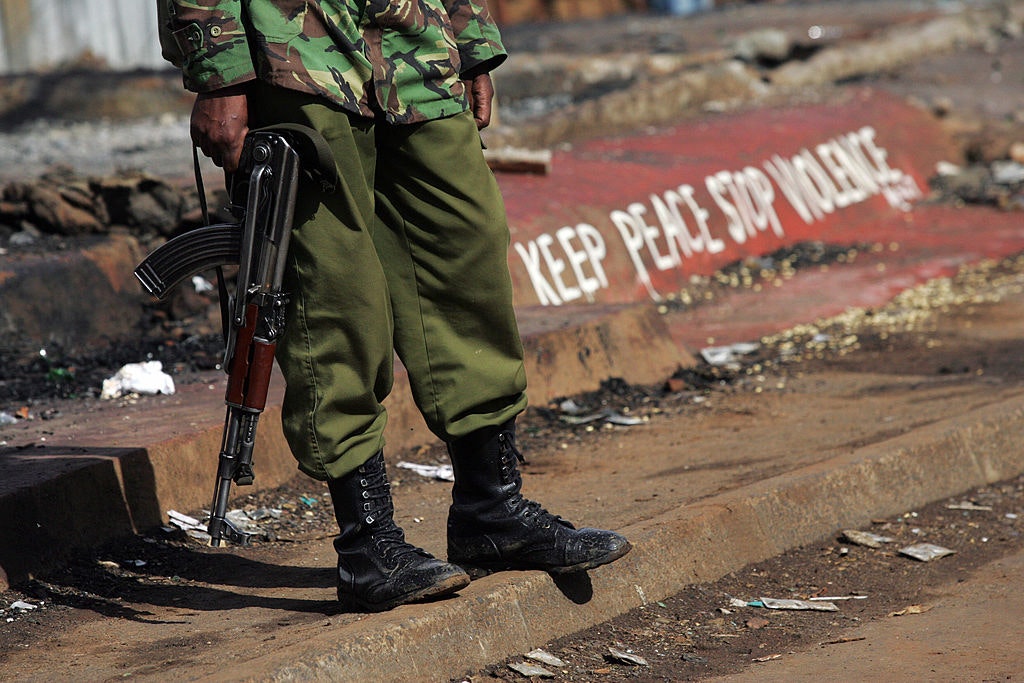
The election campaign period in Kenya is typically hectic for the statutory body that keeps tabs on inflammatory speech on political platforms and the media. This is hardly surprising for a public watchdog formed in response to the 2007 post-election violence in which more than 1,100 people were killed. Both sides stood accused of inflaming ethnic tensions that had been building up for years.
The National Cohesion and Integration Commission was formed at the end of the violence in 2008 to promote national identity and values. It was charged with mitigating ethno-political competition and ethnically motivated violence, eliminating discrimination on an ethnic, racial or religious basis and promoting national reconciliation and healing.
Every election since 2007 has been marked by fear of violence, and inflammatory speech has always featured. Ahead of the 2022 election on August 9, the independent watchdog warns of
existing concern that the 2022 General Elections draw several parallels to the 2007 one. Moreover, most of the underlying causes of conflict largely remain unresolved.
In previous campaigns, the watchdog says on its website, people shared negative ethnic messages to discredit political opponents and drive voters to more readily accept campaign claims. These negative messages were sent out by political leaders, musicians, political analysts, journalists and bloggers, among others.
In the latest clampdown on hate messaging, the commission has published a list of words and phrases it deems likely to foment ethnic hatred as Kenya heads to general elections in August 2022. Some of the blacklisted words, it says, have been “regularly used in Kenya’s political landscape with the intent to provoke violence among communities of diverse political viewpoints” especially during the current political campaign period.
There are a few weaknesses.
The first is that the commission lacks legal mechanisms to act against perpetrators and can only make recommendations to relevant authorities. The implications are that politicians, musicians, media practitioners etc are likely to get away with supposed hate speech charges.
A high profile case in 2012 against three musicians couldn’t hold, because the charges were based on a “criminal interpretation to artistic works” and that the prosecution “did not present enough evidence to link the singers to hate speech as alleged”.
Secondly, by clamping down on hate speech at political campaign rallies only, the commission overlooks the media’s contribution to the problem.
Thirdly, Kenyans’ everyday talk is full of ethnic bile, misogynistic utterances and words that are outright dehumanising. There’s no hope that the commission will make an impact on this if it only takes action during an election campaign. It should be finding relevance at all times, not just during polling season.
Stoking hatred
Every five years at election time, underlying ethnic rivalries are rekindled through songs, words, euphemisms, epithets and slurs. Ordinary words and catchphrases can assume a different meaning altogether when used during campaigns and depending on the context.
On the list of the blacklisted phrases, for example, is “Linda Kura”, which in its ordinary Kiswahili sense is a call to “protect the vote and ensure that all votes cast are duly counted”. It should be a welcome phrase about civic duty especially in a country where claims of election rigging are rampant.
Popular music catchphrases can be exploited to galvanise support. The speech watchdog has blacklisted the song Sipangwingwi by Exray Taniua. The title is street slang derived from the Kiswahili word “sipangwi” (I am not told what to do). The lyrics of the song, as well as its banned plural form “hatupagwingwi”, appear harmless and innocent, and relate to everyday life struggles.
It is probable that the word was flagged because it has been adopted as a political slogan by one of the political formations. But as political commentator Macharia Gaitho argues, “political sloganeering will always be about competition, rivalries and staking out turf. It will indicate rivalries and antagonism …but it can hardly be deemed as hate speech”.
In blacklisting words that emanate from a song, the public watchdog appears to be contravening the same constitution that guarantees the freedom of expression. In its attempt to ostensibly tackle hate speech that might provoke ethnic tensions, the commission’s choice of blacklisted words falls short as explained below. This does little to mend its current image as a toothless bulldog.
What the commission can do
This is not to say that the watchdog should stop discouraging hate speech. But it should fully understand the contexts of how some words are used.
According to linguist and cultural scholar Kimani Njogu,
words derive meaning from the context in which they are used. In tracking hate speech, the words identified would need to meet additional criteria … such as context of use, intentionality, place in which they are used, who is using them etc.
The current blacklist, for instance, doesn’t include those words that continually denigrate women politicians. Ethnic jibes are always thrown at women politicians married across communities.
The blacklist also misses a good number of words and phrases that could easily spread ethnic hate and political violence. It’s not clear why some relatively innocent words are included and more potent ones are left out.
Perhaps the commission should focus more on the barrage of misinformation and disinformation that is most likely to cause serious political discord. It includes alleged assassination plots and political conspiracies – serious claims that could polarise communities and stoke ethnic violence.
In its failure to comprehensively address the issues that could lead to ethnic disharmony, the commission fails in its core mandate of promoting national unity, equity and the elimination of all forms of ethnic discrimination by facilitating equality of opportunities, peaceful resolution of conflicts and respect for diversity among Kenyan communities. Publishing a few lexical items without extensive research is definitely not a step in the right direction.


