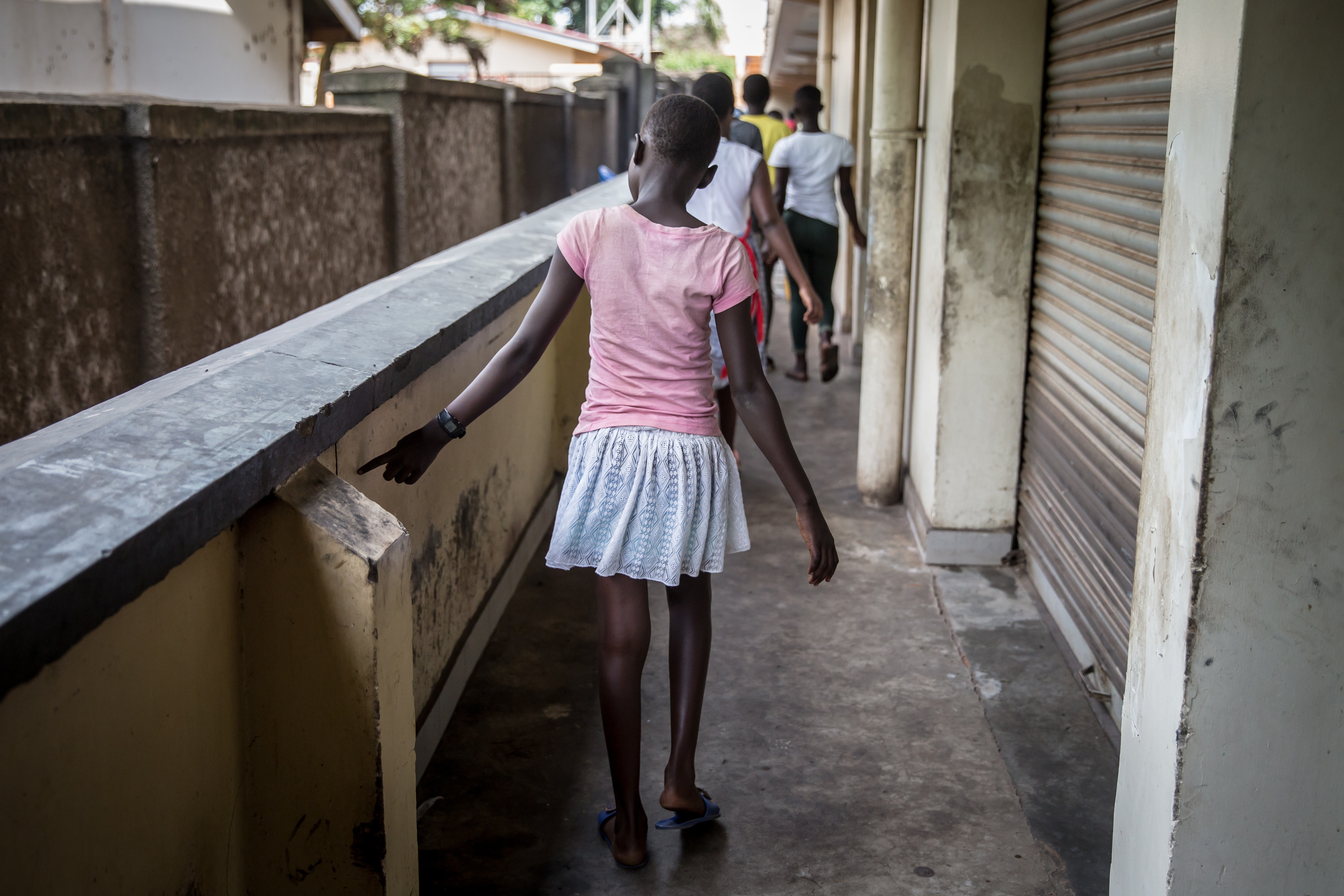
COVID-19 has impacted women and girls around the globe in adverse ways. However, little attention has been paid to women and girls in humanitarian settings, those whose safety has already been reduced due to conflict, natural disaster or displacement. For these women and girls, COVID-19 has made them particularly vulnerable to increases in gender-based violence.
This is not the first time we have seen an infectious disease event lead to higher levels of gender-based violence. A similar increase was seen in the 2018 to 2020 Ebola outbreak in the Democratic Republic of the Congo (DRC). Communities reported that there were increased incidences of sexual and physical violence, sexual exploitation and abuse.
In a recent paper we examined how the response to the Ebola epidemic failed to protect women and girls from violence. We hope that our analysis provides insights into how we can do better during the COVID-19 pandemic.
We use a term coined by medical anthropologists – “syndemic” – to explore the connection between two public health concerns: violence and infectious disease. A syndemic describes the negative interaction between diseases or epidemics, which are worsened by social inequalities like poverty, stigma, stress, and structural violence.
So how can policy makers and researchers address rising violence against women and girls during the COVID-19 pandemic?
In our paper, we argue that policy-makers and practitioners must heed lessons from the Ebola outbreak in the DRC. They must mitigate against further exacerbation of gender-based violence. They must also improve support for survivors during infectious disease outbreaks, epidemics and pandemics.
Lessons learned from the Ebola response
In previous pandemics the humanitarian community has prioritised policies to reduce spread of infectious diseases. But they have done this without properly engaging local women and girls to understand how these policies affect them.
This gender-blind approach means that other aspects that threaten women and girls’ safety and health, such as gender-based violence, can be overlooked.
During the 2018 to 2020 Ebola outbreak in the DRC, for example, sexual and physical violence against women and girls was reported to have increased in a number of ways. For instance, economic insecurity led women and girls to resort to survival and transactional sex, known risk factors for violence.
Harmful gender norms that place the burden of domestic care on women were also heightened. Increased demand for household water, for example, required women and girls to travel long distances or over unusual hours. This need to travel intensified violence from opportunistic abusers.
At the same time, our analysis shows that both Ebola and COVID-19 response efforts overlooked the life-saving nature of gender-based services. Critical supports – such as safe spaces – were closed. Case management services for survivors of violence were affected and mental health services reduced.
These actions further isolated women and girls.
Many of these same dynamics are now occurring with the COVID-19 pandemic in humanitarian settings.
Pandemics and vulnerability
A growing body of research is showing that policies put in place to control the spread of COVID-19 have increased women and girls’ vulnerability to violence and insecurity. Studies show that prolonged periods of lockdown have had a number of adverse effects. Well known risk factors for violence include:
Lockdown and isolation: Lockdowns put victims and abusers in close proximity. Some abusers take advantage of stay-at-home orders to limit contact with support networks such as family, friends and healthcare services. Others use the fear of infection to further enforce control. They engage in distinct forms of psychological intimate partner violence.
Household labour: In household settings without running water and sanitation, adherence to hand washing measures increases the frequency with which women and girls must leave the home to collect water. Travelling long distances to gather water elevates the risk of sexual violence and harassment.
Financial strain: Some women and girls engage in transactional sex to make money during times of crisis when opportunities to achieve independent economic stability are reduced. Research also shows that humanitarian aid workers and peacekeepers have been found to be the perpetrators of sexual abuse and exploitation in times of crises.
Some solutions
COVID-19 itself doesn’t directly result in gendered vulnerabilities of women and girls. Rather, social and political contexts promote the clustering and mutual reinforcement of infectious disease and sexual and gender-based violence.
Pandemic control measures need to address this. They need to manage both the threat of infectious disease and gender inequality in humanitarian settings.
Urgent response is imperative as women and girls are disproportionately affected. The good news is that the way forward is not complicated.
First, we need to include women at all levels in response planning.
We have seen diminishing involvement of women leaders, despite country-level guidance in countries like Libya, Nigeria and Sudan. We recommend increased representation of women in decision-making positions.
Local women’s organisations, too, should be integrated within response planning, not relegated to risk communication and community engagement. These women are best situated to think about how design and roll out measures related to COVID-19 can be done in a way to mitigate violence risks.
Recently, for example, a network of local women’s groups came together in the DRC to share life-saving public-health advice and tackle misinformation around both Ebola and COVID-19 in ways that target and reach women in their communities.
Policymakers and practitioners can draw on frameworks created by the Gender and COVID-19 Working Group – a global group of researchers, health practitioners and policy actors dedicated to gender equity and human rights. They’ve designed gender responsive public health measures and offer suggestions for key policy activities before, during, and after an outbreak occurs
A gender perspective is essential to health interventions because it anchors them in human rights and safety. But it also contributes to more effective and equitable pandemic control policies.


