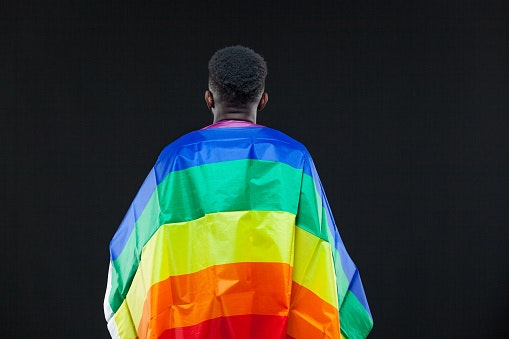
The primary human rights watchdog in Africa recently made a decision that departed from its existing practice. The African Commission of Human and Peoples’ Rights, an independent expert body within the African Union (AU) framework, used sexual or gender identity as the reason it rejected applications for observer status from three non-governmental organisations (NGOs).
The commission said that “sexual orientation” was not an “expressly recognised right” in the African Charter on Human and Peoples’ Rights. It also said that protecting and promoting sexual and gender minority rights was “contrary to the virtues of African values”.
The decision casts a shadow over the commission’s commitment to advancing the rights of all Africans. It also seriously erodes its independence from AU states.
One of the commission’s competences is to grant observer status to NGOs. This entitles an NGO to participate in the commission’s public sessions, and make statements drawing attention to the violation of the rights of the most vulnerable, including sexual and gender minorities.
So far, the commission has granted observer status to 544 NGOs. The three it recently refused observer status to are Alternative Côte d’Ivoire, Human Rights First Rwanda and Synergía – Initiatives for Human Rights.
Read more: Successes of African Human Rights Court undermined by resistance from states
The denial of observer status means that the NGOs will not have a voice before the African commission. They will not be able to draw its attention to the human rights violations of LGBTQ+ people in Africa. The move further politicises sexual and gender minority issues in Africa, further restricts civil society functioning, and further marginalises communities and people who have already been stigmatised and excluded.
Not the first time
The commission’s decision has a history. In 2015, it granted observer status to a South African-based NGO, the Coalition of African Lesbians. The AU executive council directed the commission to withdraw this, on the basis that the NGO attempts to impose values contrary to African values. The executive council is made up of ministers of foreign affairs. Its mandate is to “consider” the commission’s activity reports.
After getting an ultimatum from the executive council, the commission complied in 2018.
The reversal attracted the legitimate criticism that the commission was not acting independently in supervising state compliance with human rights in Africa.
Its latest decision rests on three pillars.
-
It assumes that all three NGOs advocate for the equal rights of lesbian, gay, bisexual, transgender and queer (LGBTQ+) persons, without explaining how they do this.
-
It argues that because sexual orientation is not a right expressly provided for in the African human rights charter, these NGOs lack a basis to exist.
-
The commission holds the view that the NGOs’ work of advancing equal rights and dignity for all, irrespective of sexual orientation, is against African values.
Strong arguments can be mounted against all three.
The LGBTQ+ question
In my view the commission is on shaky ground in asserting that the three NGOs pursue a particular LGBTQ+ agenda. A look at the publicly accessible websites of all three casts doubt on this assertion.
In addition, if all NGOs working to advance equality based on sexual orientation were disqualified from observer status, many more would be affected. NGOs may have a particular focus, such as women’s rights, but they increasingly work within the reality of intersectionality. People’s rights are interrelated and indivisible. Thus, women’s rights organisations would inevitably be concerned about the rights of lesbians.
To deny such a body observer status is to negate the interrelatedness of rights.
Sexual orientation and nondiscrimination
The commission is also on shaky ground when it comes to the debate about rights.
It is well accepted that there is no distinct “right to sexual orientation”, as such, under human rights law. Sexual orientation is innate to every human being. We all have one, whatever it may be.
The charter to which the commission refers to justify its rejection contains a provision (article 2) setting out an open-ended list of non-discrimination grounds. Nothing prevents “sexual orientation” from being read into this list.
The commission’s own practice also contradicts its argument. There are numerous grounds for non-discrimination that the commission has recognised. Take disability. It is not included in article 2. Yet the commission has tacitly accepted that “disability” is a ground on which discrimination is not allowed. The same applies to “age”.
Read more: Botswana court ruling is a ray of hope for LGBT people across Africa
The commission itself has adopted the position that sexual orientation (and gender identity) are grounds on which discrimination under the African Charter cannot be tolerated. Resolution 275, adopted at the African Commission’s 55th Ordinary Session, in 2014, specifically condemns “systematic attacks by state and non-state actors” against persons because of their imputed or real sexual orientation or gender identity.
African values
Finally, the commission’s approach implies a simplistic view that there is a single set of values that define what “African” is. In a continent of great diversity and dynamism, such a monolithic approach beggars belief.
Through its restrictive interpretation of “African values”, the commission has taken an approach that inhibits human rights. It negates charter values such as tolerance, and the foundational charter premise of equal dignity of all, which is a restatement of the ubuntu (humanness) principle in article 29 of the charter.
Discrimination against anyone based on their sexual orientation or gender identity is not an African value. Discrimination breeds violence, and violence is inimical to respect for human rights.
While 32 African states (60% of them) still criminalise consensual sex between adults, 22 states (40%) have either never criminalised consensual same-sex acts between adults or no longer do.
The commission’s reasoning on “African values” is an affront to these African states. It is equally an affront to the many non-heterosexual Africans
whose existence is an undeniable matter of human biology.
Read more: Africa’s rights commission can — and should — do more for sexual minorities
Two of the NGOs – Alternative Côte d’Ivoire and Human Rights First Rwanda Association – operate legally in countries that do not criminalise same-sex consensual conduct. (Synergía – Initiatives for Human Rights operates from the United States.) The commission implies that Côte d’Ivoire and Rwanda are “un-African” because they allow the registration of these NGOs.
Beyond the setback
The commission’s decision is clearly a setback. However, those committed to human rights in Africa need to continue supporting the commission, based on its established jurisprudence, including Resolution 275, to ensure that the African Charter protects rights on the continent.
The commission took a step in this direction in January, when it condemned the homophobic killing of Kenyan gay activist Edwin Choliba.


