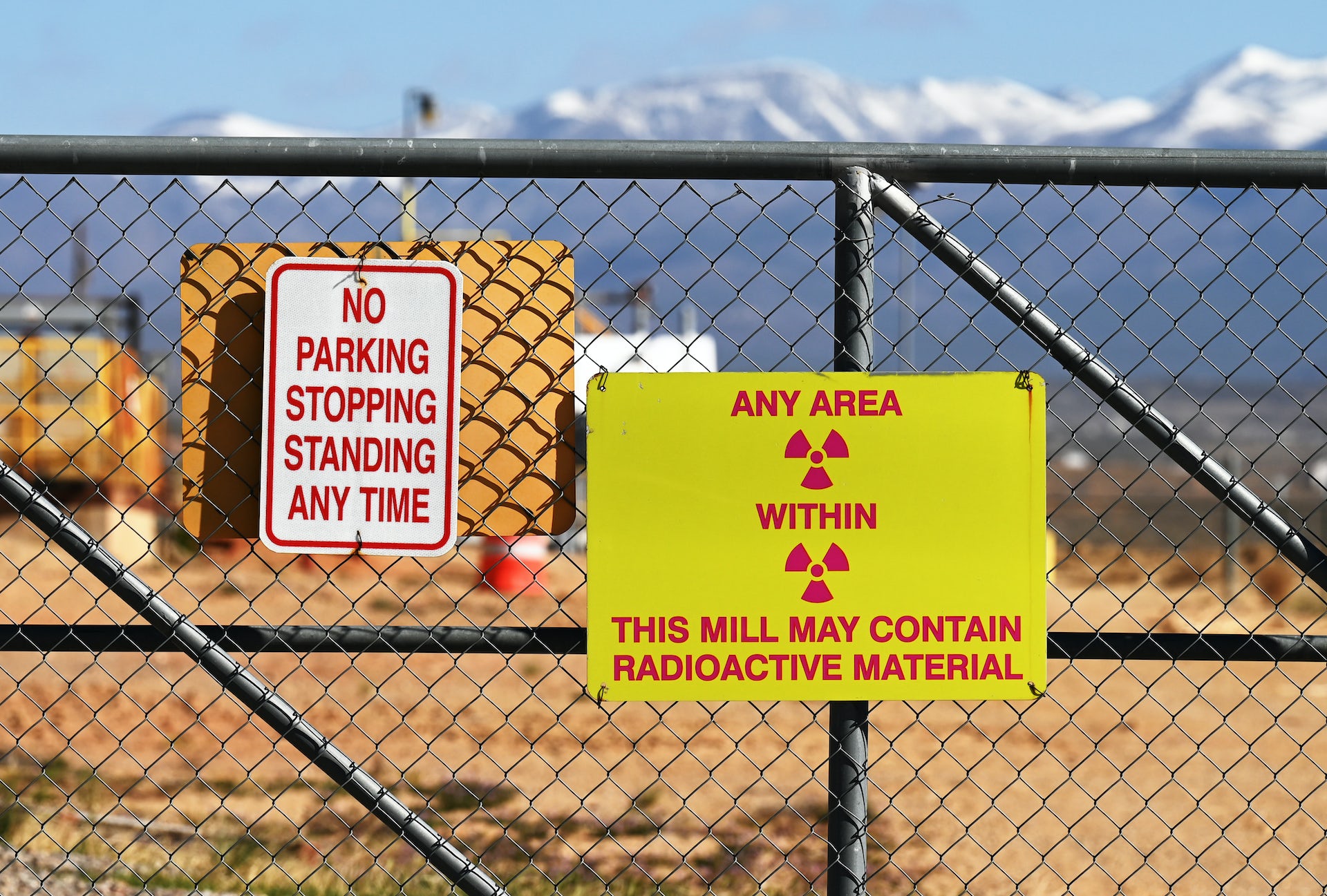
Earlier this year the International Atomic Energy Agency Director General Rafael Grossi reported that about 2.5 tonnes of uranium ore concentrate had gone missing from a site in Libya. This was arguably one of the largest quantity of uranium ore concentrate that had ever been misplaced.
Barely a day after the IAEA’s announcement, General Khaled Mahjoub of the self-styled Libyan National Army said the uranium ore had been found about 5km from the warehouse where it had been stored. A week later, the IAEA, which had been monitoring the stockpile occasionally, confirmed that most of the uranium ore concentrate had been found.
Uranium ore concentrate, popularly known as ‘yellowcake’, is a type of uranium concentrate powder obtained after uranium ore has been milled and chemically processed. Yellowcake has very low radioactivity, equivalent to the radioactivity of uranium ore found in nature, and it is produced by all countries where uranium ore is mined.
Yellow cake is further processed to become enriched uranium, which is used to manufacture the fuel for nuclear reactors. However, enriched uranium can also be used to manufacture nuclear weapons. If the technology were available, the 2.5 tons of missing yellowcake would have been half the amount required for a nuclear bomb.
Nuclear material experts had said the Libyan uranium ore concentrate in case posed “no significant security risk” as it required prohibitively sophisticated processing capabilities before it can be suitable for civil or weapons use.
Nevertheless, the news of missing Libyan uranium ore concentrate did highlight serious problems with the national and global governance structures for managing uranium.
Based on my experience in nuclear non-proliferation and politics, I believe that the missing Libyan uranium debacle illustrates two things.
Firstly, it illustrates the dangers of a IAEA that doesn’t have enough resources to monitor uranium ore stockpiles, especially in countries with unstable regimes. And faced with more pressing issues such as the safety and security of nuclear power plants in Ukraine, the IAEA won’t prioritise yellowcake storage.
Secondly, many African countries still struggle to implement nuclear safety and security governance provisions.
A regional destabiliser
Libya has been unstable since the fall of Muammar Gaddafi’s regime in 2011. This plunged the country into a civil war that has destabilised the North African and the Sahel regions, as Libya lost control of the largest and most diverse military arsenals in the region.
Much of this arsenal eventually fell into the hands of various non-state actors. Among them were Boko-Haram which mounted a reign of terror in northern Nigeria, and Ansar Al-Sharia in Tunisia.
Gaddafi had amassed stockpiles of nuclear material and technology as he sought to develop nuclear weapons. He had help from Abdul Qadeer Khan, who had been identified as a key facilitator for the global smuggling of nuclear material and technology.
Gaddafi eventually abandoned the weapons program in 2003, after months of secret disarmament negotiations with the US and British.
Following this deal, the US airlifted about 25 metric tonnes of Libya’s nuclear weapon programme components and documents. The last of Libya’s enriched uranium was removed in 2009. But there remained in Sabha, the southern Libyan city, about 6400 barrels of uranium ore concentrate. It’s this material that was under the control of an army battalion.
Olli Heinonen, a former Deputy Director of the IAEA, has since explained that it would have been very costly to airlift the remaining concentrate. He also said there were incentives for Libyans to holding onto the concentrate until the spot price of uranium was high enough for profitable export.
More questions than answers
Though the missing 2.5 tonnes of uranium have been recovered, questions remain: Why did 2.5 tonnes go missing in the first place? Who would have wanted to acquire it?
Mahjoub’s speculation was that a group from Chad raided the warehouse in search of conventional weapons. But Heinonen’s explanation was that a black market seller could have stolen the concentrate to show it to a prospective buyer.
Both explanations raise more concerns about how secure Libya’s cache and nuclear materials are. This, despite various mechanisms that have been put in place since the early 2000s in response to a CIA warning that Al-Qaeda could possibly develop a crude nuclear device. The agency also said the organisation had access to nuclear expertise and facilities.
The UN proposed a number of measures aimed at curbing the proliferation of weapons of mass destruction by non-state actors. These included the UN Security Council Resolution 1540 and the International Convention for the Suppression of Acts of Nuclear Terrorism. There was also the IAEA Additional Protocol which allowed for more intrusive inspections of nuclear sites.
There’s also the African Nuclear-Weapon-Free-Zone Treaty – the Pelindaba Treaty – which came into force in July 2009.
The Pelindaba treaty establishes the African Commission on Nuclear Energy to ensure compliance with the stipulations of the treaty. Article 10, for example, provides for extensive oversight of nuclear materials on the continent.
Libya is a signatory to all these conventions. But reality is that, in the absence of a stable and competent government in Libya, international and regional authorities must fill the nuclear governance vacuum.
African problems, African solutions?
The IAEA has decried its limited resources. This was long before Moscow’s invasion of Ukraine which demanded the agency’s attention.
African countries should invest in regional nonproliferation mechanisms, such as the African Commission on Nuclear Energy, whose responsibilities include the promotion of safe and secure peaceful uses of nuclear energy, as a complementary confidence building measure.


