Lockdowns threaten childrens’ nutrition: why extra care is needed:
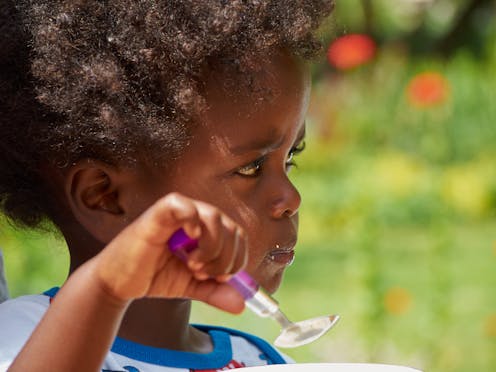
Data from two years ago shows that close to 60% of children in South Africa lived below the poverty line, while a third were below the food poverty line. Statistics also show that households with children are more likely to experience hunger than those without.
This will be aggravated by any loss of jobs or livelihoods that have resulted from the measures to control COVID-19. And if households use some of their scarce resources to buy the sanitising and hygiene products in efforts to to combat COVID-19, this will come at the cost of food and other essentials. Dietary diversity may be reduced, increasing the risk of micro-nutrient deficiencies.
Approximately 30% of children already live in households in which no-one is employed. These households depend on grants, the altruism of those who are employed, and piece-meal work largely in the informal economy.
If parents or caregivers lose their jobs, are unable to work or lose their markets because of the lockdown, or are unable to access the support provided by family members, food insecurity will follow.
Read more: Social protection responses to the COVID-19 lockdown in South Africa
For young children, nutritional shocks can result in increased wasting and stunting. These are known to have long-term effects on the health and education outcomes of children and compromise their immune systems.
It’s not just children already born who are at risk. During the 21 days of the current lockdown, approximately 240,000 South African women will be in the third trimester of their pregnancies.
This is a critical time for their well-being and the physical development of their unborn children. Any nutritional shock may have severe implications, both in the short-term birth weight of the child and in the longer term, as stunting.
There are some steps that can be taken to mitigate these fallouts. They include raising child support grants and extending a grant to pregnant women. And businesses also need to come to the party by not ramping up food prices.
Points of impact on children
It’s not yet clear to what extent lockdowns will have on food security levels, but we know that this is likely to affect global and local food supply and demand. The uncertainty around how long the lockdowns will last – and the potential effects on the economy – are among the driving factors behind recent panic buying and stockpiling of food items and other essentials.
Read more: Pandemics don’t heal divisions — they reveal them. South Africa is a case in point
The United Nations’ Food and Agriculture Organisation points out that even though there’s currently an adequate supply of staple grains and oil seeds, a surge in panic buying from big importers such as millers and governments could create a food crisis. This may result in food price inflation, making staple foods more costly and less accessible to the majority of the population. This is likely to worsen in the next few months due to disruptions in farming and food supply chains resulting from the lockdown procedures currently being implemented in many countries.
At individual and household level, while wealthier and high-income households have the financial means to purchase and store food, many low-income families are unable to do this. This means that poorer households will be most affected by unavailability of food or any significant increases in food prices.
Read more: Panic buying in the wake of COVID-19 underscores inequalities in South Africa
In addition, stockpiling requires access to proper storage facilities and equipment. Poorer households who don’t own refrigerators and freezers cannot safely store perishables. This includes fresh fruits and vegetables that are important sources of nutrients. Stockpiling by a segment of the population can decrease the availability of foods with long shelf life such as long life and powdered milk. Again, these foods also provide children with much needed proteins, calcium and other micronutrients.
Poor families hold little money for transactional purposes and have almost no precautionary budget as they live from pay-check to pay-check, or from grant to grant. So, while the middle and high-income households are stockpiling, low-income households can’t do this, leaving their children at risk of inadequate food consumption.
What can be done?
Businesses will need to manage the demands of their customers and adhere to the regulations that have been imposed by government. Wealthier individuals need to be socially responsible in their buying, knowing that their decisions to stockpile may hit the most vulnerable populations hardest. Their altruism will also be important.
Community driven charitable actions can mobilise resources more quickly than those coming from government and may better target those most in need. This requires institutions that can responsibly manage donations and ensure the procurement and distribution of food baskets, as well as addressing legal constraints such as those relating to the taxation of such donations and the collection and payment of VAT. The Community Action Networks approach is an example that appears to having an impact.
But the most direct form of intervention is through South Africa’s established social grant system. This is known to have reduced child poverty. The child support grant is also known to be insufficient to provide a nutritious diet for children. Increasing the grant has been proposed before and this is the moment to do so.
Another proposal that has been made before is the introduction of a maternity grant, effectively extending the child support grant back into the period of pregnancy. This has significantly benefited maternal and child outcomes in other countries where such grants have been made available to pregnant women.

Julian May receives funding from the South African National Research Foundation. He is affiliated with the Academy of Science in South Africa.
Winnie Sambu's PhD research is supported by the DSI-NRF Centre of Excellence in Food Security.
Coretta Jonah does not work for, consult, own shares in or receive funding from any company or organisation that would benefit from this article, and has disclosed no relevant affiliations beyond their academic appointment.
Source: The Conversation – Articles (AFRICA)
Read more on The Conversation.
Join the fun: Add Your event | Submit a Press Release | Add your listing.


