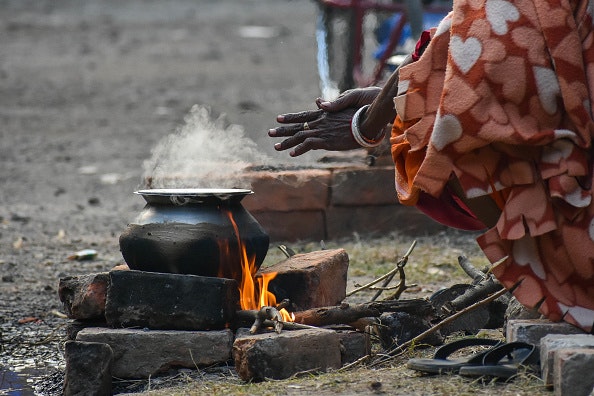
Hundreds of millions of people living in sub-Saharan Africa still use polluting cooking fuels. A recent survey across 33 countries in the region found that over 90% of households were found to use firewood, charcoal, or other heavily polluting fuel as their primary cooking fuel.
Ghana is no exception. The latest statistics from the Ghana Statistical Service show that over 50% of the country’s households rely on firewood and charcoal for cooking. More than 60% in 11 of the 16 administrative regions use firewood or charcoal as their primary cooking fuel.
Using polluting fuels affects the environnment as well as people’s health. It’s especially a concern for women, who often have the responsibility of cooking family meals, and for children under 5.
Some of the negative health effects include itchy and teary eyes, respiratory infections and cancer risk. Research also suggests more subtle effects such as child stunting and adverse birth effects.
Read more: Nigerian newborns weigh less if their mothers use biomass fuel – a major health risk
Based on this growing body of research, governments should be promoting the use of clean cooking fuels. Liquefied petroleum gas (LPG) is one of them. It emits far fewer pollutants than firewood or charcoal.
But in Ghana, there are a number of obstacles to increased use of LPG.
The biggest is that it’s inconvenient to get hold of it. Consumers have to buy a cylinder (canister). Then they must go to a refill station when it’s empty. This involves making long trips which cost time and money.
The government has tried various interventions to reduce firewood use for cooking and promote LPG in its place. Its efforts have produced mixed results.
Take the most recent – the Rural LPG Promotion Programme, led by Ghana’s Ministry of Energy. It distributed LPG equipment and accessories to rural households free of charge. Some studies found that the programme has had a low or non-existent impact in more rural areas. Our own first study showed that the intervention increased LPG adoption in more urban areas.
We did a subsequent study in which we sought to uncover the relevant supply side factors that could motivate LPG adoption and use beyond intervention programmes. We surveyed 904 households and found that the distance to refill the cylinder significantly affected LPG use and willingness to pay.
Based on our findings we concluded that a policy that brought LPG refill closer to households and reduced the time and cost of accessing a refill station was key to increasing the adoption of LPG as the primary cooking fuel.
Refill stations should be closer to homes
The study found that longer distances to LPG refill stations reduced the likelihood that a household would adopt LPG as its main fuel. Longer distance also reduced the number of times a day that a household used its LPG cylinder and stove.
A one kilometre increase in the distance to a refill station reduced the probability of adopting LPG by 2.1%. A one minute increase in the travel time to a refill station reduced the likelihood of adopting LPG by 0.3%.
We also found that providing additional services at LPG refill stations – such as selling and repairing LPG equipment and accessories – increased LPG adoption and use. Some refill stations also sell groceries.
The availability of additional services meant that consumers could complete multiple household errands in one trip. These consumers used more LPG to cook more meals because the regular trips to refill their cylinders made better use of their time.
What are the implications for government intervention? Clearly, bringing LPG closer to households increases the likelihood that they will use the cleaner fuel.
The government could improve the LPG distribution system nationwide by offering an enabling environment for private investment in this business. Private sector investors will need policy support to make the business attractive in sparsely populated areas.
One business opportunity is a cylinder re-circulation model under which several circulation points are mounted in each district within reasonable distance of consumers’ homes. Households could go to the circulation points to exchange their empty LPG cylinders for filled ones.
Alternatively, a home delivery system could take filled LPG cylinders to the doorstep of consumers in exchange for their empty ones at an extra charge. This is convenient and also safer because cylinders can be inspected for defects before being filled.
Read more: Gas prices: as cooking fuels become more expensive, people are turning to dirtier alternatives
Offering free equipment may be necessary in promoting LPG take-up, as the government has attempted. But it’s not enough to push through a fuel transition. There must be an accompanying increase and equitable spread in LPG supply systems and infrastructure.
Once households, rural or urban, become accustomed to the convenience that cooking with cleaner fuel brings, and the improved health outcomes, they will rely less on polluting fuel over time.
The change begins with the convenience of getting access to the fuel.


