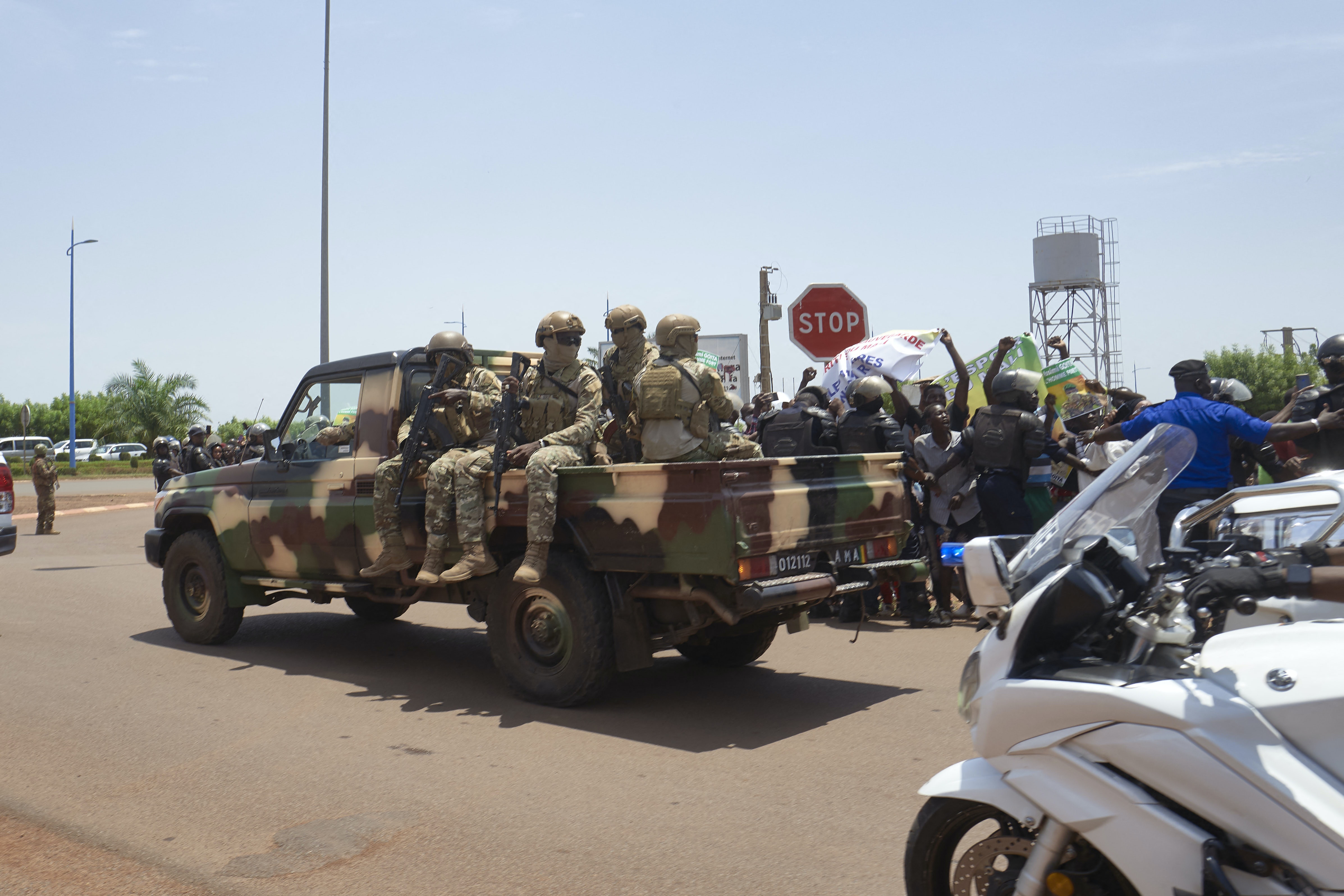
Recent events in Mali have caused consternation among state actors, domestically and externally, in addition to non-state actors such as jihadi groups operating across the Sahel.
What’s causing particular alarm is the fact that there’s been another coup in the country, just nine months after the last one.
The military’s recent arrest of Mali’s interim president and prime minister is an outright infringement on the country’s nascent democracy. Events in Mali matter not only to ordinary Malians, but to the region and the world. This is because groups associated with both Al-Qaeda and ISIS have found a use for the country as a base from which to launch attacks across the region. This has destabilised neighbouring countries and threatened the interests of the US, the UK, France and the European Union.
This article explores the top five likely implications of the recent palace coup, and potential solutions. In particular, it points to the need for the political will of key stakeholders to move the needle on Mali’s protracted state decay before it degenerates into full state collapse.
The five factors that will shift the dial
Democracy, constitutionalism and the rule of law. As is commonly the case in the event of a coup, the military has disavowed every semblance of democratic tenets by suspending the constitution.
This disregard for the provisions of the constitution abrogates the rule of law, which, in turn, breeds anarchy.
The implication is that gains in democracy, such as the political compromises that have been made over the years among opposing groups in Mali, will be truncated. And local tensions, such as disenchantment towards the state over corruption and in certain cases human rights abuses among the security forces, are likely to increase.
All of this will make it more difficult for the machinery of governance, such as courts, to function.
There is also the strong likelihood of press freedom being stifled, and the shrinking the civic space.
The inevitable outcome would be more chaos and a breakdown into civil unrest. The Sahel region already has pockets of civil unrest. Events in Mali could potentially tilt the scale further.
The economy – regime survival over state survival: Mali is one of the poorest countries in the Sahel. The economy continues to experience sub-optimal economic growth and development. The situation has been further complicated by the effects of the COVID-19 global pandemic.
There’s a strong likelihood that the military junta won’t prioritise economic growth and development but will be more interested in consolidating its hold on political power. Added to this is the fact that potential foreign investors are likely to be more sceptical about bringing in much needed foreign direct investments. The Malian people will bear the brunt.
Distrust and dissatisfaction: The social contract that exists between the Malian state and the Malian society has come under severe pressure. This has resulted in distrust and dissatisfaction between society and the state, eroding the state’s authority and legitimacy. This is worsened by the military’s continued hold on political power.
The military’s interference in domestic politics has reinforced local grievances among groups with divergent interests. The political cost of these rising tensions in the absence of an inclusive political solution is the danger that the country will slip into civil war. This would have dire consequences on the entire Sahel region and the broader West African sub-region.
The war on insurgency and jihadi groups: The greatest beneficiaries of the unfolding events are the insurgency and jihadi groups seeking to derail the Malian state. Having lost state legitimacy, the current military coup makes it difficult for the military junta to “win the hearts and minds” of local people in its fight against these violent extremist groups.
A military junta at the helm of affairs also implies the likelihood of an over-militarised approach at the expense of addressing non-militaristic root causes such as poverty, inequality, the absence of public goods and social services, and functional state institutions. This will exacerbate local tensions that created the situation in the first instance.
Mali cannot afford to lose the war against the jihadist groups. Doing so would have a catastrophic effect on peace and security in and outside the country.
Peace and security in the Sahel and West African sub-region: As the situation in Mali continues to deteriorate the likelihood of a “domino effect” across weaker states in the Sahel and the broader West African sub-region can’t be ignored.
There’s the danger that the military in other states could also decide to take political power. This would result in a plethora of pariah states. This would, in turn, lead to diminished support from international actors such as the US, the UK, the European Union and France, and prolonged insecurity and instability requiring more foreign military interventions.
Going forward, what must be done?
To avert these kinds of consequences there’s a need for a number of quick steps to be taken.
The first is for the current military junta to step aside and reinstate the deposed civilian political leadership. Doing so would serve to strengthen whatever is left of Mali’s nascent democracy.
Secondly, the regional body, the Economic Community of West African States (ECOWAS), needs to act firmly beyond mere rhetoric and Mali’s suspension. It must pressure the military regime to relinquish power by imposing targeted sanctions. ECOWAS must then take the lead in working closely with the African Union to facilitate political consultations among the various groups to pave the way for political compromise. This should include people who have been mostly marginalised.
Lastly, the international community must be careful not to impose its will on the political process. It should instead support an “African-led solution to an African problem”.


