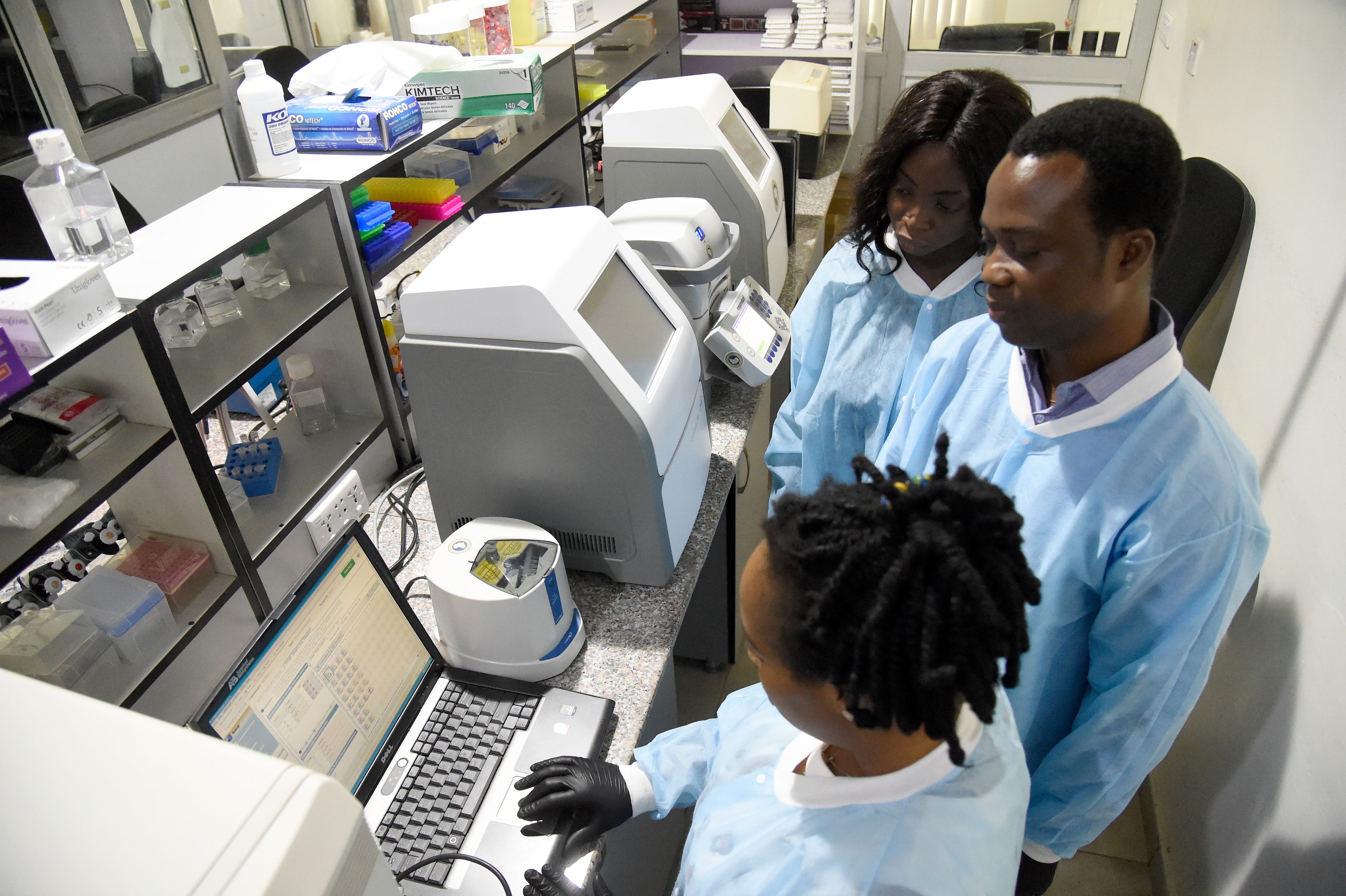
Our world and everything in it is made up of innumerable tiny molecules. These molecules are the smallest units of chemical compounds or living things. Viruses, bacteria, parasites, plants, animals, humans: each organism is underpinned by molecules. Studying them allows scientists to understand the basic principles and interactions that govern all forms of life.
Shifts at such basic levels change the way an organism looks or functions. That’s critical in understanding diseases, for one thing. During the COVID-19 pandemic, molecular research enabled scientists to quickly understand how the new coronavirus behaved and how to prevent infection. That, in turn, drove vaccine development.
Molecular research could also, in future, make it possible to personalise medicine – basing treatment on a patient’s DNA. And it may be key to progress in the treatment of diseases such as sickle cell anaemia, diabetes and cancer.
There’s a problem, though: molecular research is expensive. It requires specialised equipment and chemicals, which is costly.
In Nigeria, where I conduct molecular research – and in many other African countries – there is very little state funding for research and development. Nigeria’s TETFund, the government agency responsible for all higher education funding, has very limited resources. Molecular research is often neglected in funding decisions in favour of other forms of research that could provide immediate solutions to pressing societal needs, such as immediate control measures for disease outbreaks.
As I argued in a recent journal article, though, molecular research can help address some of Nigeria’s health needs. Nigeria has a rich biodiversity of humans, animals and plants whose molecular compositions may hold clues to future advancements in medical science. The country also bears a huge burden of infectious disease. Microorganisms that cause diseases abound in the tropical climate of Nigeria.
Investment in research into the molecular characteristics of these microorganisms would go a long way in disease control and management both locally and globally.
Untapped contributions
It’s worth noting what Nigeria’s molecular research scientists have already been able to achieve without good resources.
They were at the forefront of sequencing the SARS-CoV-2 genome within days of the first infection being recorded on Nigerian soil. This work allowed them to publish the first SARS-CoV-2 sequence data on the African continent. This was made possible by many years of international and local funding to build capacity at the African Centre of Excellence for the Genomics of Infectious Disease and the Nigerian Institute of Medical Research.
Read more: Nigerian scientists have identified seven lineages of SARS-CoV-2: why it matters
Imagine how much more could be done and how Nigeria could contribute to global health solutions if its numerous excellent scientists were properly equipped with adequate facilities.
South Africa has demonstrated this dedicated research support via its National Research Foundation. Huge funds have been invested in research for the control of HIV and AIDS and, more recently, COVID-19.
At present, most Nigerian molecular research scientists do not have the specialised research equipment they need. This is because of cost and limited availability. Most of this equipment, and the chemical reagents needed for this work, is imported. There are a few specialised reference molecular laboratories in the country, but not nearly enough to serve the needs of this nation of more than 200 million people.
Universities, which are the ideal spaces for such research facilities, don’t offer adequate institutional support for procuring molecular research equipment and reagents.
Yet there are many diseases peculiar to the country and region, for which new treatments could be easily developed with the aid of molecular research. They include genetic diseases like sickle cell, noncommunicable diseases like diabetes, and infectious diseases like malaria and neglected tropical diseases (among them river blindness and sleeping sickness or African trypanosomiasis).
Read more: New finding offers breakthrough in beating African sleeping sickness
Nigeria – and the African continent – cannot continue to wait for western researchers to find solutions to these peculiar health challenges.
Concerted effort
Nigeria has the opportunity to contribute an enormous amount of knowledge to molecular research. For this to happen, a concerted effort is required by the government, institutions, local and international funding bodies, and molecular researchers themselves.
COVID-19 has taught us that a health problem in one place could threaten global health. Therefore all hands should be on deck to tackle health challenges wherever they occur.
There is a strong need for national and international funding bodies to increase funding allocations to improve molecular research capacity in Africa. Also, universities and research institutions should provide an enabling environment by providing easy access to the equipment and facilities that researchers need. Researchers will thus be encouraged to find solutions to health challenges and train more scientists.


