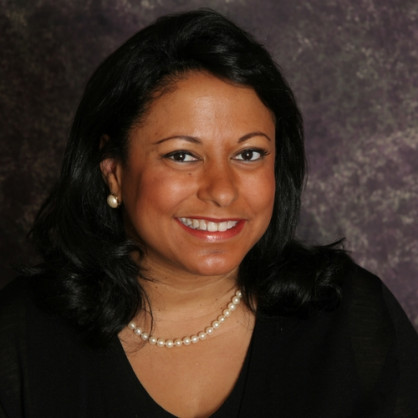
By Teresa Clarke, Africa.com Chair & Executive Editor
I was invited to dine with Bill Gates last week during the World Economic Forum in Davos, Switzerland. The terms of the invitation, which was extended to six others besides myself, were that the discussion would be off-the-record. Therefore, I can’t write about anything discussed that evening. What I can tell you is what we ate, and what I thought about after the dinner.
The menu, prepared by chefs at Microsoft House – the temporary headquarters of all things Microsoft at the Davos conference – was superb. The first course was an Asian beef salad, followed by a main course of rack of veal and the most tender asparagus I’ve ever had. The meal ended with a mango sorbet with fresh fruits. It all tasted as good as it sounds.
What I thought about afterwards was my own cynicism regarding Gates’ optimism that his plan can prevent the next pandemic. His book on this topic, published just weeks before our dinner, was something I spent a good deal of time understanding in preparation for the dinner discussion. I never doubted the wisdom of what he proposed in the book; but I had, and continue to have, concerns about our global leadership’s ability to receive wise counsel and act in concert, in the interest of humanity, absent selfish nationalistic objections. I listened intently as Bill spoke that evening, and initially considered his optimism to be naive. I admit that it took some time and reflection afterwards for me to appreciate that, had he set out with a cynical view, for example, with regard to his bold plan to cut childhood malaria deaths in half, based on a dim view of global leadership, he would never have achieved that goal. His optimism, I came to realize, is not naive; it is a necessary tool in his arsenal to achieve the global impact he desires.
As I continued to mull over his ambitious, yet practical plan to stave off the next pandemic, I arrived at a sense of gratitude that this unusually capable mind has dedicated its resources to solving crucial societal problems. Going into the dinner, I had an appreciation for his intellect and drive. What I discovered over dinner was his passion and commitment for leaving the world a better place than he found it. Given the vastness of his foundation’s work over the last 22 years, that may sound obvious; but some continue to question his motives. After spending two uninterrupted hours with him over a small dinner table, I can declare, to myself at least, that his motives are genuine. He seems excited about this shiny toy – his agile mind – and he enjoys playing with it, and testing its limits to understand its capabilities. He has chosen to do just that with regard to preventing the next pandemic.
His book on how to prevent the next pandemic is an exercise in the use of that great mind for the common good – a gift to society from a unicorn. Who else has the experience of having scaled one of history’s largest efforts to improve public health globally, a deep understanding of bio-science, epidemiology and statistics, unfettered access to the leading, relevant subject matter experts, and the independence to opine without concerns about political backlash? It seems to me that he might even consider it irresponsible to possess this unparalleled knowledge that can save lives, and not couple it with an optimistic expectation that the world will follow.
In his book, “How to Prevent the Next Pandemic,” Gates has synthesized the learnings from the last two and half years into a practical, easy to digest action plan for those who are committed to ensuring that we learn from our mistakes. He has taken an apolitical view of the countries that have had the best outcomes, and examined what they did right in their management of the novel Coronavirus. He notes that Australia demonstrated a deft orchestration of virus diagnostics – they did early testing widely – and executed lock down policies with great effectiveness, leading Australia to one of the lowest death rates from COVID among wealthy countries. From Japan, he notes that the well established habit of wearing masks served the country well in maintaining low transmission rates. South Africa, in partnership with UNICEF, counteracted the spread of misinformation about the pandemic in rural communities with a multimedia truck with huge LED screens to broadcast local stories and information. South Korea did an excellent job using cell phone data for contact tracing, though he notes that this use of private information would not likely be well received in most democratic countries.
Gates processes all of this information, together with his deep and vast global public health experience, to inform a plan with three key pillars, to be orchestrated by a newly established, centralized, global pandemic response team that he proposes. The three pillars of his plan are as follows:
- Invest in better vaccines, therapeutics and diagnostics. Successful ideas can take years to research before they are actionable, so the time to invest is not after the start of a pandemic; investment must be part of an on-going plan.
- Improve disease monitoring with Global Epidemic Response & Mobilization – GERM. This is one of the most important steps to stop the next pandemic. GERM would be a permanent organization of experts who are fully paid and prepared to mount a coordinated response to a dangerous outbreak at any time. A key aspect of their work would be to ensure preparedness by running “fire drills” – exercises to practice the response protocols for an actual outbreak.
- Strengthen health systems – the pandemic showed us that until we are all safe, none of us is safe. Health systems need to be strong in low, middle and high income countries and communities. We need well functioning hospitals, clinics and most importantly, health care workers. These resources can not be developed overnight, and also need investment as part of an on-going plan.
After my dinner with Bill, I was inspired to learn more about him and how he formed his ambitious world views. I read a blog he wrote, in which he quoted the great epidemiologist, Larry Brilliant, who said that “outbreaks are inevitable, but pandemics are optional.” Listening to those with unparalleled expertise and experience, and adopting their plans to contain outbreaks before they become pandemics should be the strategy of every world leader. And while I continue to have my concerns about whether global leadership has the vision, and the wherewithal, to take the actions proposed by Gates, and implement such plans effectively, I respect his optimism that his plan will be adopted in some form. Without such optimism, surely it would be impossible. And I close with a quote from another wise man, Nelson Mandela, who used his leadership to overcome seemingly unattainable goals: “It always seems impossible, until it is done.”
Distributed by APO Group on behalf of Africa.com.
Press Contact:
Africa.com
Laura Joseph
+27 82 332 0473 (mobile & WhatsApp)
Email: laura.joseph@africa.com
About Teresa Clarke:
Teresa Clarke, Chair, CEO and Executive Editor of Africa.com since its founding more than a decade ago, was the first African-American woman named managing director in the investment banking division of Goldman Sachs & Co. Ms. Clarke, an expert on African investment, served on President Obama’s Advisory Board on Doing Business in Africa. She is a member of the Council on Foreign Relations, and a member of the Leadership Council of the New York Women Corporate Directors. A frequent lecturer on the topic of African investment, she has lectured at the following business schools, among others: Harvard, Yale, Princeton, Wharton, Stanford, Oxford, and Lagos Business School. Named one of the Top 25 Women in Business, she currently serves on the board of Arthur J. Gallagher (NYSE:AJG), the global insurance brokerage with operations in 56 countries. She is the former board chair of Australian fintech, Change Financial (ASX:CCA) and she served on the board of Cim Finance (SEM:CIM), a financial services company. Ms. Clarke founded the Student Sponsorship Programme of South Africa, which has awarded over $20 million in scholarships to South Africa’s high performing high school students. She chairs the US board of the Legal Resources Centre, the largest public law organization on the continent of Africa, which employs nearly 100 attorneys and staff working human and civil rights matters. Ms. Clarke earned an A.B. cum laude from Harvard College, an M.B.A. from Harvard Business School, and a J.D. from Harvard Law School.


